THE ADVENTURE COLLECTIVE® · Independent discovery and booking for outdoor travel

Watch the desert change color while sipping Bedouin tea on a private three-hour Wadi Rum sunset tour. Visit Lawrence’s Spring, Khazali Canyon’s petroglyphs and natural rock bridges as the light softens and the air cools.
Watch the desert change color while sipping Bedouin tea on a private three-hour Wadi Rum sunset tour. Visit Lawrence’s Spring, Khazali Canyon’s petroglyphs and natural rock bridges as the light softens and the air cools.
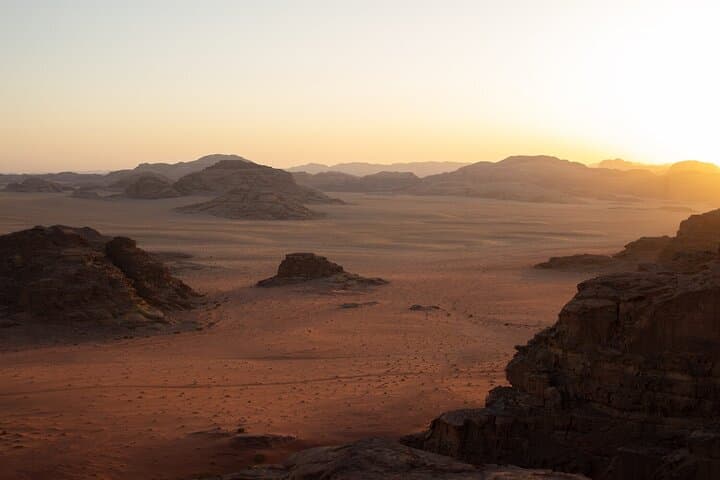
The sun slides like a slow coin toward the horizon and the desert inhales. Heat that held the day loosens its grip and the sand cools underfoot, turning from harsh orange to soft vermilion. On a gentle rise near Um Fruth, a small group gathers around steaming mugs of Bedouin tea; across the valley, a band of wind-carved cliffs throws long, theatrical shadows.
Verified experiences and guided adventures in the surrounding area.
Operated by Wadi Rum Desert Eyes · Wadi Rum Village, Aqaba Governorate
The sun slides like a slow coin toward the horizon and the desert inhales. Heat that held the day loosens its grip and the sand cools underfoot, turning from harsh orange to soft vermilion. On a gentle rise near Um Fruth, a small group gathers around steaming mugs of Bedouin tea; across the valley, a band of wind-carved cliffs throws long, theatrical shadows.
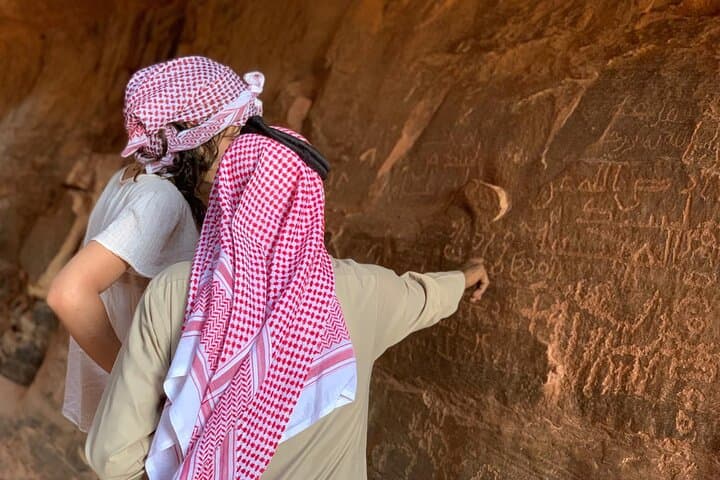
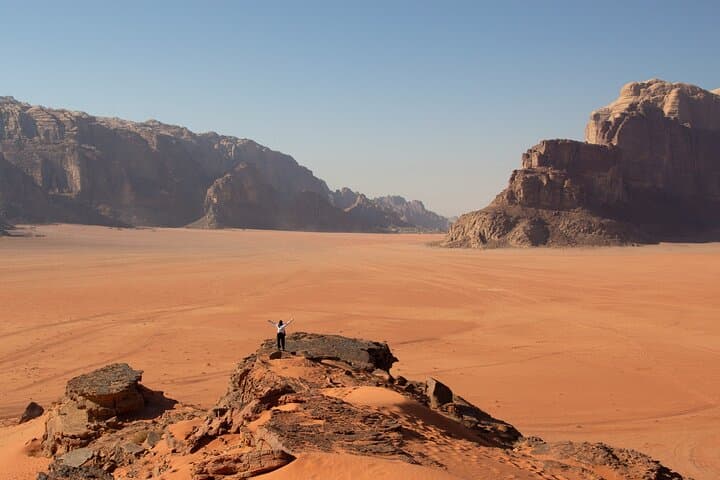
This three-hour sunset tour across Wadi Rum Protected Area offers a concentrated lesson in desert scale and history. The landscape here is layered: Precambrian granite and sandstone folded and shattered over hundreds of millions of years, then polished into arches, bridges and sheer-faced towers by wind and rare flash floods. Humans have left their mark too—the petroglyphs and Nabatean inscriptions in Khazali Canyon are quiet pages of movement and trade that predate modern borders.
Cultural threads run tight. The Bedouin who guide and host these tours draw on centuries of desert knowledge—reading dunes, finding springs such as Ain Abu Aineh (Lawrence’s Spring), and preparing the simple hospitality of tea and biscuits at sunset. The area’s cinematic fame, from T.E. Lawrence to contemporary film sets, has introduced travelers without erasing local rhythms: this is still a working landscape where livestock, ancient trails and seasonal camps persist.
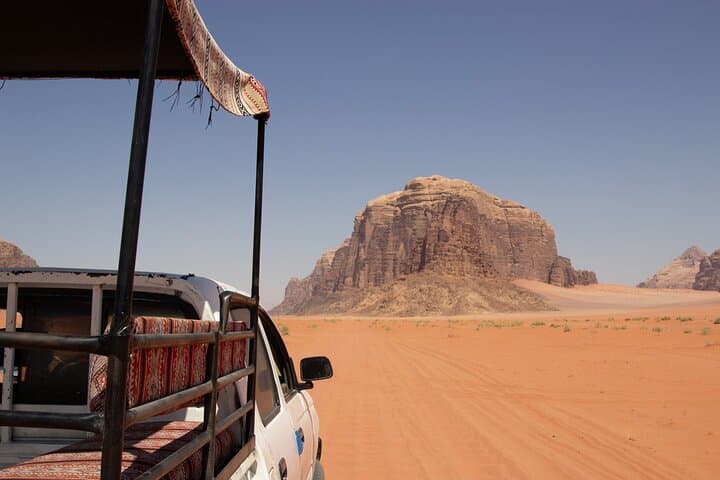
Practically, this is a short but physically active outing. Expect short walks over soft sand and rocky ledges; Khazali’s petroglyphs require crouched moves and steady footing. The meeting point is Wadi Rum Rest House in Wadi Rum Village (a 7 km drive from the Visitor Centre where park fees are paid). The tour is private and includes bottled water and a guide/driver.
Timing is everything—arrive early enough to scout a viewpoint, and bring layers: desert temperature shifts are dramatic after sunset. Footwear with good traction helps on dunes and in canyons, and a small headlamp is useful for the walk back to the vehicle. If you plan to pay with the Jordan Pass, remember the Visitor Centre processes entrance fees; confirm whether your pass covers access.
For photographers and first-timers, the payoff is immediate: the last light slices across ancient rock and the quiet makes even small details—inscriptions, wind-etched grooves—feel monumental. Leave no trace, support local guides, and let the desert set its pace—there’s a humility in watching the sunlight pull away that you won’t find in a city skyline.
moderate.
3 hours.
Moderate fitness; able to walk short distances over sand and uneven rock and to climb low ledges.
Meet at the Wadi Rum Rest House in Wadi Rum Village; it’s about a 7 km drive from the Wadi Rum Visitor Centre where park fees are paid.
The tour does not include the Wadi Rum Protected Area entrance fee (5 JD per adult); it may be covered by the Jordan Pass—confirm before travel.
The tour involves walking on uneven ground and climbing low ledges; it’s not recommended for pregnant travelers or those with serious back/heart problems—families with mobile children often participate but should supervise closely.
This specific itinerary focuses on vehicle-assisted sightseeing and short walks; camel rides are a different offering and should be booked separately if desired.
Khazali requires crouching and stepping over rocks in spots; it’s not wheelchair accessible and can be tight for limited-mobility guests.
Bring water (though bottled water is provided), closed-toe shoes, a warm layer, sun protection, and ID for any Jordan Pass verification.
Wadi Rum’s rock inscriptions and trade routes predate modern states; the area is also tied to T.E. Lawrence’s Arab Revolt and has featured in several films, which shaped its modern tourism profile.
Wadi Rum is a protected area—stay on established tracks, pack out all waste, and use local guides who support community-based conservation and low-impact tourism.
Wadi Rum Desert Eyes operates guided outdoor trips and adventures with an emphasis on safety, stewardship, and memorable experiences.
The sun slides like a slow coin toward the horizon and the desert inhales. Heat that held the day loosens its grip and the sand cools underfoot, turning from harsh orange to soft vermilion. On a gentle rise near Um Fruth, a small group gathers around steaming mugs of Bedouin tea; across the valley, a band of wind-carved cliffs throws long, theatrical shadows.
The sun slides like a slow coin toward the horizon and the desert inhales. Heat that held the day loosens its grip and the sand cools underfoot, turning from harsh orange to soft vermilion. On a gentle rise near Um Fruth, a small group gathers around steaming mugs of Bedouin tea; across the valley, a band of wind-carved cliffs throws long, theatrical shadows.
This three-hour sunset tour across Wadi Rum Protected Area offers a concentrated lesson in desert scale and history. The landscape here is layered: Precambrian granite and sandstone folded and shattered over hundreds of millions of years, then polished into arches, bridges and sheer-faced towers by wind and rare flash floods. Humans have left their mark too—the petroglyphs and Nabatean inscriptions in Khazali Canyon are quiet pages of movement and trade that predate modern borders.
Cultural threads run tight. The Bedouin who guide and host these tours draw on centuries of desert knowledge—reading dunes, finding springs such as Ain Abu Aineh (Lawrence’s Spring), and preparing the simple hospitality of tea and biscuits at sunset. The area’s cinematic fame, from T.E. Lawrence to contemporary film sets, has introduced travelers without erasing local rhythms: this is still a working landscape where livestock, ancient trails and seasonal camps persist.
Practically, this is a short but physically active outing. Expect short walks over soft sand and rocky ledges; Khazali’s petroglyphs require crouched moves and steady footing. The meeting point is Wadi Rum Rest House in Wadi Rum Village (a 7 km drive from the Visitor Centre where park fees are paid). The tour is private and includes bottled water and a guide/driver.
Timing is everything—arrive early enough to scout a viewpoint, and bring layers: desert temperature shifts are dramatic after sunset. Footwear with good traction helps on dunes and in canyons, and a small headlamp is useful for the walk back to the vehicle. If you plan to pay with the Jordan Pass, remember the Visitor Centre processes entrance fees; confirm whether your pass covers access.
For photographers and first-timers, the payoff is immediate: the last light slices across ancient rock and the quiet makes even small details—inscriptions, wind-etched grooves—feel monumental. Leave no trace, support local guides, and let the desert set its pace—there’s a humility in watching the sunlight pull away that you won’t find in a city skyline.