THE ADVENTURE COLLECTIVE® · Independent discovery and booking for outdoor travel

Move at the desert's pace on a 2‑night camel trek through Wadi Rum: ride ancient routes, sleep in Bedouin tents, and watch the Milky Way spill over sandstone peaks. This trip blends hands‑on Bedouin hospitality with practical guidance for first‑time camel travelers.
Move at the desert's pace on a 2‑night camel trek through Wadi Rum: ride ancient routes, sleep in Bedouin tents, and watch the Milky Way spill over sandstone peaks. This trip blends hands‑on Bedouin hospitality with practical guidance for first‑time camel travelers.
The first light in Wadi Rum arrives like a slow exhale. Camels shift and low, ancient rock throws long, red shadows across wind-sculpted dunes while a Bedouin guide quietly brews tea beside a low fire. On a two‑night camel trek you move with the rhythm of the desert—slow, patient, deliberate—and the landscape rewards that pace: sandstone walls that lean like old guards, narrow canyons that cool the sun, and dunes that seem to breathe.
Verified experiences and guided adventures in the surrounding area.
Operated by Soul Tribe Travel · Wadi Rum, Aqaba Governorate
The first light in Wadi Rum arrives like a slow exhale. Camels shift and low, ancient rock throws long, red shadows across wind-sculpted dunes while a Bedouin guide quietly brews tea beside a low fire. On a two‑night camel trek you move with the rhythm of the desert—slow, patient, deliberate—and the landscape rewards that pace: sandstone walls that lean like old guards, narrow canyons that cool the sun, and dunes that seem to breathe.
Wadi Rum sits in southern Jordan, part geological museum and part cultural landscape. Its towering sandstone and granite outcrops were carved over millions of years by wind and sudden flash floods; the same rocks hold petroglyphs and carved inscriptions left by travelers across millennia. Lawrence of Arabia passed through these valleys, and Bedouin families continue to live by routes and knowledge passed down through generations.
This itinerary blends traditional camel travel with modern support: expect roughly 3–6 hours of riding or walking each day, covering an estimated 8–15 km daily across mixed terrain—firm desert plain, broken rock, and soft dune. Elevation change is modest on the valley floor; most climbs are short scrambles to viewpoints (up to ~150–200 m). Guides know the channels where wind reveals hidden springs and the quiet alcoves where petroglyphs still keep secrets.
Culturally, the trip is intimate: campfire music, shared meals of slow‑cooked stews and flatbreads, and conversations about sustainable pastoral life. Staying in a traditional Bedouin tent (shared facilities) connects travelers to a way of living that prioritizes resourcefulness—water is conserved, fuel is minimal, and waste is handled with care.
Practically, travel begins at the Wadi Rum Rest House parking area where a jeep transfer meets you. Bring a lightweight sheath scarf (shemagh) for sun and sand, layered clothing for cool desert nights, and sturdy, closed-toe shoes for rocky sections. Hydration is non-negotiable: carry at least 2–3 liters per day and refill when guides provide water at camp.
Timing matters: early morning and late afternoon are best for riding and photos; midday is for rest, tea, and the slow passing of light. Nights are astonishing—without city glow, the Milky Way becomes a low, luminous river. Respect the environment: stick to routes, minimize plastic, and tip guides who are keeping traditions alive.
For anyone seeking a travel experience that pairs physical simplicity with deep cultural contact, a short camel trek across Wadi Rum is both accessible and profoundly grounding. The desert will not rush you; it will teach the value of moving with patience and looking closely at the world.
moderate.
2–3 days.
Moderate fitness—able to sit on camel for hours and walk short stretches over dunes and rocky ground.
Moderate—riding is low-impact but you should be comfortable sitting for several hours and able to walk short distances over uneven sand and rock.
Accommodation is in traditional Bedouin tents with shared facilities; single/double occupancy may be available on request.
Children can join if accustomed to sitting on camels; check ages with the operator and note that small children tire more quickly.
Camps use shared facilities; showers may be basic or limited depending on location—expect bucket or solar showers in some camps.
Meet at the Wadi Rum Rest House parking area—reachable by bus, rental car, or taxi from Aqaba; you can park safely there and guides provide jeep transfers.
Spring and fall offer the most temperate conditions; summers are hot and winters can be chilly at night—bring layers and sun protection.
Wadi Rum has been a travel corridor for millennia; petroglyphs and inscriptions mark its role in trade and migration, and T.E. Lawrence’s WWI presence made parts internationally famous.
Tourism supports local Bedouin livelihoods; follow guide instructions to avoid sensitive archaeological sites and minimize waste—water is scarce and should be conserved.
Soul Tribe Travel operates guided outdoor trips and adventures with an emphasis on safety, stewardship, and memorable experiences.
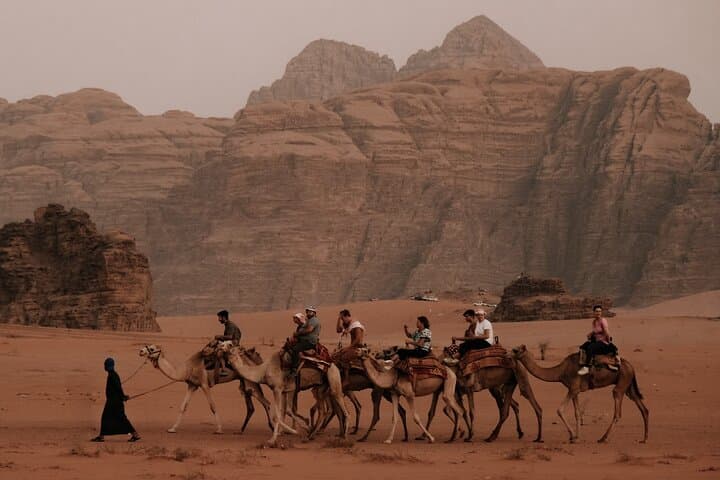
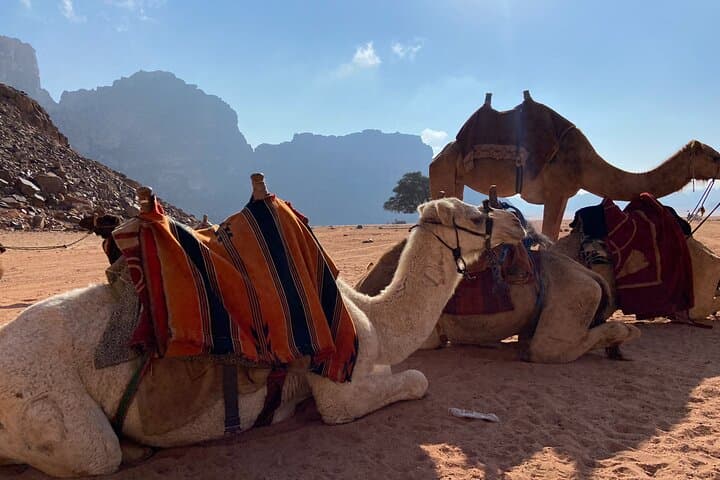
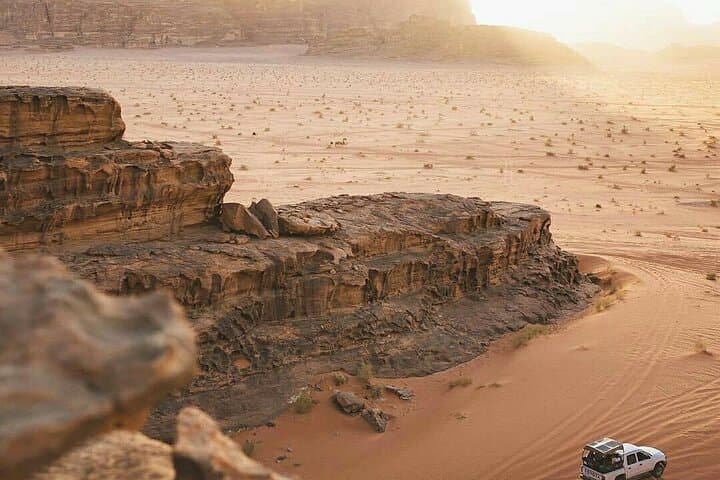
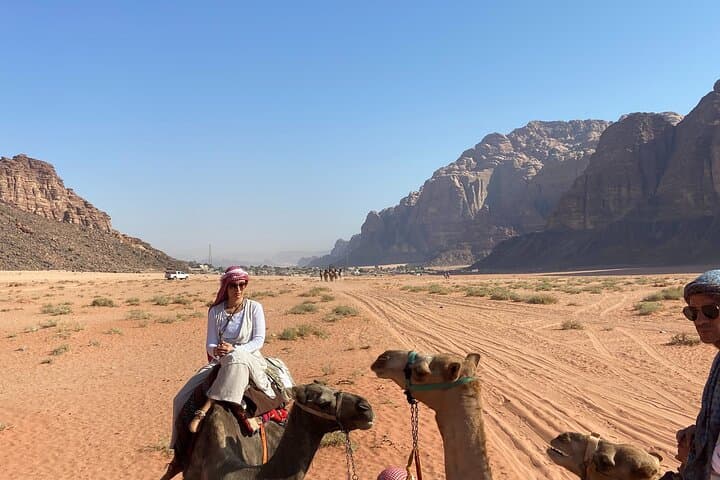
The first light in Wadi Rum arrives like a slow exhale. Camels shift and low, ancient rock throws long, red shadows across wind-sculpted dunes while a Bedouin guide quietly brews tea beside a low fire. On a two‑night camel trek you move with the rhythm of the desert—slow, patient, deliberate—and the landscape rewards that pace: sandstone walls that lean like old guards, narrow canyons that cool the sun, and dunes that seem to breathe.
The first light in Wadi Rum arrives like a slow exhale. Camels shift and low, ancient rock throws long, red shadows across wind-sculpted dunes while a Bedouin guide quietly brews tea beside a low fire. On a two‑night camel trek you move with the rhythm of the desert—slow, patient, deliberate—and the landscape rewards that pace: sandstone walls that lean like old guards, narrow canyons that cool the sun, and dunes that seem to breathe.
Wadi Rum sits in southern Jordan, part geological museum and part cultural landscape. Its towering sandstone and granite outcrops were carved over millions of years by wind and sudden flash floods; the same rocks hold petroglyphs and carved inscriptions left by travelers across millennia. Lawrence of Arabia passed through these valleys, and Bedouin families continue to live by routes and knowledge passed down through generations.
This itinerary blends traditional camel travel with modern support: expect roughly 3–6 hours of riding or walking each day, covering an estimated 8–15 km daily across mixed terrain—firm desert plain, broken rock, and soft dune. Elevation change is modest on the valley floor; most climbs are short scrambles to viewpoints (up to ~150–200 m). Guides know the channels where wind reveals hidden springs and the quiet alcoves where petroglyphs still keep secrets.
Culturally, the trip is intimate: campfire music, shared meals of slow‑cooked stews and flatbreads, and conversations about sustainable pastoral life. Staying in a traditional Bedouin tent (shared facilities) connects travelers to a way of living that prioritizes resourcefulness—water is conserved, fuel is minimal, and waste is handled with care.
Practically, travel begins at the Wadi Rum Rest House parking area where a jeep transfer meets you. Bring a lightweight sheath scarf (shemagh) for sun and sand, layered clothing for cool desert nights, and sturdy, closed-toe shoes for rocky sections. Hydration is non-negotiable: carry at least 2–3 liters per day and refill when guides provide water at camp.
Timing matters: early morning and late afternoon are best for riding and photos; midday is for rest, tea, and the slow passing of light. Nights are astonishing—without city glow, the Milky Way becomes a low, luminous river. Respect the environment: stick to routes, minimize plastic, and tip guides who are keeping traditions alive.
For anyone seeking a travel experience that pairs physical simplicity with deep cultural contact, a short camel trek across Wadi Rum is both accessible and profoundly grounding. The desert will not rush you; it will teach the value of moving with patience and looking closely at the world.