THE ADVENTURE COLLECTIVE® · Independent discovery and booking for outdoor travel

Ride a camel through Wadi Rum’s orange sand valleys and granite towers on a private 3–4 hour tour from Wadi Rum Village. Visit Lawrence Spring, climb the Red Sand Dune and explore Khazali Canyon’s ancient petroglyphs with a Bedouin guide.
Ride a camel through Wadi Rum’s orange sand valleys and granite towers on a private 3–4 hour tour from Wadi Rum Village. Visit Lawrence Spring, climb the Red Sand Dune and explore Khazali Canyon’s ancient petroglyphs with a Bedouin guide.
You climb onto a camel and the desert reorders itself. The animal rocks forward with the slow, deliberate gait that has moved caravans across this plateau for centuries; sand shifts in orange sheets, and towers of sandstone and granite rise like weathered pages. In a three-hour private camel convoy from Wadi Rum Village, you follow a guide from Lawrence Spring (Ain Abu Aineh) toward the Red Sand Dune, pause to crouch before ancient Nabatean petroglyphs in Khazali Canyon, and scramble up wind-polished ridgelines for 360° views.
Verified experiences and guided adventures in the surrounding area.
Operated by Wadi Rum Desert Eyes · Wadi Rum Village, Ma'an Governorate
You climb onto a camel and the desert reorders itself. The animal rocks forward with the slow, deliberate gait that has moved caravans across this plateau for centuries; sand shifts in orange sheets, and towers of sandstone and granite rise like weathered pages. In a three-hour private camel convoy from Wadi Rum Village, you follow a guide from Lawrence Spring (Ain Abu Aineh) toward the Red Sand Dune, pause to crouch before ancient Nabatean petroglyphs in Khazali Canyon, and scramble up wind-polished ridgelines for 360° views.
Wadi Rum is both geological classroom and cultural stage. The valley’s sculpted rocks were carved by wind and occasional flash floods from Cambrian sandstone and granite uplifted millions of years ago. Nabatean and earlier inscriptions mark shelters and springs; the same landscape later hosted T. E. Lawrence during the Arab Revolt, an association that still colors how visitors read the place.
The tour is practical as it is poetic. Your guide leads on his own camel; each rider gets a single mount and time to dismount and walk. The route varies by time of day: morning rides favor cooler, shadowed canyons and clearer light for reading petroglyphs, while sunset tours concentrate on dune crests and long, low-angle light for photos. Entrance to the protected area is paid at the visitor center (about 5 JD per adult, or free if you have a Jordan Pass). The Rest House in Wadi Rum Village—about 7 km from the visitor center—is the meeting point; parking is available there.
Practical realities matter here. The pace is slow but steady; expect three to four hours total and a camel ride that covers roughly 5–8 km across mixed sand and compact desert. The experience demands moderate fitness: you will mount and dismount, and short walks include uneven footing in canyons and on dunes. It is not recommended for pregnant travelers or those with serious back or heart conditions.
Bring sunscreen, a wide-brim hat, sunglasses, and closed-toe shoes for walking. Hydration is critical—bottled water is provided, but carry an extra bottle if you sweat heavily. Dress in layers: mornings are brisk, midday can be hot, and evenings drop quickly.
On the ground, keep to your guide’s route to protect fragile cryptobiotic soil and rock art. Ask about local customs: many guides are Bedouin who will share stories, tea, and practical knowledge of water and shelter. Leave petroglyphs unmarked, photograph respectfully, and tip the guide at the end of the tour if service was good.
Whether you come for the inscriptions in Khazali Canyon, the dune panoramas, or simply the slow rhythm of camel travel, this private trek trims the desert to something immediate: a landscape that moves around you as the camel keeps you moving forward.
moderate.
3–4 hours.
Moderate fitness; able to mount/dismount animals and walk short uneven sections
Meet at the Wadi Rum Rest House in Wadi Rum Village (about 7 km from the Visitor Centre); parking is available beside the Rest House.
Yes—the Wadi Rum Protected Area fee is paid at the Visitor Centre (about 5 JD per adult) and is waived if you have a Jordan Pass.
The ride itself is gentle, but you should be able to mount/dismount and walk short sections on uneven ground; the trip is rated moderate.
Children can ride but should be accompanied by an adult; operators may restrict very young riders for safety—check in advance.
Yes; photography is encouraged but avoid touching or climbing on rock art and be mindful of guides and animals when using flashes or tripods.
Tipping is customary for good service; prepare local currency (Jordanian dinar) and ask your guide about local customs for gratuities.
Wadi Rum contains Nabatean inscriptions and later became famous during the Arab Revolt and Lawrence of Arabia’s campaigns; the area has long been a Bedouin homeland.
The protected-area fee supports conservation and local communities; stay on routes, avoid collecting artifacts, and minimize water waste to reduce impact.
Wadi Rum Desert Eyes operates guided outdoor trips and adventures with an emphasis on safety, stewardship, and memorable experiences.
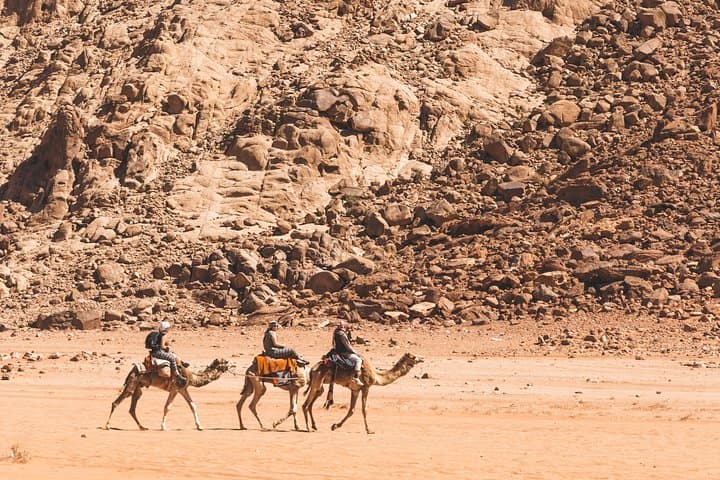
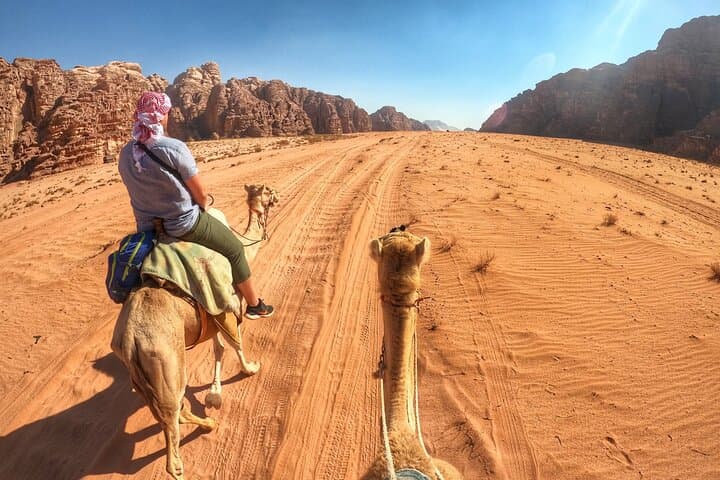
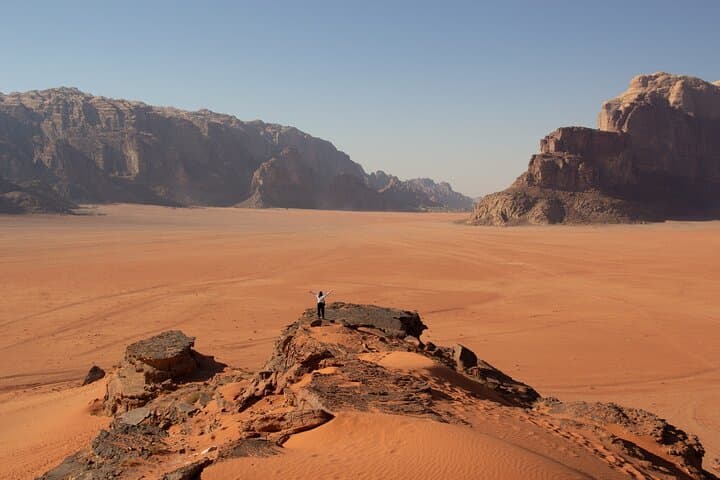
You climb onto a camel and the desert reorders itself. The animal rocks forward with the slow, deliberate gait that has moved caravans across this plateau for centuries; sand shifts in orange sheets, and towers of sandstone and granite rise like weathered pages. In a three-hour private camel convoy from Wadi Rum Village, you follow a guide from Lawrence Spring (Ain Abu Aineh) toward the Red Sand Dune, pause to crouch before ancient Nabatean petroglyphs in Khazali Canyon, and scramble up wind-polished ridgelines for 360° views.
You climb onto a camel and the desert reorders itself. The animal rocks forward with the slow, deliberate gait that has moved caravans across this plateau for centuries; sand shifts in orange sheets, and towers of sandstone and granite rise like weathered pages. In a three-hour private camel convoy from Wadi Rum Village, you follow a guide from Lawrence Spring (Ain Abu Aineh) toward the Red Sand Dune, pause to crouch before ancient Nabatean petroglyphs in Khazali Canyon, and scramble up wind-polished ridgelines for 360° views.
Wadi Rum is both geological classroom and cultural stage. The valley’s sculpted rocks were carved by wind and occasional flash floods from Cambrian sandstone and granite uplifted millions of years ago. Nabatean and earlier inscriptions mark shelters and springs; the same landscape later hosted T. E. Lawrence during the Arab Revolt, an association that still colors how visitors read the place.
The tour is practical as it is poetic. Your guide leads on his own camel; each rider gets a single mount and time to dismount and walk. The route varies by time of day: morning rides favor cooler, shadowed canyons and clearer light for reading petroglyphs, while sunset tours concentrate on dune crests and long, low-angle light for photos. Entrance to the protected area is paid at the visitor center (about 5 JD per adult, or free if you have a Jordan Pass). The Rest House in Wadi Rum Village—about 7 km from the visitor center—is the meeting point; parking is available there.
Practical realities matter here. The pace is slow but steady; expect three to four hours total and a camel ride that covers roughly 5–8 km across mixed sand and compact desert. The experience demands moderate fitness: you will mount and dismount, and short walks include uneven footing in canyons and on dunes. It is not recommended for pregnant travelers or those with serious back or heart conditions.
Bring sunscreen, a wide-brim hat, sunglasses, and closed-toe shoes for walking. Hydration is critical—bottled water is provided, but carry an extra bottle if you sweat heavily. Dress in layers: mornings are brisk, midday can be hot, and evenings drop quickly.
On the ground, keep to your guide’s route to protect fragile cryptobiotic soil and rock art. Ask about local customs: many guides are Bedouin who will share stories, tea, and practical knowledge of water and shelter. Leave petroglyphs unmarked, photograph respectfully, and tip the guide at the end of the tour if service was good.
Whether you come for the inscriptions in Khazali Canyon, the dune panoramas, or simply the slow rhythm of camel travel, this private trek trims the desert to something immediate: a landscape that moves around you as the camel keeps you moving forward.