THE ADVENTURE COLLECTIVE® · Independent discovery and booking for outdoor travel

Mount a camel as the desert shifts color in Wadi Rum — a three-hour private tour that pairs easy riding with Bedouin tea and panoramic viewpoints. Learn the desert’s geology and history while timing your camera for sunrise or sunset.
Mount a camel as the desert shifts color in Wadi Rum — a three-hour private tour that pairs easy riding with Bedouin tea and panoramic viewpoints. Learn the desert’s geology and history while timing your camera for sunrise or sunset.
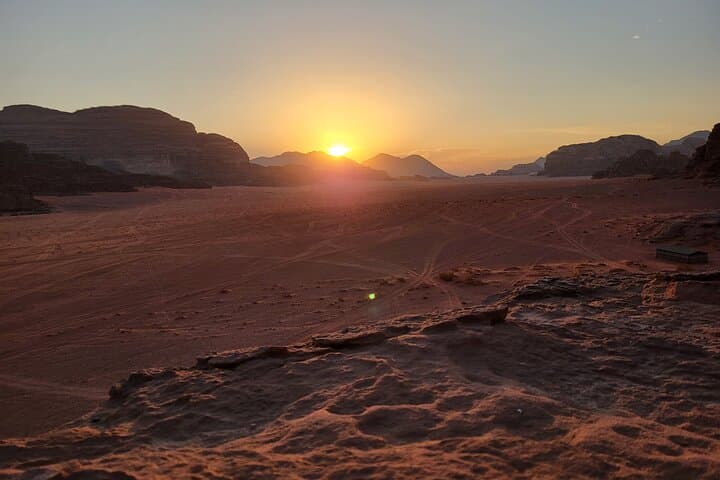
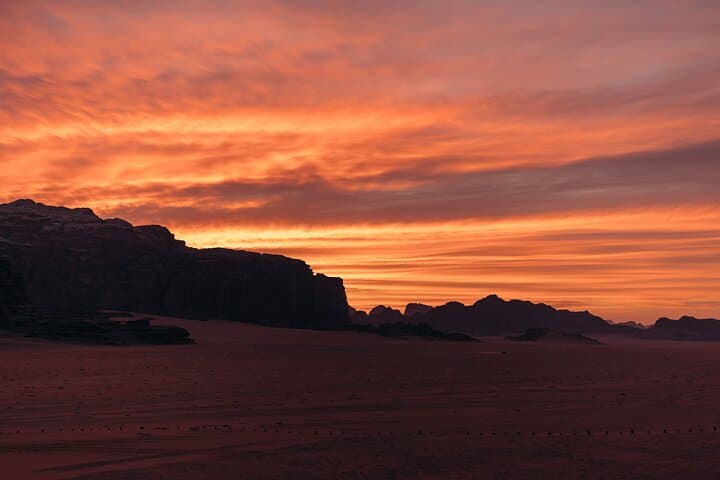
Before the sun clears the sandstone lip, a line of camels threads the red plain like punctuation marks on an enormous page. The animals shift and sigh; each step sends a small plume of ruby sand that the wind quickly sculpts away. On either horizon the desert decides whether it will flare into color or melt into indigo, and the rider’s pulse keeps time with that slow, inevitable change.
Verified experiences and guided adventures in the surrounding area.
Operated by Magic Bedouin Star Tours · Wadi Rum Village, Ma'an Governorate
Before the sun clears the sandstone lip, a line of camels threads the red plain like punctuation marks on an enormous page. The animals shift and sigh; each step sends a small plume of ruby sand that the wind quickly sculpts away. On either horizon the desert decides whether it will flare into color or melt into indigo, and the rider’s pulse keeps time with that slow, inevitable change.
Wadi Rum is not an empty stage. The cliffs here are Jurassic sandstone and granite, hollowed and plaited by wind and rare rain into vaulted corridors, mushroom caps and engine-sized arches. The valley has been a crossroads for millennia — Nabatean merchants carved inscriptions into Khazali and other canyons, and in the 20th century T.E. Lawrence rode these same tracks, writing of an open, uncompromising landscape. Bedouin families still live and work here; their tents, tea and stories shape the modern itinerary as much as the rock does.
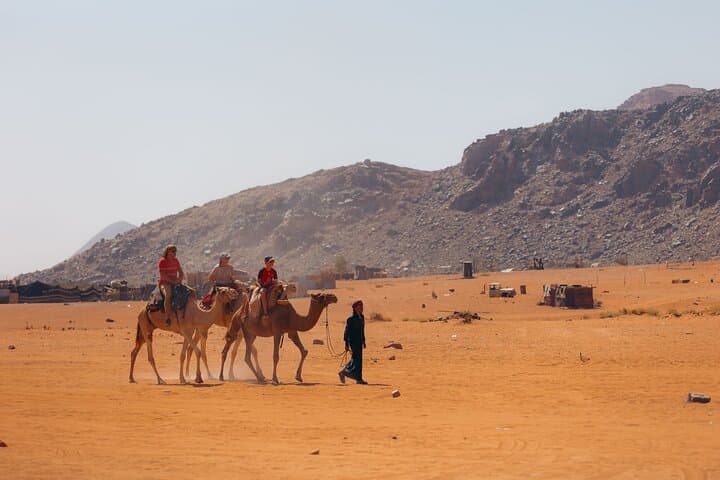
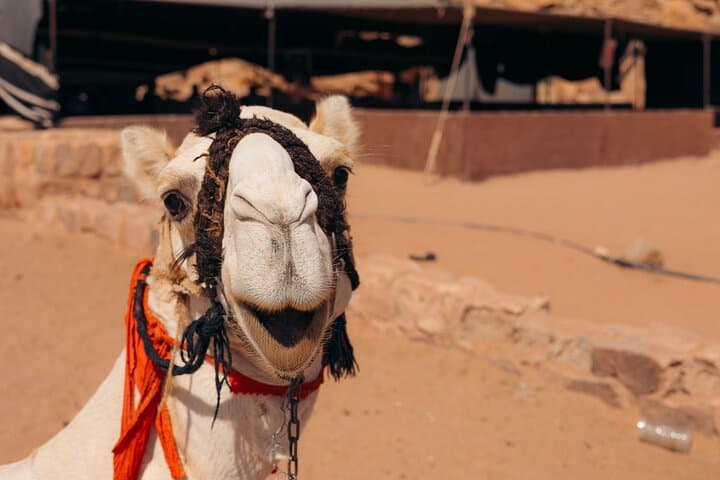
The Magic Bedouin Star tour pitches itself between poetry and logistics: a private, roughly three-hour outing that begins at the Wadi Rum Rest House and includes a short camel ride, traditional Bedouin tea and an English-speaking local guide. Camel saddles sway with a surprisingly steady rhythm that turns the desert into a slow-moving postcard — silhouettes against dunes, curling shadows on rock faces, and a sky that refuses to be ordinary.
For planning, timing is everything. Sunrise trips mean crisp air and soft pastels but require an early pick-up; sunset runs deliver richer color and warmer temperatures afterward, though light fades quickly. The Wadi Rum protected area charges a small entrance fee (5 JOD if you don’t have a Jordan Pass); the meeting point is the Wadi Rum Rest House where your guide Raad will pick you up by jeep.
Practicalities are simple but consequential: wear closed-toe shoes for shifting sand and rocky approaches, bring sun protection and a wind layer for pre-dawn or post-sunset chills, and bring a refillable bottle — bottled water is supplied, but extra is wise. The tour is rated easy for fitness, but it’s not suitable for travelers with serious spinal, heart or pregnancy-related concerns. Carry a small amount of cash for tips or extra tea.
The experience balances scenery and culture: ride, listen to the guide explain prehistoric etchings, sip sweet Bedouin tea, and remember to leave nothing behind but footprints. Wadi Rum asks you to move slowly — the landscape will reward patience with light you won’t forget.
easy.
3 hours.
Light fitness: able to mount/dismount a camel and walk short uneven stretches
Meet at the Wadi Rum Rest House near the Visitor Centre; your guide (often named Raad) will collect the group and coordinate the camel ride.
No; the 5 JOD protected-area fee is not included—show a Jordan Pass to waive it or pay on arrival.
Infants must sit on laps; small children can ride but supervision is required. The tour is otherwise suitable for most ages.
This booking covers one three-hour session. You can book additional trips but confirm availability with the operator.
The tour is not recommended for travelers with spinal injuries, pregnancy, or serious cardiovascular conditions—consult the operator before booking.
Arrive early, and plan for at least 20–30 minutes for composed shots at viewpoints; light changes quickly at sunrise and sunset.
Wadi Rum bears traces of Nabatean travelers and 20th-century episodes like T.E. Lawrence’s journeys; its rock inscriptions record centuries of passage.
Wadi Rum is a protected area—entrance fees support conservation and Bedouin community programs; stick to marked routes and avoid trampling biological soil crust.
Magic Bedouin Star Tours operates guided outdoor trips and adventures with an emphasis on safety, stewardship, and memorable experiences.
Before the sun clears the sandstone lip, a line of camels threads the red plain like punctuation marks on an enormous page. The animals shift and sigh; each step sends a small plume of ruby sand that the wind quickly sculpts away. On either horizon the desert decides whether it will flare into color or melt into indigo, and the rider’s pulse keeps time with that slow, inevitable change.
Before the sun clears the sandstone lip, a line of camels threads the red plain like punctuation marks on an enormous page. The animals shift and sigh; each step sends a small plume of ruby sand that the wind quickly sculpts away. On either horizon the desert decides whether it will flare into color or melt into indigo, and the rider’s pulse keeps time with that slow, inevitable change.
Wadi Rum is not an empty stage. The cliffs here are Jurassic sandstone and granite, hollowed and plaited by wind and rare rain into vaulted corridors, mushroom caps and engine-sized arches. The valley has been a crossroads for millennia — Nabatean merchants carved inscriptions into Khazali and other canyons, and in the 20th century T.E. Lawrence rode these same tracks, writing of an open, uncompromising landscape. Bedouin families still live and work here; their tents, tea and stories shape the modern itinerary as much as the rock does.
The Magic Bedouin Star tour pitches itself between poetry and logistics: a private, roughly three-hour outing that begins at the Wadi Rum Rest House and includes a short camel ride, traditional Bedouin tea and an English-speaking local guide. Camel saddles sway with a surprisingly steady rhythm that turns the desert into a slow-moving postcard — silhouettes against dunes, curling shadows on rock faces, and a sky that refuses to be ordinary.
For planning, timing is everything. Sunrise trips mean crisp air and soft pastels but require an early pick-up; sunset runs deliver richer color and warmer temperatures afterward, though light fades quickly. The Wadi Rum protected area charges a small entrance fee (5 JOD if you don’t have a Jordan Pass); the meeting point is the Wadi Rum Rest House where your guide Raad will pick you up by jeep.
Practicalities are simple but consequential: wear closed-toe shoes for shifting sand and rocky approaches, bring sun protection and a wind layer for pre-dawn or post-sunset chills, and bring a refillable bottle — bottled water is supplied, but extra is wise. The tour is rated easy for fitness, but it’s not suitable for travelers with serious spinal, heart or pregnancy-related concerns. Carry a small amount of cash for tips or extra tea.
The experience balances scenery and culture: ride, listen to the guide explain prehistoric etchings, sip sweet Bedouin tea, and remember to leave nothing behind but footprints. Wadi Rum asks you to move slowly — the landscape will reward patience with light you won’t forget.