THE ADVENTURE COLLECTIVE® · Independent discovery and booking for outdoor travel

Spend a half day driving across Wadi Rum’s ochre plains with Bedouin guides, hiking rock bridges and sharing desert tea. This 4–6 hour 4x4 tour mixes geology, Nabataean inscriptions and intimate cultural encounters.
Spend a half day driving across Wadi Rum’s ochre plains with Bedouin guides, hiking rock bridges and sharing desert tea. This 4–6 hour 4x4 tour mixes geology, Nabataean inscriptions and intimate cultural encounters.
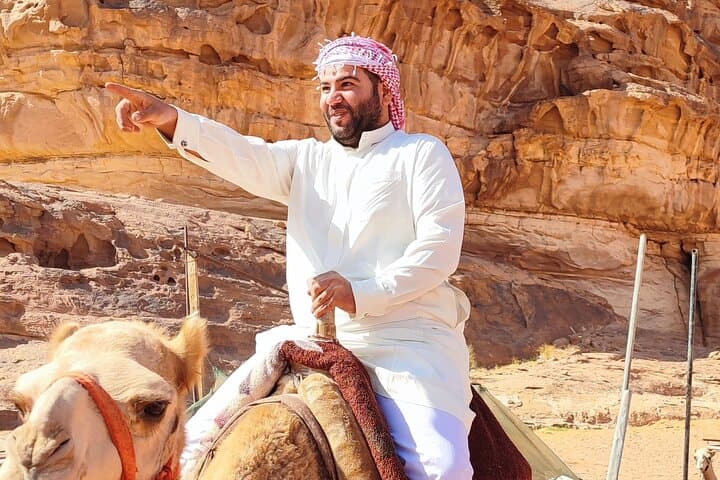
The sun breaks over the desert like a slow intent—first a pale smear, then a hard coin of light that sets the sandstone on fire. You stand at the edge of a flat plain and the silence answers: wind moving grains, the distant clink of stacked stones, the Bedouin guide shaking tea into a steaming pot. This is Wadi Rum, and for four to six hours the desert becomes a classroom of geology, history and old songs.
Verified experiences and guided adventures in the surrounding area.
Operated by Booking Shots Tourism Promotion Company (Head Branch) · Wadi Rum Village, Ma'an Governorate
The sun breaks over the desert like a slow intent—first a pale smear, then a hard coin of light that sets the sandstone on fire. You stand at the edge of a flat plain and the silence answers: wind moving grains, the distant clink of stacked stones, the Bedouin guide shaking tea into a steaming pot. This is Wadi Rum, and for four to six hours the desert becomes a classroom of geology, history and old songs.
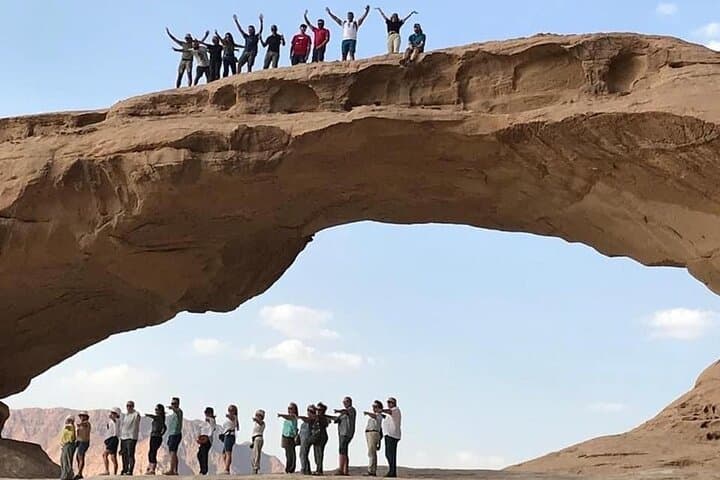
Your route threads through a sculpted landscape: ribbed quartz sandstone rising from ochre sand, granite outcrops pocked by time, and narrow canyons where inscriptions echo human passage. The guide navigates in a 4x4, easing up to vantage points like Lawrence’s House and the Seven Pillars, then stops so you can feel the scale—an arch fifteen meters above ground, a mushroom rock offering shade, a cleft lined with Nabataean and Thamudic engravings.
Wadi Rum’s story is layered. Beneath the sand lies a deep geological history—Cambrian sandstones sitting on much older granite—and human occupation that stretches back to caravan routes and Nabataean traders. T. E. Lawrence wrote one chapter here; film crews have borrowed its Martian skins for Hollywood. But the real keepers of the place are the Bedouin: families who read the wind, bake lafa bread over coals, and play the rebab as dusk settles.
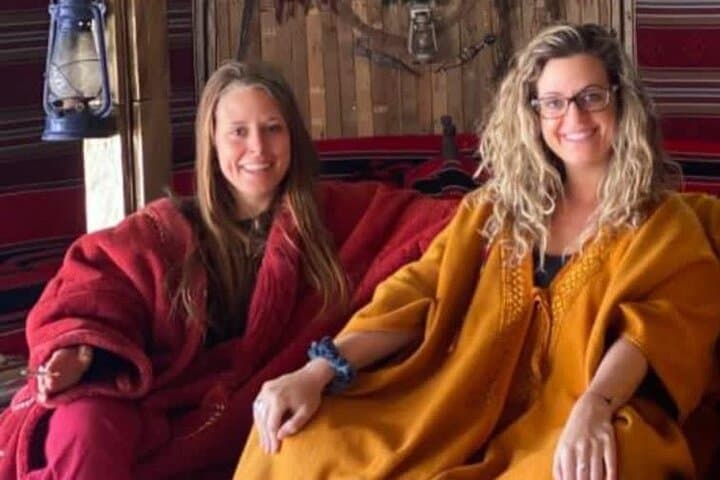
Culture is tactile: you’ll be offered tea, shown how to press dough into flatbread, and invited to listen to a poem. Language matters; a few Arabic phrases—marhaba, shukran, mayya—open smiles and stories.
Practicalities are straightforward. Tours run 4–6 hours by 4x4, suitable for most fitness levels but expect short scrambles to reach viewpoints (Burdah rock bridge is steep). Best times are sunrise and late afternoon when temperatures ease and light sculpts the canyons. Bring at least 2 liters of water, sun protection, and sturdy shoes with grip for sand and rock. Vehicles are air-conditioned for transfers, and snacks or a simple Bedouin meal are typically included.
Respect matters: avoid adding to cairns or touching fragile rock art, keep rubbish with you, and ask before photographing people. If you have mobility concerns, ask about accessibility—some stops are easy from the vehicle, others require climbing.
By day's end the desert has a rhythm: tea, conversation, a panoramic hush. You leave with sand in your boots and a clearer sense of how Wadi Rum shapes those who travel through it—both a landscape of extremes and a place where hospitality is as natural as the wind.
moderate.
4–6 hours.
Suitable for reasonably fit travelers who can manage short steep scrambles and uneven rock surfaces; not demanding endurance-wise.
This experience runs about 4–6 hours depending on stops; expect several 20–30 minute walks and multiple short photo breaks.
No—guides lead all navigation. Basic mobility for short climbs is helpful but the tour accommodates many fitness levels.
Yes—bottled water, Bedouin tea and a traditional meal (breakfast, lunch or dinner depending on departure) are included.
This tour is a day experience; ask your operator about extended or overnight camp options to sleep under the stars.
Some viewpoints are reachable by vehicle, but many sites require walking on uneven ground; contact the operator to confirm accessibility details for specific stops.
Tipping is customary—small cash gestures for guides and drivers are appreciated and support local families.
Wadi Rum has served as a caravan corridor for millennia; its inscriptions and waymarkers record Nabataean and Islamic-era travelers, while T. E. Lawrence put it on 20th-century maps.
Wadi Rum is a protected area—stay on established tracks, avoid touching rock art, and follow guides’ instructions to minimize impact on fragile desert ecosystems.
Booking Shots Tourism Promotion Company (Head Branch) operates guided outdoor trips and adventures with an emphasis on safety, stewardship, and memorable experiences.
The sun breaks over the desert like a slow intent—first a pale smear, then a hard coin of light that sets the sandstone on fire. You stand at the edge of a flat plain and the silence answers: wind moving grains, the distant clink of stacked stones, the Bedouin guide shaking tea into a steaming pot. This is Wadi Rum, and for four to six hours the desert becomes a classroom of geology, history and old songs.
The sun breaks over the desert like a slow intent—first a pale smear, then a hard coin of light that sets the sandstone on fire. You stand at the edge of a flat plain and the silence answers: wind moving grains, the distant clink of stacked stones, the Bedouin guide shaking tea into a steaming pot. This is Wadi Rum, and for four to six hours the desert becomes a classroom of geology, history and old songs.
Your route threads through a sculpted landscape: ribbed quartz sandstone rising from ochre sand, granite outcrops pocked by time, and narrow canyons where inscriptions echo human passage. The guide navigates in a 4x4, easing up to vantage points like Lawrence’s House and the Seven Pillars, then stops so you can feel the scale—an arch fifteen meters above ground, a mushroom rock offering shade, a cleft lined with Nabataean and Thamudic engravings.
Wadi Rum’s story is layered. Beneath the sand lies a deep geological history—Cambrian sandstones sitting on much older granite—and human occupation that stretches back to caravan routes and Nabataean traders. T. E. Lawrence wrote one chapter here; film crews have borrowed its Martian skins for Hollywood. But the real keepers of the place are the Bedouin: families who read the wind, bake lafa bread over coals, and play the rebab as dusk settles.
Culture is tactile: you’ll be offered tea, shown how to press dough into flatbread, and invited to listen to a poem. Language matters; a few Arabic phrases—marhaba, shukran, mayya—open smiles and stories.
Practicalities are straightforward. Tours run 4–6 hours by 4x4, suitable for most fitness levels but expect short scrambles to reach viewpoints (Burdah rock bridge is steep). Best times are sunrise and late afternoon when temperatures ease and light sculpts the canyons. Bring at least 2 liters of water, sun protection, and sturdy shoes with grip for sand and rock. Vehicles are air-conditioned for transfers, and snacks or a simple Bedouin meal are typically included.
Respect matters: avoid adding to cairns or touching fragile rock art, keep rubbish with you, and ask before photographing people. If you have mobility concerns, ask about accessibility—some stops are easy from the vehicle, others require climbing.
By day's end the desert has a rhythm: tea, conversation, a panoramic hush. You leave with sand in your boots and a clearer sense of how Wadi Rum shapes those who travel through it—both a landscape of extremes and a place where hospitality is as natural as the wind.