THE ADVENTURE COLLECTIVE® · Independent discovery and booking for outdoor travel

Spend a night in a family-run Bedouin camp in Wadi Rum—private tents, a communal dinner and breakfast, and a telescope-ruled sky. This two-day stay combines traditional hospitality with easy access to the desert’s dramatic rock formations.
Spend a night in a family-run Bedouin camp in Wadi Rum—private tents, a communal dinner and breakfast, and a telescope-ruled sky. This two-day stay combines traditional hospitality with easy access to the desert’s dramatic rock formations.
You arrive at Wadi Rum Village as the last light thins, the hum of engines replaced by a wide, breathing quiet. A short 7 km ride in a 4x4 takes you away from the single-track road and into a bowl of red sandstone and granite towers. The camp sits low in the sand, a cluster of low-profile Bedouin tents under a sky that seems to expand as daylight leaves the horizon. By night the communal tent glows with lamps, a buffet spread, and the slow drum of music where you might learn the dabke step while stars crowd the spaces between rock ribs.
Verified experiences and guided adventures in the surrounding area.
Operated by Desert Moon Camp · Wadi Rum Village, Aqaba Governorate
You arrive at Wadi Rum Village as the last light thins, the hum of engines replaced by a wide, breathing quiet. A short 7 km ride in a 4x4 takes you away from the single-track road and into a bowl of red sandstone and granite towers. The camp sits low in the sand, a cluster of low-profile Bedouin tents under a sky that seems to expand as daylight leaves the horizon. By night the communal tent glows with lamps, a buffet spread, and the slow drum of music where you might learn the dabke step while stars crowd the spaces between rock ribs.
Wadi Rum is a geological gallery: wind-polished sandstone cliffs and igneous intrusions carved across millions of years. The valley’s rock faces show layers of ancient sea beds and desert varnish; it’s the same landscape that Omar Sharif and T.E. Lawrence made world-famous. Bedouin families have lived here for generations, guiding travelers and sharing a campsite lifestyle where the tent—private for sleeping but communal for dinner—remains central.
At this family-run camp you sleep in a private traditional tent with shared bathrooms and hot water, and you’ll eat a dinner and breakfast buffet served in the large communal tent. The hosts offer modern touches—Wi‑Fi and a telescope for stargazing—while still keeping the rhythms of Bedouin hospitality: coffee poured slowly, stories told around a campfire, and music that invites you to stand up and join.
Practicalities: this is a two-day, one-night experience. Expect a moderate level of fitness—the booking advises that it’s not suitable for those with significant spinal, heart, or pregnancy-related conditions. Groups are small (up to eight people) and pickup is at the Wadi Rum Village parking lot next to the Rest House. The camp sits within the Wadi Rum protected area, and most transfers are by jeep on sandy tracks; plan for dust and uneven surfaces.
Timing and weather matter. Desert days can be very hot in summer and cold at night in winter; layers and sun protection are essential. Bring a reusable water bottle (refill provided), sturdy shoes for rock and sand, and earplugs if you prefer a quieter night away from the communal fire. If you want the clearest skies, aim for new-moon windows and the shoulder seasons: spring and fall offer comfortable days and crisp, photogenic nights.
This is an experiential stay more than a luxury product—expect simple comfort, warm hospitality, and a theater of rock and sky outside your tent. It’s an accessible way to sleep under desert stars while learning how living traditions endure in one of Jordan’s most elemental landscapes.
moderate.
2 days (approx. 48 hours).
Moderate fitness—able to board a 4x4, walk on sand and uneven rock, and manage a basic camp environment.
Sleeping accommodations are private Bedouin tents; bathrooms are shared with hot water available.
Yes, the family-run camp offers Wi‑Fi, though speeds may be limited compared with urban areas.
Meet at the Wadi Rum Village parking lot next to the Wadi Rum Rest House—hosts pick up guests there for the 4x4 transfer to camp.
Hosts provide a dinner and breakfast buffet—notify the operator at booking for common dietary needs and they will accommodate where possible.
The tour advises it is not recommended for pregnant travelers or those with significant spinal or cardiovascular conditions.
Daytime can be hot and sun-exposed; nights are cool to cold—bring sun protection for the day and warm layers after sunset.
Wadi Rum has been inhabited by Bedouin groups for millennia and became internationally known through T.E. Lawrence and film productions that used its otherworldly landscape.
The camp operates inside the Wadi Rum protected area—visitors are encouraged to follow Leave No Trace principles and avoid off-track driving to protect fragile desert soils.
Desert Moon Camp operates guided outdoor trips and adventures with an emphasis on safety, stewardship, and memorable experiences.
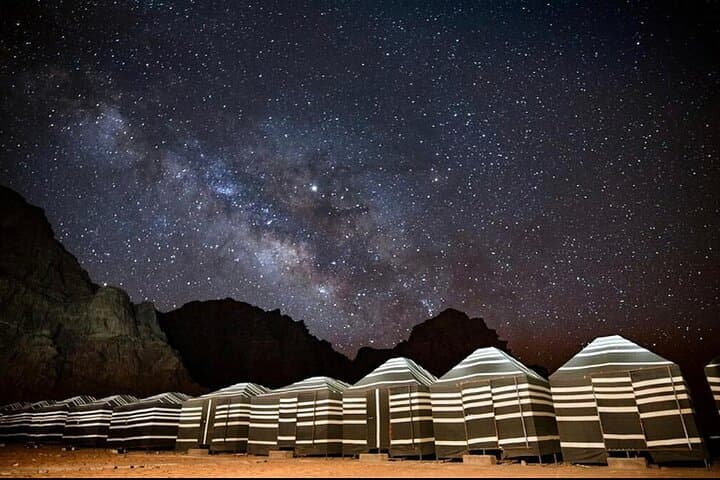
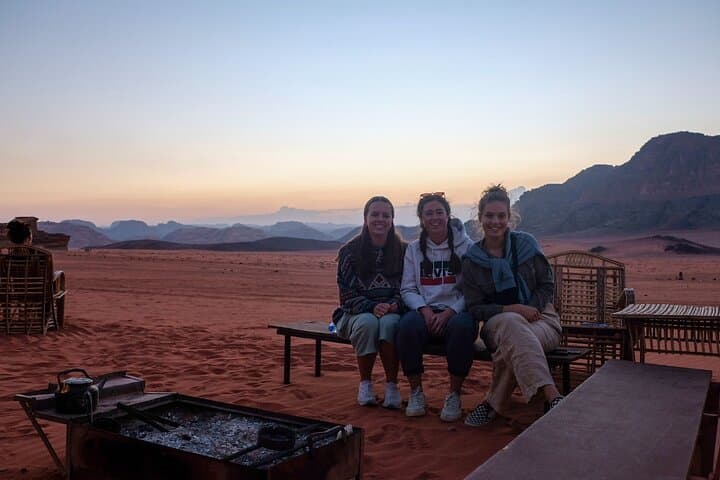
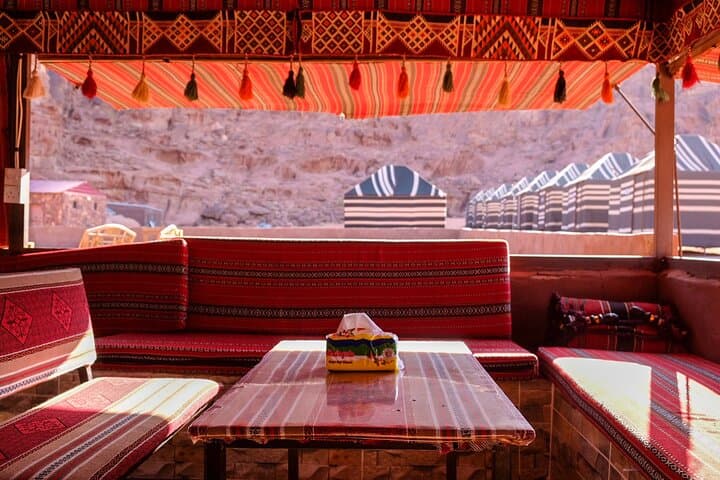
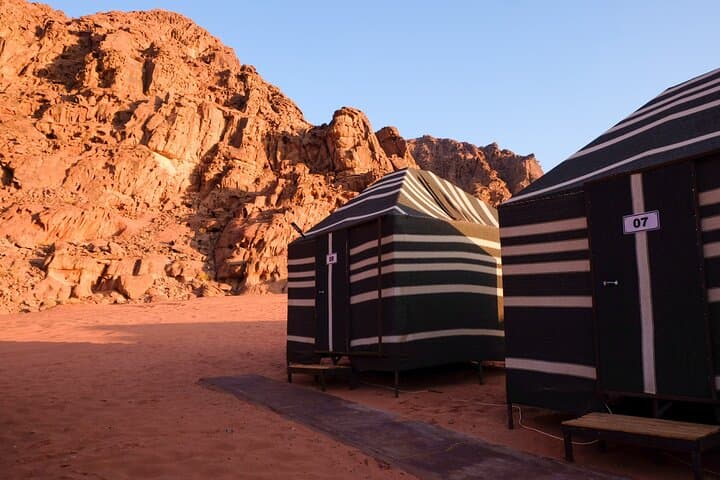
You arrive at Wadi Rum Village as the last light thins, the hum of engines replaced by a wide, breathing quiet. A short 7 km ride in a 4x4 takes you away from the single-track road and into a bowl of red sandstone and granite towers. The camp sits low in the sand, a cluster of low-profile Bedouin tents under a sky that seems to expand as daylight leaves the horizon. By night the communal tent glows with lamps, a buffet spread, and the slow drum of music where you might learn the dabke step while stars crowd the spaces between rock ribs.
You arrive at Wadi Rum Village as the last light thins, the hum of engines replaced by a wide, breathing quiet. A short 7 km ride in a 4x4 takes you away from the single-track road and into a bowl of red sandstone and granite towers. The camp sits low in the sand, a cluster of low-profile Bedouin tents under a sky that seems to expand as daylight leaves the horizon. By night the communal tent glows with lamps, a buffet spread, and the slow drum of music where you might learn the dabke step while stars crowd the spaces between rock ribs.
Wadi Rum is a geological gallery: wind-polished sandstone cliffs and igneous intrusions carved across millions of years. The valley’s rock faces show layers of ancient sea beds and desert varnish; it’s the same landscape that Omar Sharif and T.E. Lawrence made world-famous. Bedouin families have lived here for generations, guiding travelers and sharing a campsite lifestyle where the tent—private for sleeping but communal for dinner—remains central.
At this family-run camp you sleep in a private traditional tent with shared bathrooms and hot water, and you’ll eat a dinner and breakfast buffet served in the large communal tent. The hosts offer modern touches—Wi‑Fi and a telescope for stargazing—while still keeping the rhythms of Bedouin hospitality: coffee poured slowly, stories told around a campfire, and music that invites you to stand up and join.
Practicalities: this is a two-day, one-night experience. Expect a moderate level of fitness—the booking advises that it’s not suitable for those with significant spinal, heart, or pregnancy-related conditions. Groups are small (up to eight people) and pickup is at the Wadi Rum Village parking lot next to the Rest House. The camp sits within the Wadi Rum protected area, and most transfers are by jeep on sandy tracks; plan for dust and uneven surfaces.
Timing and weather matter. Desert days can be very hot in summer and cold at night in winter; layers and sun protection are essential. Bring a reusable water bottle (refill provided), sturdy shoes for rock and sand, and earplugs if you prefer a quieter night away from the communal fire. If you want the clearest skies, aim for new-moon windows and the shoulder seasons: spring and fall offer comfortable days and crisp, photogenic nights.
This is an experiential stay more than a luxury product—expect simple comfort, warm hospitality, and a theater of rock and sky outside your tent. It’s an accessible way to sleep under desert stars while learning how living traditions endure in one of Jordan’s most elemental landscapes.