THE ADVENTURE COLLECTIVE® · Independent discovery and booking for outdoor travel

From Aqaba’s shoreline to the rose-red façade of Petra, this two-day private loop pairs a Wadi Rum jeep safari and a deluxe desert camp with a guided visit to Petra. Expect desert panoramas, Nabataean history, and practical logistics designed for travelers on a tight schedule.
From Aqaba’s shoreline to the rose-red façade of Petra, this two-day private loop pairs a Wadi Rum jeep safari and a deluxe desert camp with a guided visit to Petra. Expect desert panoramas, Nabataean history, and practical logistics designed for travelers on a tight schedule.
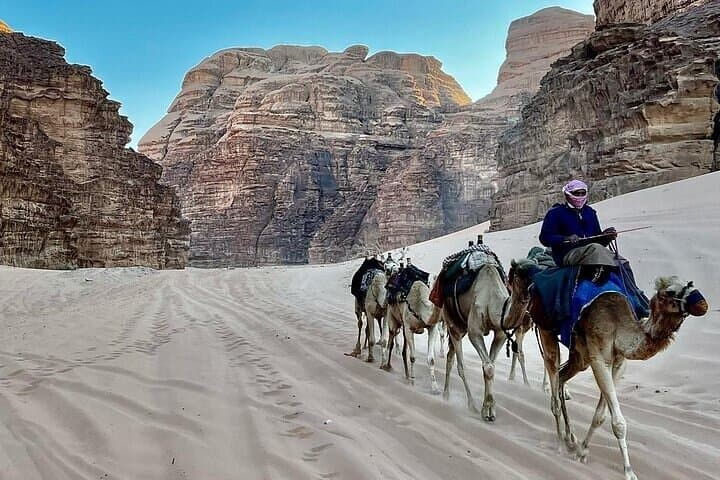
The engine hushes as the highway drops away and the horizon opens to sandstone towers that seem to stand in deliberate formation. From Aqaba, a two-hour drive folds the Red Sea’s heat into a dryer breath; Wadi Rum arrives like a landscape that learned to sculpt itself. Jeep tires crunch over ancient alluvium while a Bedouin guide points out faint petroglyphs and the flat shadows that mark ancestral camps. That first evening, a deluxe tent awaits with hot food and a sky that pulls constellations low enough to plan routes by.
Verified experiences and guided adventures in the surrounding area.
Operated by Bridge Travel · Wadi Rum Village, Aqaba Governorate
The engine hushes as the highway drops away and the horizon opens to sandstone towers that seem to stand in deliberate formation. From Aqaba, a two-hour drive folds the Red Sea’s heat into a dryer breath; Wadi Rum arrives like a landscape that learned to sculpt itself. Jeep tires crunch over ancient alluvium while a Bedouin guide points out faint petroglyphs and the flat shadows that mark ancestral camps. That first evening, a deluxe tent awaits with hot food and a sky that pulls constellations low enough to plan routes by.
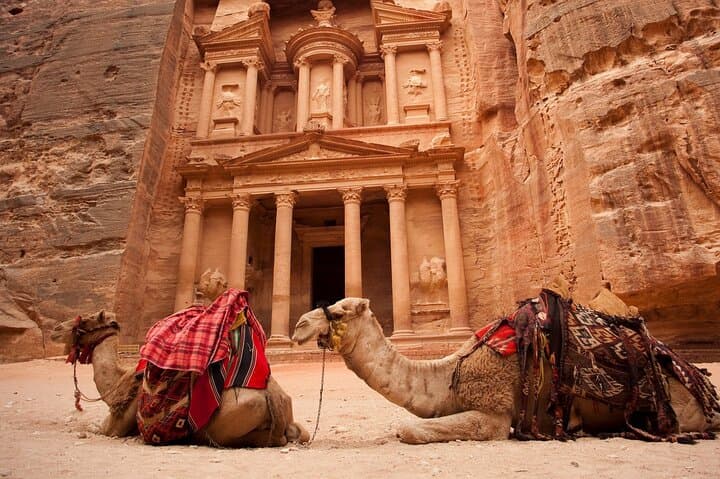
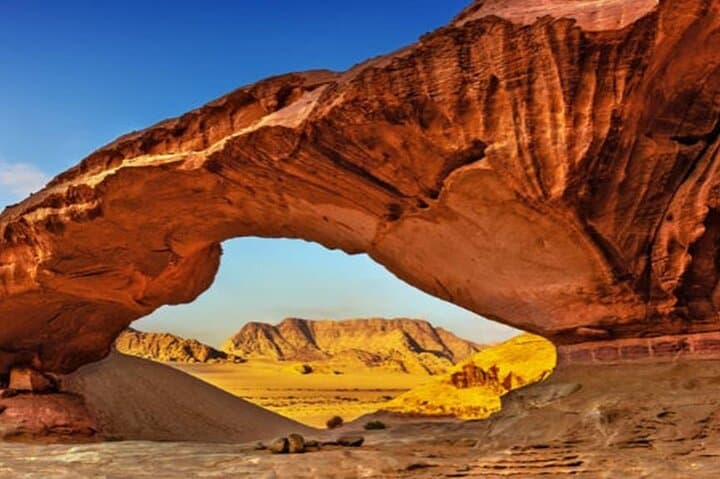
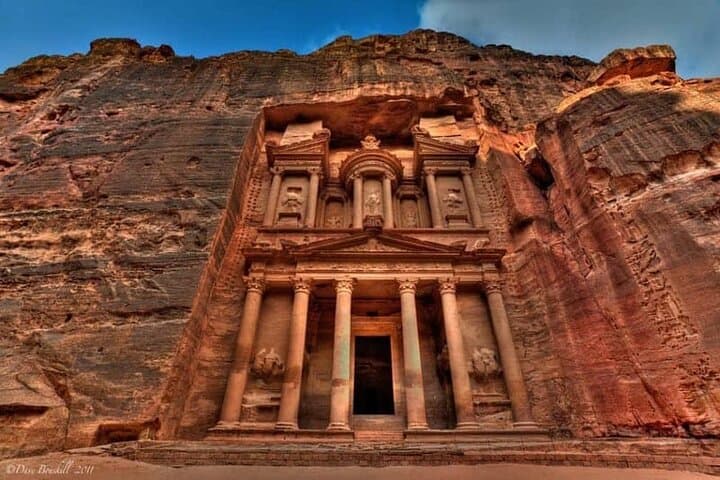
Geology here reads like a slow-motion clock: wind and seasonal flash floods have hollowed sandstone into arches, bridges and the narrow, thirsty canyons that give Wadi Rum its contained drama. The next day shifts the scale. Petra, carved into sandstone cliffs by the Nabataeans, opens after a 1.2-kilometer walk through the Siq—an angled slit that narrows and then spills you out in front of the Treasury’s scarified façade. Petra’s red and pink strata are less ornamental than geological record; layers speak of ancient seas, then uplift, then centuries of human hands chiseling tombs and theaters.
Culture is ever-present: Bedouin hospitality in Wadi Rum—tea poured into chipped glasses by firelight—and the Nabataean ingenuity that turned a mountain-ringed basin into a trading capital. Lawrence of Arabia arrived here and left traces of romantic myth; the real story is older, told in graffiti, tombs and the shepherding routes still used by local families.
Practical overview: the itinerary includes private pickup in Aqaba, a two-hour guided jeep safari in Wadi Rum, one night in a deluxe desert tent with dinner and breakfast, and a guided two-hour visit inside Petra. Expect moderate activity — dusty jeep rides, short hikes in the desert, and uneven stone steps and packed-sand walking in Petra. The Siq is about 1.2 km; if you want to reach the Monastery, add a steep climb of roughly 800 steps and 30–60 minutes.
Tips for planning: arrive in Aqaba the night before to avoid border delays; buy a Jordan Pass if you plan to visit Petra independently—it often covers entry. Pack sturdy walking shoes, sun protection, and a refillable water bottle; temperatures swing dramatically between day and night. Timing matters: Wadi Rum sunsets are the sharpest light you’ll get, while Petra is quietest at first light. Respect local customs—modest dress is advised in public and in villages—and support Bedouin-run camps when possible to ensure tourism benefits local communities.
This two-day loop is compact but rewarding: one night sleeping on desert soil, a full day of carved history, and two landscapes that, together, make Jordan feel like a country of geological and human scale.
moderate.
2 days (approx. 48 hours).
Moderate fitness—able to handle uneven terrain, short hikes and dusty jeep rides; not suited for those with serious mobility limits.
Yes—private pickup from hotels in Aqaba or from the Wadi Araba border crossing is included; confirm your pickup point when booking.
Admission fees may not be included by default; check booking options—many travelers purchase the Jordan Pass to cover Petra entry and several other sites.
Deluxe tents typically have comfortable beds, shared or private facilities depending on the camp, and meals; standards vary between camps so ask about private bathrooms if required.
Expect at least 1–2 kilometers round-trip to see the Treasury via the Siq; reaching the Monastery adds a strenuous climb of roughly 800 stone steps.
Yes—the safari is an off-road experience across dunes and rock valleys; it’s thrilling but can be rough for those with back issues.
Tipping is customary—small amounts for your driver and guide are appreciated; camps often expect a modest tip for staff handling meals and tents.
Petra was the capital of the Nabataean kingdom and a vital caravan hub; Wadi Rum hosts Bedouin tribes and features inscriptions dating back millennia, later popularized by Lawrence of Arabia.
Tourism in both sites is managed to protect sandstone surfaces and archaeological remains—stick to marked routes, avoid touching carvings, and favor locally run camps to support conservation-minded stewardship.
Bridge Travel operates guided outdoor trips and adventures with an emphasis on safety, stewardship, and memorable experiences.
The engine hushes as the highway drops away and the horizon opens to sandstone towers that seem to stand in deliberate formation. From Aqaba, a two-hour drive folds the Red Sea’s heat into a dryer breath; Wadi Rum arrives like a landscape that learned to sculpt itself. Jeep tires crunch over ancient alluvium while a Bedouin guide points out faint petroglyphs and the flat shadows that mark ancestral camps. That first evening, a deluxe tent awaits with hot food and a sky that pulls constellations low enough to plan routes by.
The engine hushes as the highway drops away and the horizon opens to sandstone towers that seem to stand in deliberate formation. From Aqaba, a two-hour drive folds the Red Sea’s heat into a dryer breath; Wadi Rum arrives like a landscape that learned to sculpt itself. Jeep tires crunch over ancient alluvium while a Bedouin guide points out faint petroglyphs and the flat shadows that mark ancestral camps. That first evening, a deluxe tent awaits with hot food and a sky that pulls constellations low enough to plan routes by.
Geology here reads like a slow-motion clock: wind and seasonal flash floods have hollowed sandstone into arches, bridges and the narrow, thirsty canyons that give Wadi Rum its contained drama. The next day shifts the scale. Petra, carved into sandstone cliffs by the Nabataeans, opens after a 1.2-kilometer walk through the Siq—an angled slit that narrows and then spills you out in front of the Treasury’s scarified façade. Petra’s red and pink strata are less ornamental than geological record; layers speak of ancient seas, then uplift, then centuries of human hands chiseling tombs and theaters.
Culture is ever-present: Bedouin hospitality in Wadi Rum—tea poured into chipped glasses by firelight—and the Nabataean ingenuity that turned a mountain-ringed basin into a trading capital. Lawrence of Arabia arrived here and left traces of romantic myth; the real story is older, told in graffiti, tombs and the shepherding routes still used by local families.
Practical overview: the itinerary includes private pickup in Aqaba, a two-hour guided jeep safari in Wadi Rum, one night in a deluxe desert tent with dinner and breakfast, and a guided two-hour visit inside Petra. Expect moderate activity — dusty jeep rides, short hikes in the desert, and uneven stone steps and packed-sand walking in Petra. The Siq is about 1.2 km; if you want to reach the Monastery, add a steep climb of roughly 800 steps and 30–60 minutes.
Tips for planning: arrive in Aqaba the night before to avoid border delays; buy a Jordan Pass if you plan to visit Petra independently—it often covers entry. Pack sturdy walking shoes, sun protection, and a refillable water bottle; temperatures swing dramatically between day and night. Timing matters: Wadi Rum sunsets are the sharpest light you’ll get, while Petra is quietest at first light. Respect local customs—modest dress is advised in public and in villages—and support Bedouin-run camps when possible to ensure tourism benefits local communities.
This two-day loop is compact but rewarding: one night sleeping on desert soil, a full day of carved history, and two landscapes that, together, make Jordan feel like a country of geological and human scale.