THE ADVENTURE COLLECTIVE® · Independent discovery and booking for outdoor travel

Four hours across Wadi Rum packs red dunes, narrow canyons, ancient inscriptions and Bedouin tea into a compact jeep tour. Ideal for travelers short on time, the route combines geology, culture and easily accessible viewpoints.
Four hours across Wadi Rum packs red dunes, narrow canyons, ancient inscriptions and Bedouin tea into a compact jeep tour. Ideal for travelers short on time, the route combines geology, culture and easily accessible viewpoints.
You arrive at the Rest House as the desert breathes—cool in the morning, warm at sunset—jeeps lined like low-slung metal beetles waiting to punch through red sand. The guide offers a steaming cup of Bedouin tea, and for a moment the day is measured in sips: bitter, sweet, and the promise of places carved by wind and time.
Verified experiences and guided adventures in the surrounding area.
Operated by Wadi Rum Classic Tours · Wadi Rum Village, Aqaba Governorate
You arrive at the Rest House as the desert breathes—cool in the morning, warm at sunset—jeeps lined like low-slung metal beetles waiting to punch through red sand. The guide offers a steaming cup of Bedouin tea, and for a moment the day is measured in sips: bitter, sweet, and the promise of places carved by wind and time.
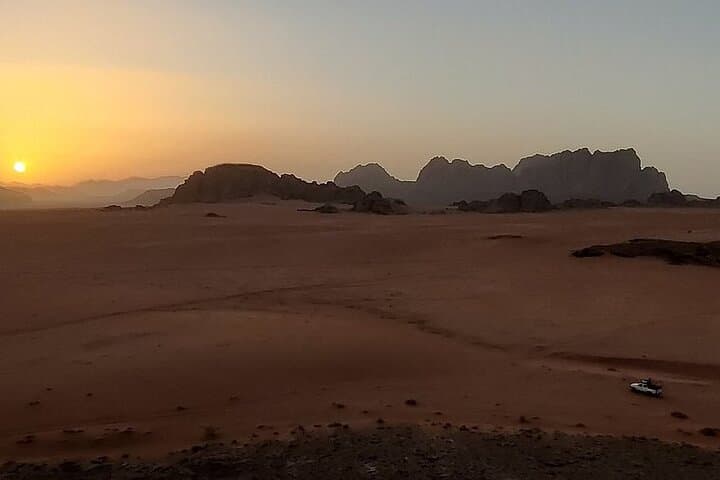
The four-hour loop that follows moves at desert pace but covers a surprising variety of landscapes. Granite and sandstone heights shear into narrow canyons; iron-rich dunes blush an intense red; a thin ribbon of green at Lawrence Spring surprises the eye where water clings to life. Driving routes trace the same corridors used by Nabatean caravans and, later, TE Lawrence—his name hangs over the landscape more as a storytelling peg than a single history. Petroglyphs and Thamudic inscriptions in Khazali Canyon register human presence in a place shaped first by geology and then by movement across it.
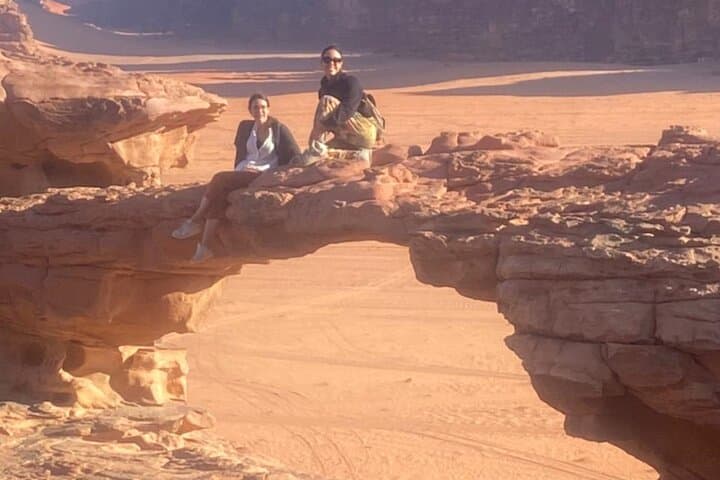
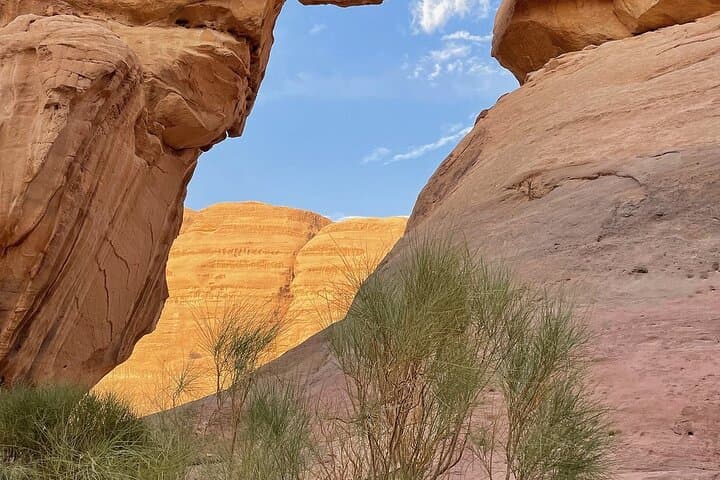
Geologically, Wadi Rum is a museum of erosion. Flat-lying sandstone interleaved with harder sills has been sculpted over millions of years into bridges, cliffs, and natural arches. The red sand owes its color to oxidized iron; when wind rides the dunes it polishes the rocks and pinches out delicate inscriptions in sheltered alcoves.
Culturally, the tour is compact Bedouin hospitality: short visits to a tent, tea around an open fire, and conversation that folds modern life into nomadic memory. Guides point out water-collection bottles hung for birds in Abu Khashaba and explain how stone cairns once marked caravan routes—practical markers that predate maps.
Practical guidance: wear sturdy closed shoes—the soft sand and rock scrambles demand grip. Expect 4 hours from meeting to drop-off; morning runs cooler for walks through canyons, while sunset trips concentrate on viewpoints and photos. Bring at least 1 liter of water (the supplier provides bottled water), sun protection, and a light layer for early mornings or the post-sunset chill. The tour is short but active, with short hikes of 10–40 minutes at sites like Khazali Canyon, the Red Sand Dune, and Umm Fruth Rock Bridge.
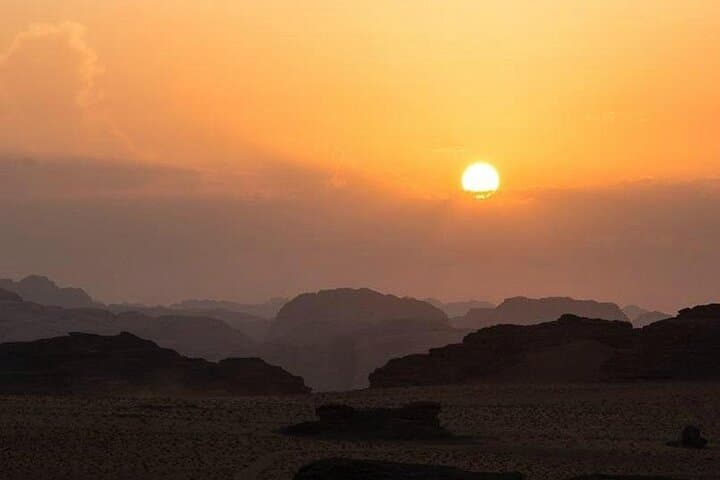
This itinerary suits travelers short on time who want a concentrated introduction to Wadi Rum’s geology, history, and living Bedouin culture. Guides pace the tour for mixed fitness levels but note it’s not recommended for people with serious back or heart conditions. For photographers, golden hour at the sunset viewpoint and the broad sweep from the red dune deliver the best light; for families, Little Bridge offers dramatic photos with minimal climbing.
Leave no trace: the desert recovers slowly—pack out what you bring, stay on established paths around petroglyphs, and ask before photographing people in camp. When the jeep pulls back into the village and you sip a last cup of tea, the desert has already shifted its shape again—quiet, patient, with routes that invite another return.
moderate.
4 hours.
Suitable for travelers with average fitness; involves short hikes on soft sand and uneven rock
The tour is four hours and meets at the Wadi Rum Rest House in Rum Village; drop-off is back at the same point.
Yes—routes include brief, easy walks and family-friendly stops like Little Bridge; however, those with serious mobility limits should check with the operator first.
Bring sun protection, a light layer for the cooler parts of the day, closed-toe shoes, and a reusable water bottle; bottled water and tea are provided.
Yes—running or sandboarding down the dune is a common activity; if you want to sandboard, confirm equipment availability when booking.
The standard tour includes transfers around Wadi Rum but not national park permit fees; check with the operator for current permit policy.
Yes—guides are typically local Bedouin drivers who combine knowledge of the landscape with cultural insights and hospitality.
Wadi Rum’s corridors served as caravan routes for millennia; later the area became linked to TE Lawrence and 20th-century desert narratives.
The desert ecosystem is fragile—stay on established tracks, avoid touching petroglyphs, and minimize plastic waste to reduce long-term impact.
Wadi Rum Classic Tours operates guided outdoor trips and adventures with an emphasis on safety, stewardship, and memorable experiences.
You arrive at the Rest House as the desert breathes—cool in the morning, warm at sunset—jeeps lined like low-slung metal beetles waiting to punch through red sand. The guide offers a steaming cup of Bedouin tea, and for a moment the day is measured in sips: bitter, sweet, and the promise of places carved by wind and time.
You arrive at the Rest House as the desert breathes—cool in the morning, warm at sunset—jeeps lined like low-slung metal beetles waiting to punch through red sand. The guide offers a steaming cup of Bedouin tea, and for a moment the day is measured in sips: bitter, sweet, and the promise of places carved by wind and time.
The four-hour loop that follows moves at desert pace but covers a surprising variety of landscapes. Granite and sandstone heights shear into narrow canyons; iron-rich dunes blush an intense red; a thin ribbon of green at Lawrence Spring surprises the eye where water clings to life. Driving routes trace the same corridors used by Nabatean caravans and, later, TE Lawrence—his name hangs over the landscape more as a storytelling peg than a single history. Petroglyphs and Thamudic inscriptions in Khazali Canyon register human presence in a place shaped first by geology and then by movement across it.
Geologically, Wadi Rum is a museum of erosion. Flat-lying sandstone interleaved with harder sills has been sculpted over millions of years into bridges, cliffs, and natural arches. The red sand owes its color to oxidized iron; when wind rides the dunes it polishes the rocks and pinches out delicate inscriptions in sheltered alcoves.
Culturally, the tour is compact Bedouin hospitality: short visits to a tent, tea around an open fire, and conversation that folds modern life into nomadic memory. Guides point out water-collection bottles hung for birds in Abu Khashaba and explain how stone cairns once marked caravan routes—practical markers that predate maps.
Practical guidance: wear sturdy closed shoes—the soft sand and rock scrambles demand grip. Expect 4 hours from meeting to drop-off; morning runs cooler for walks through canyons, while sunset trips concentrate on viewpoints and photos. Bring at least 1 liter of water (the supplier provides bottled water), sun protection, and a light layer for early mornings or the post-sunset chill. The tour is short but active, with short hikes of 10–40 minutes at sites like Khazali Canyon, the Red Sand Dune, and Umm Fruth Rock Bridge.
This itinerary suits travelers short on time who want a concentrated introduction to Wadi Rum’s geology, history, and living Bedouin culture. Guides pace the tour for mixed fitness levels but note it’s not recommended for people with serious back or heart conditions. For photographers, golden hour at the sunset viewpoint and the broad sweep from the red dune deliver the best light; for families, Little Bridge offers dramatic photos with minimal climbing.
Leave no trace: the desert recovers slowly—pack out what you bring, stay on established paths around petroglyphs, and ask before photographing people in camp. When the jeep pulls back into the village and you sip a last cup of tea, the desert has already shifted its shape again—quiet, patient, with routes that invite another return.