THE ADVENTURE COLLECTIVE® · Independent discovery and booking for outdoor travel

Cover Wadi Rum’s iconic sites in a compact 2‑hour jeep tour — Lawrence Spring, Khazali Canyon, the Red Sand Dune, and Bedouin hospitality. Perfect for short itineraries, with morning and sunset options for different light and temperatures.
Cover Wadi Rum’s iconic sites in a compact 2‑hour jeep tour — Lawrence Spring, Khazali Canyon, the Red Sand Dune, and Bedouin hospitality. Perfect for short itineraries, with morning and sunset options for different light and temperatures.
The jeep jerks over corrugated sand and suddenly the world opens — a low horizon of red rock, slabs of sandstone carved into arches and towers, and the wind arranging dunes like a restless audience. On a 2‑hour tour through Wadi Rum, the landscape is both stage and actor: red dunes shift underfoot, a spring insists on pooling where you least expect it, and canyons keep quiet watch over millennia of human marks.
Verified experiences and guided adventures in the surrounding area.
Operated by Wadi Rum Classic Tours · Wadi Rum Village, Ma'an Governorate
The jeep jerks over corrugated sand and suddenly the world opens — a low horizon of red rock, slabs of sandstone carved into arches and towers, and the wind arranging dunes like a restless audience. On a 2‑hour tour through Wadi Rum, the landscape is both stage and actor: red dunes shift underfoot, a spring insists on pooling where you least expect it, and canyons keep quiet watch over millennia of human marks.
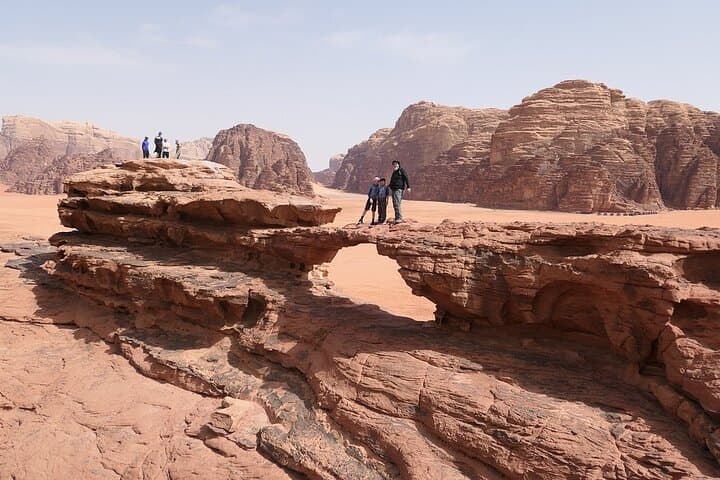
This is the landscape Lawrence of Arabia crossed and the road for ancient caravans between Egypt and Damascus. Bedouin guides still point out Thamudic and Nabatean inscriptions cut into canyon walls, shorthand histories left by traders and pilgrims. Geologically, Wadi Rum is a patchwork of Cambrian sandstone and granite, sculpted by wind and flash floods into narrow canyons, natural bridges, and towering domes. The iron in the sand gives the dunes their rust color; the same mineral stains the cliffs in streaks that are best seen in early or late light.
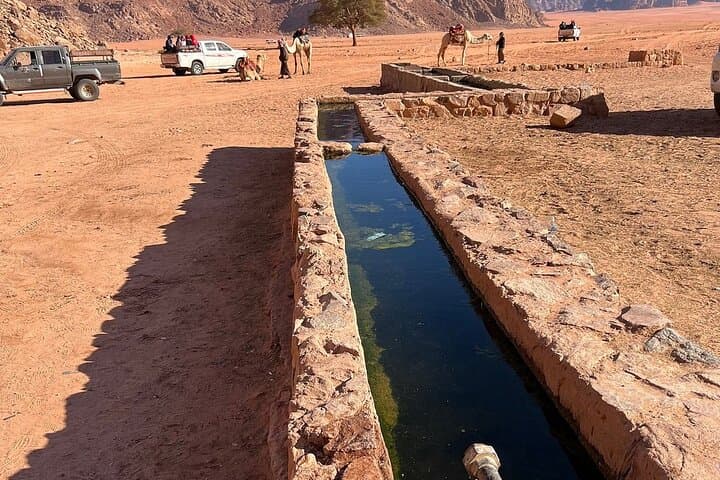
Culturally, the tour moves at the pace of hospitality. A short stop for tea at the village or near Lawrence Spring feels deliberate: an invitation to sit, sip, and hear how local families still use these watering points for camels and livelihoods. The guide will point out small green mosses at springs, petroglyphs of travelers and animals, and the logic of routes through the valley.
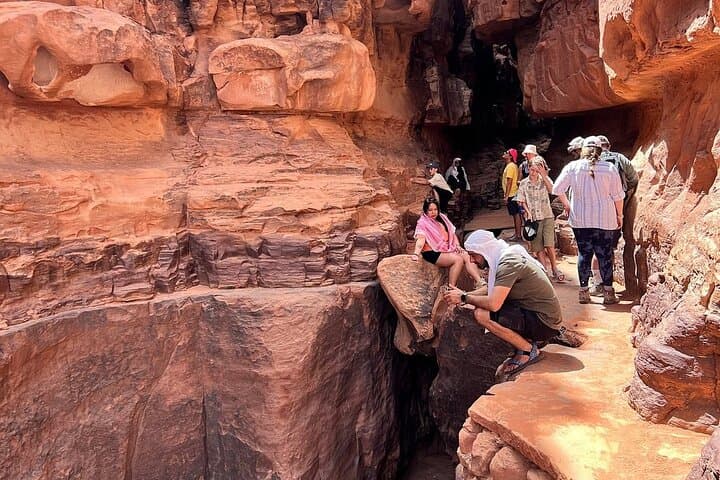
Practically, expect three to six short stops with light walking — a walk up the Red Sand Dune (soft, energy-sapping sand, about 40–60m of climbing on loose footing), a stroll through Khazali Canyon to read inscriptions, and a brief visit at Lawrence Spring. Total on‑foot distance rarely exceeds 1–2 km; the jeep covers the rest across undulating desert tracks.
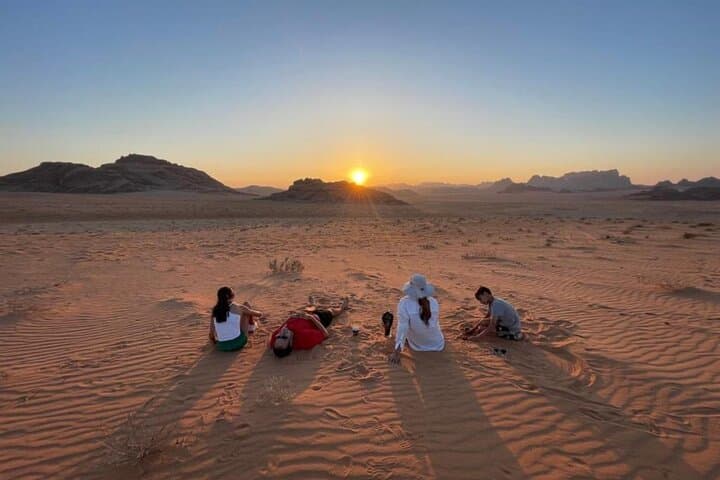
For timing, morning tours offer cooler temps and clearer visibility for inscriptions; sunset tours turn the cliffs into glowing copper and are ideal for silhouette photography. Bring a 1–2 liter water bottle, sun protection, and sturdy shoes with decent traction for dune climbs. Layers are essential — desert days warm quickly and nights cool just as fast.
Accessibility is limited: soft sand and uneven rock mean this isn’t suitable for travelers with serious spinal or mobility issues. Respect local customs: dress modestly, ask before photographing people, and leave rock art undisturbed. The desert is fragile — stick to jeep tracks where directed, pack out waste, and avoid trampling cryptobiotic soil.
In two hours you won’t see every arch, but you’ll get the valley’s pulse: geological time, human marks, and a living Bedouin presence, all moving together under an expansive desert sky.
easy.
2–3 hours.
Light activity; suitable for anyone comfortable with short walks on soft sand and uneven rock.
Meet at the Wadi Rum Rest House in Wadi Rum Village; it’s the first building on the right when entering the village and the guide will be waiting there.
The tour includes transfer to and from Wadi Rum Village; transport from Aqaba to the village may be arranged separately or via public options.
Yes — infants must sit on a lap; the tour is family-friendly but watch children on dunes and near cliff edges.
Not recommended for travelers with spinal injuries due to jeep movement and short climbs over uneven terrain.
Yes — the itinerary usually includes sightings of domestic camels at Lawrence Spring and opportunities to experience Bedouin hospitality over tea.
Full refund if cancelled at least 24 hours before the scheduled departure; no refund within 24 hours.
Wadi Rum has layers of human travel: Thamudic and Nabatean inscriptions, caravan routes, and 20th-century links to T.E. Lawrence’s campaigns.
The desert’s soils and rock art are fragile; follow guide directions, avoid touching inscriptions, and pack out all trash to protect this arid ecosystem.
Wadi Rum Classic Tours operates guided outdoor trips and adventures with an emphasis on safety, stewardship, and memorable experiences.
The jeep jerks over corrugated sand and suddenly the world opens — a low horizon of red rock, slabs of sandstone carved into arches and towers, and the wind arranging dunes like a restless audience. On a 2‑hour tour through Wadi Rum, the landscape is both stage and actor: red dunes shift underfoot, a spring insists on pooling where you least expect it, and canyons keep quiet watch over millennia of human marks.
The jeep jerks over corrugated sand and suddenly the world opens — a low horizon of red rock, slabs of sandstone carved into arches and towers, and the wind arranging dunes like a restless audience. On a 2‑hour tour through Wadi Rum, the landscape is both stage and actor: red dunes shift underfoot, a spring insists on pooling where you least expect it, and canyons keep quiet watch over millennia of human marks.
This is the landscape Lawrence of Arabia crossed and the road for ancient caravans between Egypt and Damascus. Bedouin guides still point out Thamudic and Nabatean inscriptions cut into canyon walls, shorthand histories left by traders and pilgrims. Geologically, Wadi Rum is a patchwork of Cambrian sandstone and granite, sculpted by wind and flash floods into narrow canyons, natural bridges, and towering domes. The iron in the sand gives the dunes their rust color; the same mineral stains the cliffs in streaks that are best seen in early or late light.
Culturally, the tour moves at the pace of hospitality. A short stop for tea at the village or near Lawrence Spring feels deliberate: an invitation to sit, sip, and hear how local families still use these watering points for camels and livelihoods. The guide will point out small green mosses at springs, petroglyphs of travelers and animals, and the logic of routes through the valley.
Practically, expect three to six short stops with light walking — a walk up the Red Sand Dune (soft, energy-sapping sand, about 40–60m of climbing on loose footing), a stroll through Khazali Canyon to read inscriptions, and a brief visit at Lawrence Spring. Total on‑foot distance rarely exceeds 1–2 km; the jeep covers the rest across undulating desert tracks.
For timing, morning tours offer cooler temps and clearer visibility for inscriptions; sunset tours turn the cliffs into glowing copper and are ideal for silhouette photography. Bring a 1–2 liter water bottle, sun protection, and sturdy shoes with decent traction for dune climbs. Layers are essential — desert days warm quickly and nights cool just as fast.
Accessibility is limited: soft sand and uneven rock mean this isn’t suitable for travelers with serious spinal or mobility issues. Respect local customs: dress modestly, ask before photographing people, and leave rock art undisturbed. The desert is fragile — stick to jeep tracks where directed, pack out waste, and avoid trampling cryptobiotic soil.
In two hours you won’t see every arch, but you’ll get the valley’s pulse: geological time, human marks, and a living Bedouin presence, all moving together under an expansive desert sky.