THE ADVENTURE COLLECTIVE® · Independent discovery and booking for outdoor travel

Drive into a landscape of red sandstone and starlight on a two-day Wadi Rum tour that blends short hikes, ancient inscriptions, a Bedouin lunch, and an overnight in a traditionally furnished cave under the Milky Way. Practical and immersive, it’s an accessible desert escape with deep cultural roots.
Drive into a landscape of red sandstone and starlight on a two-day Wadi Rum tour that blends short hikes, ancient inscriptions, a Bedouin lunch, and an overnight in a traditionally furnished cave under the Milky Way. Practical and immersive, it’s an accessible desert escape with deep cultural roots.
The engine eases, dust arranges itself into a ribbon that the wind quickly erases, and the first cliffs of Wadi Rum rise like slow-moving sculptures. On this two-day loop you leave the visitor center behind and head deeper—toward narrow canyons scratched with ancient script, red dunes that slope like sleeping waves, and a cave camp where the desert sky stages one of the world’s most honest night shows.
Verified experiences and guided adventures in the surrounding area.
Operated by Wadi Rum Nabatean Camp · Wadi Rum Village, Aqaba Governorate
The engine eases, dust arranges itself into a ribbon that the wind quickly erases, and the first cliffs of Wadi Rum rise like slow-moving sculptures. On this two-day loop you leave the visitor center behind and head deeper—toward narrow canyons scratched with ancient script, red dunes that slope like sleeping waves, and a cave camp where the desert sky stages one of the world’s most honest night shows.
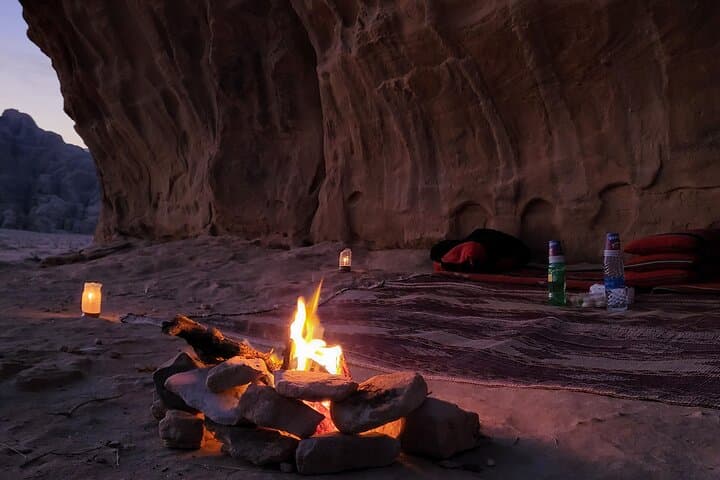
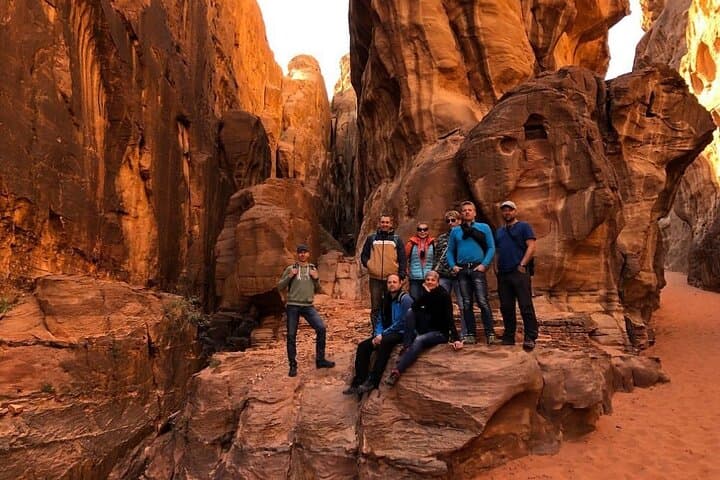
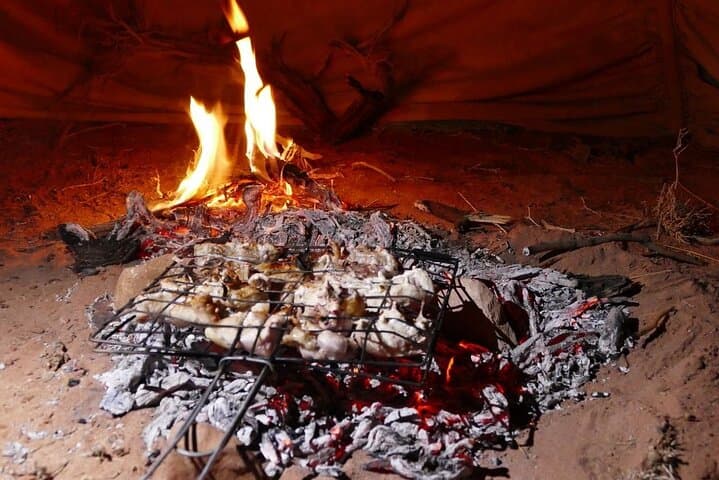
Day one moves at the tempo of the land: short drives over packed sand, guided walks through Khazali Canyon to view Thamudic and Nabatean inscriptions, and a stop at Lawrence’s Spring—named for the T.E. Lawrence chapters that filtered into myth. After a simple, hands-on Bedouin lunch, the route threads past natural arches and sandstone domes to a vantage for sunset. Guides settle a small, charcoal grill and prepare a traditional Barbecue under the cliffs while the sky blackens and the Milky Way pulls taut. The night is spent in a traditionally furnished cave camp—rolled-out mats, wool blankets, and a fireplace that smells faintly of tea and thyme.
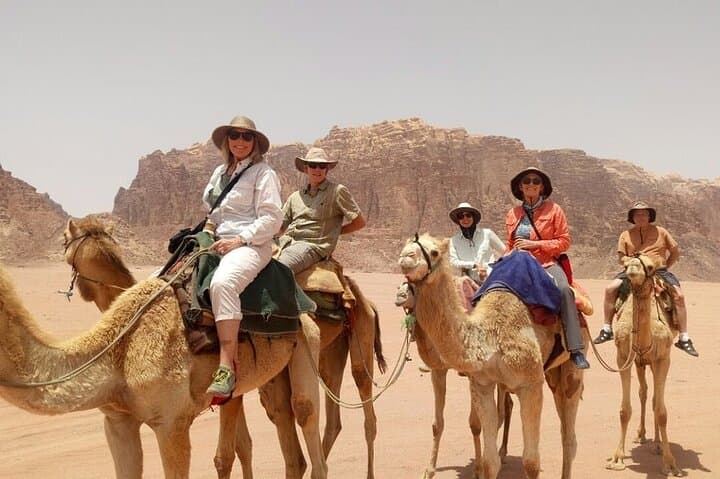
At dawn the desert shifts again. The second day is quieter: a slow breakfast as the sun paints the rock in ochres, a short walk for a panoramic sunrise, then a return to the village with options—jeep rides, camel excursions, or longer hikes if you want another night out.
Geology here reads like a slow-motion novel: Cambrian sandstone shaped by flash floods and wind into domes, windows, and canyons. Culturally, Wadi Rum has been a transit corridor for millennia, with Nabatean inscriptions and modern Bedouin traditions layered on the same stone. Your guides are often local Bedouin whose knowledge is more map than memorized script—they’ll point out water sources, hidden inscriptions, and practical routes across a landscape that refuses to be hurried.
Practical notes: the two-day tour is moderate—expect several short hikes, uneven sand and rock underfoot, and temperature swings of 20°C between day and night depending on season. Bring plenty of water (3–4 liters per person), sturdy shoes for scrambling, a warm midlayer for night, and a headlamp for walking between tents. Photography is best at sunrise, sunset and after dark for the stars—long exposures here are spectacular.
Sustainability matters: this is a protected area—follow your guide’s lead, avoid touching inscriptions, pack out all trash, and use only provided fire areas. With its mixture of geology, history and living Bedouin culture, this 48-hour escape is equal parts education and wilderness—simple in gear, rich in experience.
moderate.
2 days (approx. 48 hours).
Suitable for travelers in moderate physical condition—able to walk on uneven sand and rock and tolerate short climbs.
The camp is off the main tourist camp cluster but accessible by 4x4; facilities are traditional and basic—mats, blankets, and shared cooking areas.
Yes—traditional Bedouin lunch and dinner on day one and breakfast on day two are included in the tour price.
Children can join, but the tour requires moderate mobility and children must be supervised; infants should sit on an adult’s lap during transport.
Not recommended for travelers with spinal injuries due to uneven terrain and bumpy 4x4 transfers.
Entrance to Wadi Rum Protected Area is typically included by the operator; confirm at booking. Guides will handle local access details.
Yes—operators can usually arrange additional jeep excursions, camel rides, hikes or extra nights in camp upon request.
Wadi Rum holds Nabatean and Thamudic inscriptions and was a strategic corridor referenced by T.E. Lawrence during the Arab Revolt.
Wadi Rum is a protected area—stick to established routes, avoid disturbing archaeological sites, and pack out waste to minimize visitor impact.
Wadi Rum Nabatean Camp operates guided outdoor trips and adventures with an emphasis on safety, stewardship, and memorable experiences.
The engine eases, dust arranges itself into a ribbon that the wind quickly erases, and the first cliffs of Wadi Rum rise like slow-moving sculptures. On this two-day loop you leave the visitor center behind and head deeper—toward narrow canyons scratched with ancient script, red dunes that slope like sleeping waves, and a cave camp where the desert sky stages one of the world’s most honest night shows.
The engine eases, dust arranges itself into a ribbon that the wind quickly erases, and the first cliffs of Wadi Rum rise like slow-moving sculptures. On this two-day loop you leave the visitor center behind and head deeper—toward narrow canyons scratched with ancient script, red dunes that slope like sleeping waves, and a cave camp where the desert sky stages one of the world’s most honest night shows.
Day one moves at the tempo of the land: short drives over packed sand, guided walks through Khazali Canyon to view Thamudic and Nabatean inscriptions, and a stop at Lawrence’s Spring—named for the T.E. Lawrence chapters that filtered into myth. After a simple, hands-on Bedouin lunch, the route threads past natural arches and sandstone domes to a vantage for sunset. Guides settle a small, charcoal grill and prepare a traditional Barbecue under the cliffs while the sky blackens and the Milky Way pulls taut. The night is spent in a traditionally furnished cave camp—rolled-out mats, wool blankets, and a fireplace that smells faintly of tea and thyme.
At dawn the desert shifts again. The second day is quieter: a slow breakfast as the sun paints the rock in ochres, a short walk for a panoramic sunrise, then a return to the village with options—jeep rides, camel excursions, or longer hikes if you want another night out.
Geology here reads like a slow-motion novel: Cambrian sandstone shaped by flash floods and wind into domes, windows, and canyons. Culturally, Wadi Rum has been a transit corridor for millennia, with Nabatean inscriptions and modern Bedouin traditions layered on the same stone. Your guides are often local Bedouin whose knowledge is more map than memorized script—they’ll point out water sources, hidden inscriptions, and practical routes across a landscape that refuses to be hurried.
Practical notes: the two-day tour is moderate—expect several short hikes, uneven sand and rock underfoot, and temperature swings of 20°C between day and night depending on season. Bring plenty of water (3–4 liters per person), sturdy shoes for scrambling, a warm midlayer for night, and a headlamp for walking between tents. Photography is best at sunrise, sunset and after dark for the stars—long exposures here are spectacular.
Sustainability matters: this is a protected area—follow your guide’s lead, avoid touching inscriptions, pack out all trash, and use only provided fire areas. With its mixture of geology, history and living Bedouin culture, this 48-hour escape is equal parts education and wilderness—simple in gear, rich in experience.