THE ADVENTURE COLLECTIVE® · Independent discovery and booking for outdoor travel

Spend two days in Wadi Rum with a local Bedouin guide: jeep tracks into narrow canyons, a dune climb at golden hour, a traditional underground dinner, and a night in a private panoramic tent beneath an enormous sky. Practical, accessible, and rich in geology and culture, the tour is ideal for travelers who want deep desert time without technical climbing.
Spend two days in Wadi Rum with a local Bedouin guide: jeep tracks into narrow canyons, a dune climb at golden hour, a traditional underground dinner, and a night in a private panoramic tent beneath an enormous sky. Practical, accessible, and rich in geology and culture, the tour is ideal for travelers who want deep desert time without technical climbing.
The jeep kicks up a rooster-tail of dust and the desert takes over: red rock faces rear up like old walls, sand ripples under the tires, and heat-warped air shimmers over a distant dune. By late afternoon the convoy pulls into a pocket of flat gravel; a Bedouin guide unslings a kettle, pours dark tea, and the sky begins to spill color. Over two days, this Wadi Rum tour stitches together the desert’s best seams — narrow canyons, Nabatean inscriptions, a marrow-deep sunset, and one night under a panoramic tent where the stars feel close enough to touch.
Verified experiences and guided adventures in the surrounding area.
Operated by Welcome to Wadi Rum · Wadi Rum Village, Ma'an Governorate
The jeep kicks up a rooster-tail of dust and the desert takes over: red rock faces rear up like old walls, sand ripples under the tires, and heat-warped air shimmers over a distant dune. By late afternoon the convoy pulls into a pocket of flat gravel; a Bedouin guide unslings a kettle, pours dark tea, and the sky begins to spill color. Over two days, this Wadi Rum tour stitches together the desert’s best seams — narrow canyons, Nabatean inscriptions, a marrow-deep sunset, and one night under a panoramic tent where the stars feel close enough to touch.
Wadi Rum is a geologic page-turner. Wind and seasonal rains have carved sandstone and granite into pillars, bridges, and mushroom rocks over millions of years. Human history sits alongside geology: Nabatean carvings and caravan stops cut into canyon walls, while the story of T.E. Lawrence threads through places still called Lawrence’s House. Bedouin culture remains living and practical — fire-cooked meals, tea at dusk, and tent hospitality that has adapted for guests without losing local rhythms.
The itinerary moves fast but gently: expect repeated short stops, several 30–60 minute walks (Khazali Canyon and Abu Khashaba are roughly a 0.5–2 km stroll each, with narrow rock steps and loose sand), and one dune scramble that gains about 50–100 vertical meters to a broad red crest. Terrain toggles between soft sand, compact desert gravel, and narrow rock passages. The Burdah and Umm Fruth bridges are viewed from a short approach rather than a full climb on this tour, keeping the pace accessible for most travelers.
Practical notes: meet at the first cafeteria in Wadi Rum Village around 10:00; the operator offers free parking and bottled water. The tour includes lunch, dinner (traditional underground-cooked meal), breakfast, and an overnight in a private panoramic tent. Temperatures swing widely — daytime heat can be intense while nights drop sharply — so pack layers. Bring a refillable water bottle (extras supplied), sun protection, and sturdy shoes for sand and rock.
For photographers, aim for the golden hour on the dune or the camp’s panoramic viewpoint; come prepared for night-sky shots with a tripod. Respect the landscape: stick to paths, avoid removing stones or inscriptions, and buy souvenirs from local tents to support the community.
This two-day loop is built for travelers who want desert immersion without technical climbing — it’s story-driven, sensory, and very much grounded in local culture. The reward is simple: quiet desert mornings, warm shared food, and a sky that takes over when the lamps go out.
easy.
2 days (approx. 48 hours).
Suitable for most fitness levels; participants should be comfortable with short walks on sand and rocky steps and able to board a jeep.
Meet at the first cafeteria in Wadi Rum Village (the first building on the right as you enter). There is free parking and your guide will be waiting there.
Yes — the tour includes a private panoramic tent; basic camp facilities are provided and dinner and breakfast are included; toilet arrangements are simple camp facilities or nearby shared bathrooms depending on site.
No — the tour is suitable for all physical levels; jeeps handle the off-road driving and hikes are short and guided.
Lunch, dinner, and breakfast are included and rooted in Bedouin recipes; notify the operator of dietary restrictions during booking so they can accommodate where possible.
Mobile signal is intermittent in Wadi Rum; some camps offer charging points but bring backup battery power for cameras and devices.
Families often join; infants must sit on an adult’s lap during transport. The operator classifies the tour as physically easy, but keep close watch on children around dune edges and rock formations.
Wadi Rum holds Nabatean inscriptions and caravan stops; later it featured in the Arab Revolt and the legend of T.E. Lawrence, leaving layered traces of human passage.
The desert’s fragile crust and rare plants are vulnerable—stick to vehicle tracks and established paths, pack out trash, and support local guides who practice low-impact camping.
Welcome to Wadi Rum operates guided outdoor trips and adventures with an emphasis on safety, stewardship, and memorable experiences.
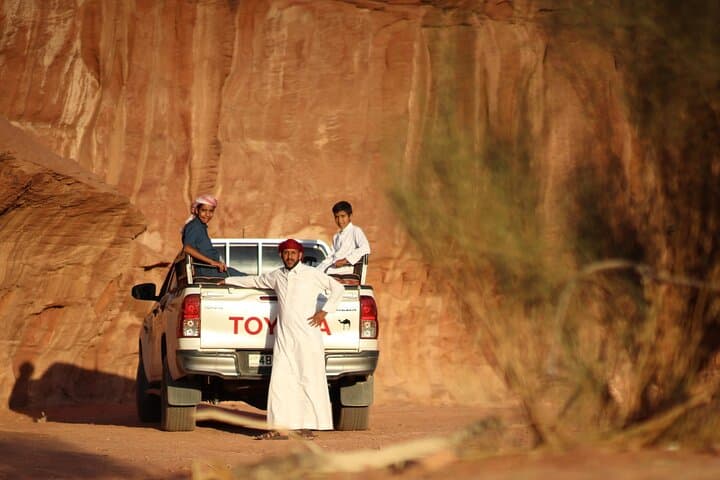
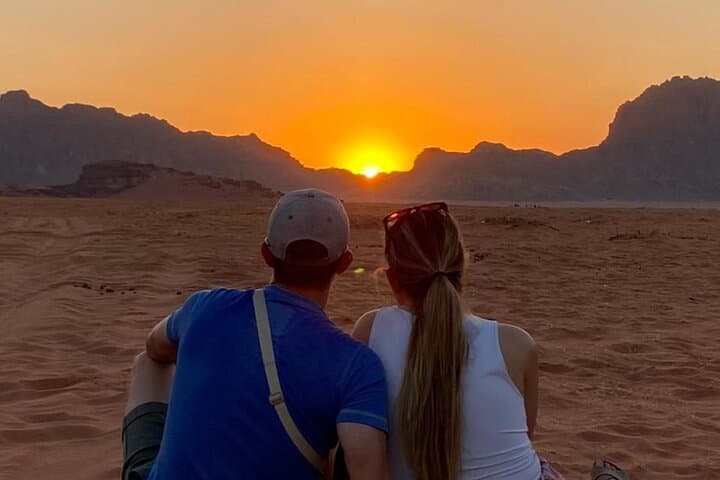
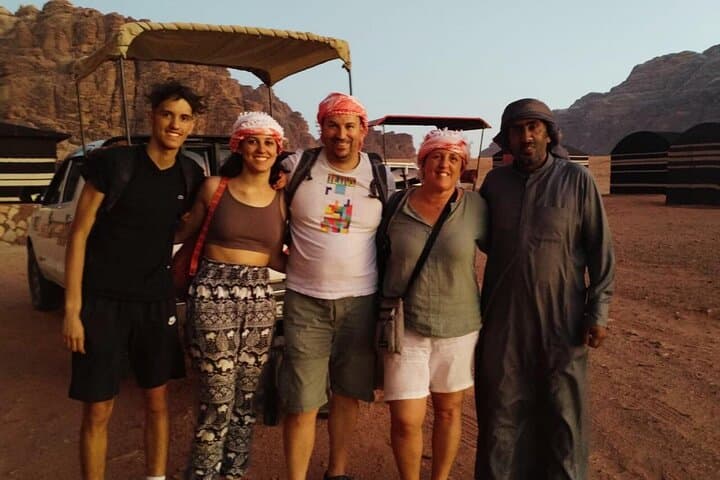
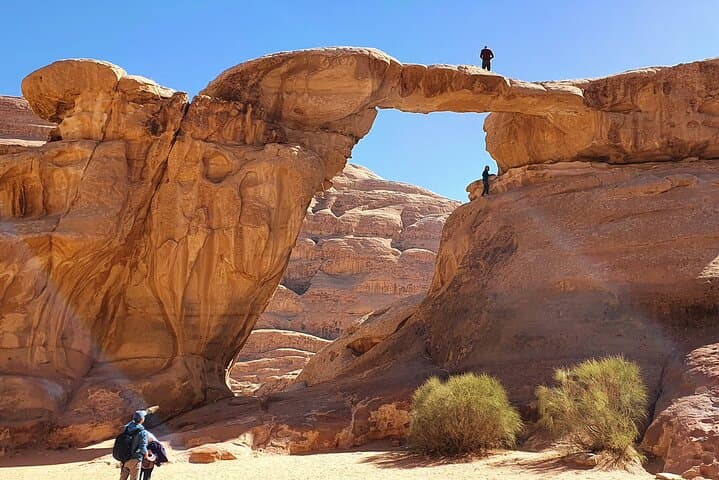
The jeep kicks up a rooster-tail of dust and the desert takes over: red rock faces rear up like old walls, sand ripples under the tires, and heat-warped air shimmers over a distant dune. By late afternoon the convoy pulls into a pocket of flat gravel; a Bedouin guide unslings a kettle, pours dark tea, and the sky begins to spill color. Over two days, this Wadi Rum tour stitches together the desert’s best seams — narrow canyons, Nabatean inscriptions, a marrow-deep sunset, and one night under a panoramic tent where the stars feel close enough to touch.
The jeep kicks up a rooster-tail of dust and the desert takes over: red rock faces rear up like old walls, sand ripples under the tires, and heat-warped air shimmers over a distant dune. By late afternoon the convoy pulls into a pocket of flat gravel; a Bedouin guide unslings a kettle, pours dark tea, and the sky begins to spill color. Over two days, this Wadi Rum tour stitches together the desert’s best seams — narrow canyons, Nabatean inscriptions, a marrow-deep sunset, and one night under a panoramic tent where the stars feel close enough to touch.
Wadi Rum is a geologic page-turner. Wind and seasonal rains have carved sandstone and granite into pillars, bridges, and mushroom rocks over millions of years. Human history sits alongside geology: Nabatean carvings and caravan stops cut into canyon walls, while the story of T.E. Lawrence threads through places still called Lawrence’s House. Bedouin culture remains living and practical — fire-cooked meals, tea at dusk, and tent hospitality that has adapted for guests without losing local rhythms.
The itinerary moves fast but gently: expect repeated short stops, several 30–60 minute walks (Khazali Canyon and Abu Khashaba are roughly a 0.5–2 km stroll each, with narrow rock steps and loose sand), and one dune scramble that gains about 50–100 vertical meters to a broad red crest. Terrain toggles between soft sand, compact desert gravel, and narrow rock passages. The Burdah and Umm Fruth bridges are viewed from a short approach rather than a full climb on this tour, keeping the pace accessible for most travelers.
Practical notes: meet at the first cafeteria in Wadi Rum Village around 10:00; the operator offers free parking and bottled water. The tour includes lunch, dinner (traditional underground-cooked meal), breakfast, and an overnight in a private panoramic tent. Temperatures swing widely — daytime heat can be intense while nights drop sharply — so pack layers. Bring a refillable water bottle (extras supplied), sun protection, and sturdy shoes for sand and rock.
For photographers, aim for the golden hour on the dune or the camp’s panoramic viewpoint; come prepared for night-sky shots with a tripod. Respect the landscape: stick to paths, avoid removing stones or inscriptions, and buy souvenirs from local tents to support the community.
This two-day loop is built for travelers who want desert immersion without technical climbing — it’s story-driven, sensory, and very much grounded in local culture. The reward is simple: quiet desert mornings, warm shared food, and a sky that takes over when the lamps go out.