THE ADVENTURE COLLECTIVE® · Independent discovery and booking for outdoor travel

Wadi Muthlim offers a quieter, narrower approach into Petra through Nabatean tunnels and carved niches. This guided 4–5 hour trail trades crowds for tight canyon passages, small rock pools, and intact archaeological features.
Wadi Muthlim offers a quieter, narrower approach into Petra through Nabatean tunnels and carved niches. This guided 4–5 hour trail trades crowds for tight canyon passages, small rock pools, and intact archaeological features.
Stepping off the beaten path, you enter Wadi Muthlim and the air closes in around you—sheer sandstone walls, scrubbed smooth by centuries of flash floods, reduce the world to the sound of your boots and occasional birdsong.
Verified experiences and guided adventures in the surrounding area.
Operated by Jordan Horizon Tours · Wadi Musa, Ma'an
Stepping off the beaten path, you enter Wadi Muthlim and the air closes in around you—sheer sandstone walls, scrubbed smooth by centuries of flash floods, reduce the world to the sound of your boots and occasional birdsong.
This route threads through a Nabatean tunnel and a narrow canyon that was once a working artery of Petra. The Nabateans left dozens of carved niches, dams and rock-cut features that hint at water management and ritual use; geology here is almost entirely soft, reddish sandstone that both stores memory and erodes quickly, producing tight slots and smooth overhangs.
Culturally, Wadi Muthlim is an antidote to the crowded Siq: far fewer visitors, more time to notice carved pediments, the Eagle Niche above the dam, and small archaeological scars that underline Petra’s long occupation.
Practically, expect 4–5 hours with a guided group, roughly 6–8 km round-trip depending on detours, mostly level walking with short scrambles and occasional rock pools. The trail narrows to foot-width in places and may be impassable when full—do not attempt in the rainy season (roughly November–March) because flash floods are a real danger.
Bring 2–3 liters of water, sturdy grippy footwear, sun protection, and a light layer for shade or wind. Your guide will navigate squeezes and point out Nabatean niches and the old dam systems; respect carved features and avoid wading in deep pools. Timing your walk for early morning light or late afternoon reduces heat and brings softer shadows across the canyon walls.
challenging.
4–5 hours.
Requires high fitness: steady pace over rocky ground, short scrambles, and endurance for several hours in heat.
While not legally mandatory, a local, English-speaking guide is strongly recommended for route-finding, safety in narrow sections, and archaeological context.
It’s challenging: expect several hours of walking, uneven footing and short scrambles—good cardiovascular fitness and nimble footing help.
No—flash floods are common and dangerous; operators typically cancel or advise against the trail during the rainy season (roughly Nov–Mar).
Yes; Wadi Muthlim leads into Petra’s archaeological zone, so a valid Petra site ticket is required for access to ruins beyond the wadi.
Wadi Muthlim preserves Nabatean engineering: rerouted channels, dams and carved niches used for water control and ritual practices that predate widespread tourism via the Siq.
The sandstone erodes easily and archaeological features are fragile—stay on established paths, avoid touching rock carvings, and follow leave-no-trace principles to protect the site.
Jordan Horizon Tours operates guided outdoor trips and adventures with an emphasis on safety, stewardship, and memorable experiences.
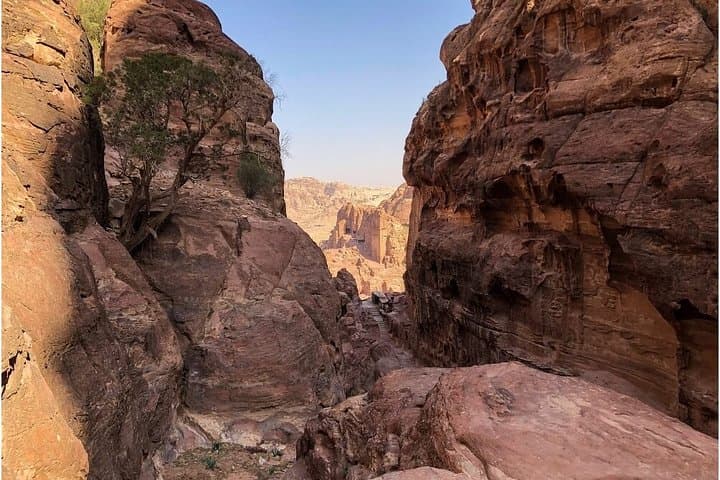
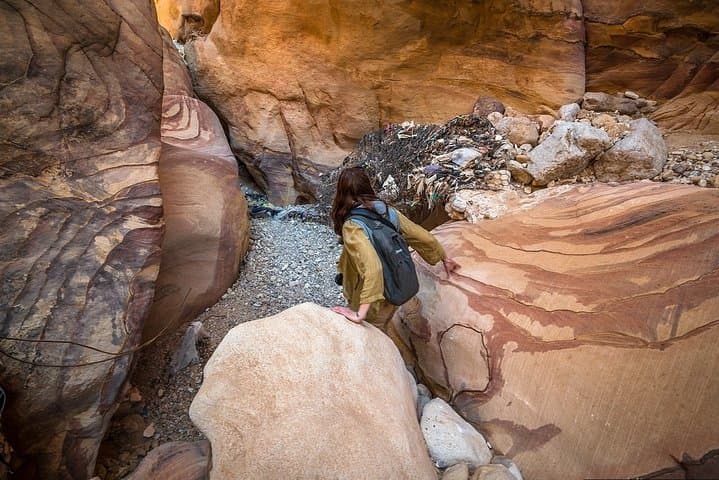
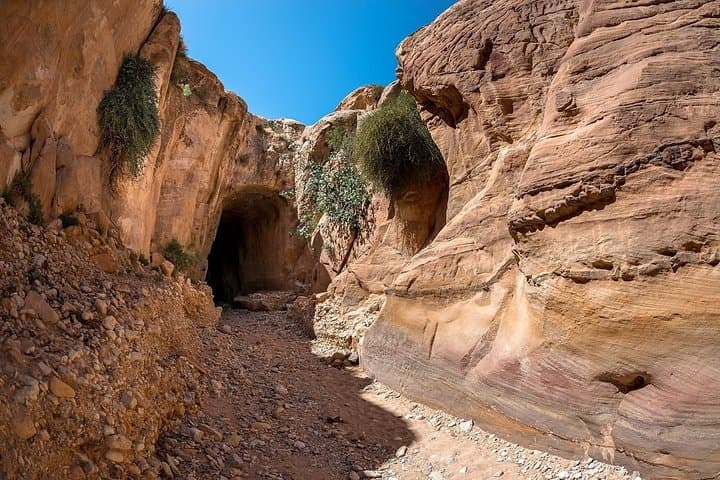
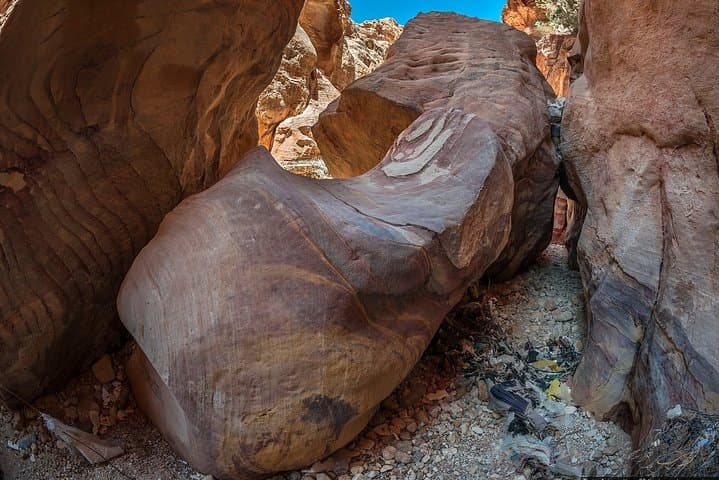
Stepping off the beaten path, you enter Wadi Muthlim and the air closes in around you—sheer sandstone walls, scrubbed smooth by centuries of flash floods, reduce the world to the sound of your boots and occasional birdsong.
Stepping off the beaten path, you enter Wadi Muthlim and the air closes in around you—sheer sandstone walls, scrubbed smooth by centuries of flash floods, reduce the world to the sound of your boots and occasional birdsong.
This route threads through a Nabatean tunnel and a narrow canyon that was once a working artery of Petra. The Nabateans left dozens of carved niches, dams and rock-cut features that hint at water management and ritual use; geology here is almost entirely soft, reddish sandstone that both stores memory and erodes quickly, producing tight slots and smooth overhangs.
Culturally, Wadi Muthlim is an antidote to the crowded Siq: far fewer visitors, more time to notice carved pediments, the Eagle Niche above the dam, and small archaeological scars that underline Petra’s long occupation.
Practically, expect 4–5 hours with a guided group, roughly 6–8 km round-trip depending on detours, mostly level walking with short scrambles and occasional rock pools. The trail narrows to foot-width in places and may be impassable when full—do not attempt in the rainy season (roughly November–March) because flash floods are a real danger.
Bring 2–3 liters of water, sturdy grippy footwear, sun protection, and a light layer for shade or wind. Your guide will navigate squeezes and point out Nabatean niches and the old dam systems; respect carved features and avoid wading in deep pools. Timing your walk for early morning light or late afternoon reduces heat and brings softer shadows across the canyon walls.