THE ADVENTURE COLLECTIVE® · Independent discovery and booking for outdoor travel

Spend a day outside Cairo exploring Wadi El-Hitan’s fossil fields, the twin lakes and waterfalls of Wadi El-Rayan, and artisan pottery in Tunis village. This full-day trip mixes geology, culture and desert scenery with manageable walks and strong photo opportunities.
Spend a day outside Cairo exploring Wadi El-Hitan’s fossil fields, the twin lakes and waterfalls of Wadi El-Rayan, and artisan pottery in Tunis village. This full-day trip mixes geology, culture and desert scenery with manageable walks and strong photo opportunities.
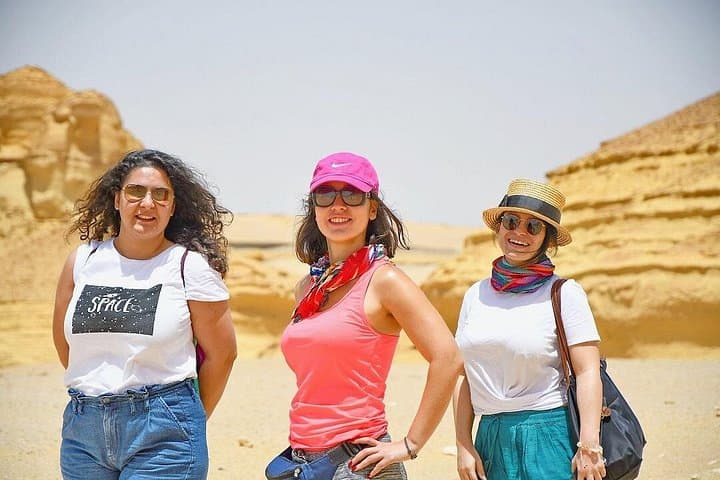
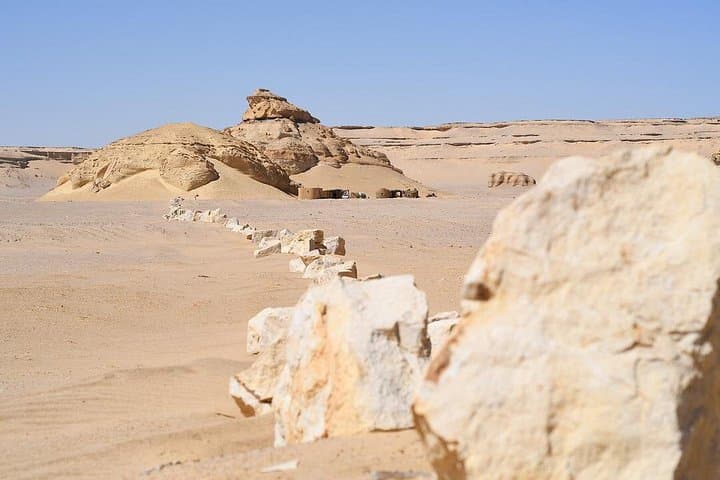
Early light on the desert gives the chalky ridges a hard edge; the 4x4 hums and the road peels away from Cairo as the city becomes a flat horizon. On a full-day run into Egypt’s Faiyum region, travelers trade urban sprawl for windswept limestone, shallow lakes and villages where pottery smoke marks the air.
Verified experiences and guided adventures in the surrounding area.
Operated by Cairo Day Trip · Faiyum, Faiyum Governorate
Early light on the desert gives the chalky ridges a hard edge; the 4x4 hums and the road peels away from Cairo as the city becomes a flat horizon. On a full-day run into Egypt’s Faiyum region, travelers trade urban sprawl for windswept limestone, shallow lakes and villages where pottery smoke marks the air.
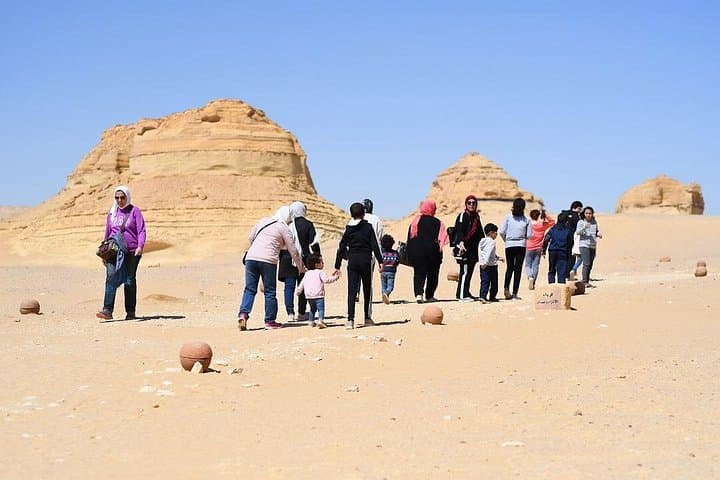
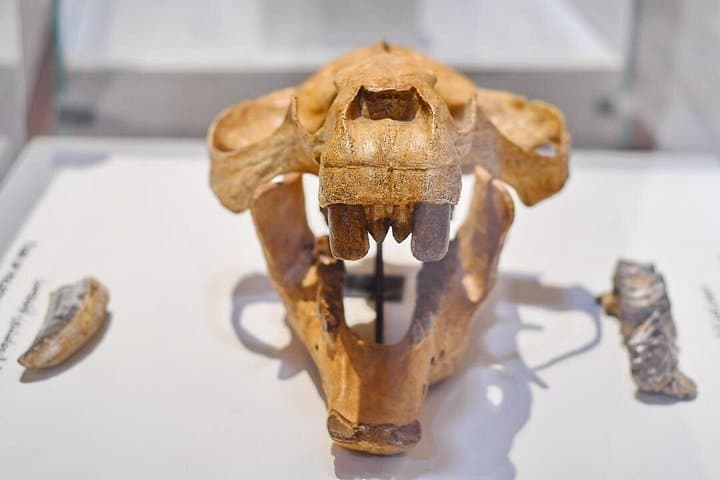
Wadi El-Hitan — the Valley of the Whales — holds fossilized skeletons of Eocene whales laid down 40–50 million years ago when this basin was a shallow sea. The fossils sit on exposed sandstone benches and small dunes that force visitors to move slowly, reading the rock like a page of deep time. Nearby Wadi El-Rayan’s twin lakes sit at two levels and create seasonal waterfalls, a rare engineered-natural feature where desert water literally pours from one basin to another.
The day also threads through agricultural plains and Tunis village, where local potters shape Nile-clay ceramics with centuries-old techniques. Geology, agriculture and craft sit side by side here: limestone escarpments, irrigated fields and artisan workshops.
Practical side: expect 10–12 hours including 2–3 hours each way by road depending on traffic, short walks over uneven, sandy ground, and exposed sun for most of the day. Bring sun protection, sturdy shoes, and at least 2 liters of water. Mornings offer cooler light for fossils and photography; afternoons highlight lake and waterfall vistas.
The itinerary is accessible for most people but includes brief hikes over unshaded terrain and simple boardwalks at viewpoints. Guides handle permits and fossil-site navigation, leaving visitors to focus on the scale of deep time and the quieter lives of the oasis.
easy.
10–12 hours.
Suitable for most fitness levels; requires standing and short walks up to 1 km on uneven ground and sand.
Expect roughly 2–3 hours each way depending on traffic; the full itinerary runs about 10–12 hours door-to-door.
Yes — admission to Wadi El-Hitan and most park facilities on this tour are included in the itinerary.
The tour is family-friendly and the operator lists wheelchair access for transport and many surfaces, though some fossil viewpoints require short uneven walks.
Wadi El-Rayan’s waterfall presence varies with water management and season; they are most visible outside the peak dry months when lake levels are higher.
Wadi El-Hitan is a UNESCO World Heritage Site known for Eocene whale fossils that document the evolution of whales from land mammals to marine life.
Visitors are asked to stay on marked paths and not remove fossils; conservation focuses on protecting exposed remains and minimizing erosion and litter.
Cairo Day Trip operates guided outdoor trips and adventures with an emphasis on safety, stewardship, and memorable experiences.
Early light on the desert gives the chalky ridges a hard edge; the 4x4 hums and the road peels away from Cairo as the city becomes a flat horizon. On a full-day run into Egypt’s Faiyum region, travelers trade urban sprawl for windswept limestone, shallow lakes and villages where pottery smoke marks the air.
Early light on the desert gives the chalky ridges a hard edge; the 4x4 hums and the road peels away from Cairo as the city becomes a flat horizon. On a full-day run into Egypt’s Faiyum region, travelers trade urban sprawl for windswept limestone, shallow lakes and villages where pottery smoke marks the air.
Wadi El-Hitan — the Valley of the Whales — holds fossilized skeletons of Eocene whales laid down 40–50 million years ago when this basin was a shallow sea. The fossils sit on exposed sandstone benches and small dunes that force visitors to move slowly, reading the rock like a page of deep time. Nearby Wadi El-Rayan’s twin lakes sit at two levels and create seasonal waterfalls, a rare engineered-natural feature where desert water literally pours from one basin to another.
The day also threads through agricultural plains and Tunis village, where local potters shape Nile-clay ceramics with centuries-old techniques. Geology, agriculture and craft sit side by side here: limestone escarpments, irrigated fields and artisan workshops.
Practical side: expect 10–12 hours including 2–3 hours each way by road depending on traffic, short walks over uneven, sandy ground, and exposed sun for most of the day. Bring sun protection, sturdy shoes, and at least 2 liters of water. Mornings offer cooler light for fossils and photography; afternoons highlight lake and waterfall vistas.
The itinerary is accessible for most people but includes brief hikes over unshaded terrain and simple boardwalks at viewpoints. Guides handle permits and fossil-site navigation, leaving visitors to focus on the scale of deep time and the quieter lives of the oasis.