THE ADVENTURE COLLECTIVE® · Independent discovery and booking for outdoor travel

Swap Muscat’s coast for clear mountain pools and an ocean of sand. This full-day tour combines a short wadi walk and swim at Wadi Bani Khalid with Bedouin hospitality and sunset on the Wahiba Sands dunes—ideal for first-time desert travelers.
Swap Muscat’s coast for clear mountain pools and an ocean of sand. This full-day tour combines a short wadi walk and swim at Wadi Bani Khalid with Bedouin hospitality and sunset on the Wahiba Sands dunes—ideal for first-time desert travelers.
The day opens on asphalt leaving Muscat behind; within two hours the city’s hum thins and the landscape tightens into rocky walls and date palms. At Wadi Bani Khalid, sunlight catches clear pools that sit like cut glass in the riverbed—you can hear water moving through narrow channels while the mountain faces watch.
Verified experiences and guided adventures in the surrounding area.
Operated by Oman Wadi Al Arbeieen Adventure · Muscat, Muscat Governorate
The day opens on asphalt leaving Muscat behind; within two hours the city’s hum thins and the landscape tightens into rocky walls and date palms. At Wadi Bani Khalid, sunlight catches clear pools that sit like cut glass in the riverbed—you can hear water moving through narrow channels while the mountain faces watch.
Wadi Bani Khalid is part of Oman’s eastern wadi network, carved from Cretaceous and Tertiary limestones and shaped by seasonal flash floods. The area has long supported tribal settlements; small falaj channels and palm groves mark centuries of local water management. Moving from the pools into Wahiba Sands, the geology shifts to wind-sculpted erg—dunes of fine quartz sand that migrate with the monsoon-driven northwesterlies.
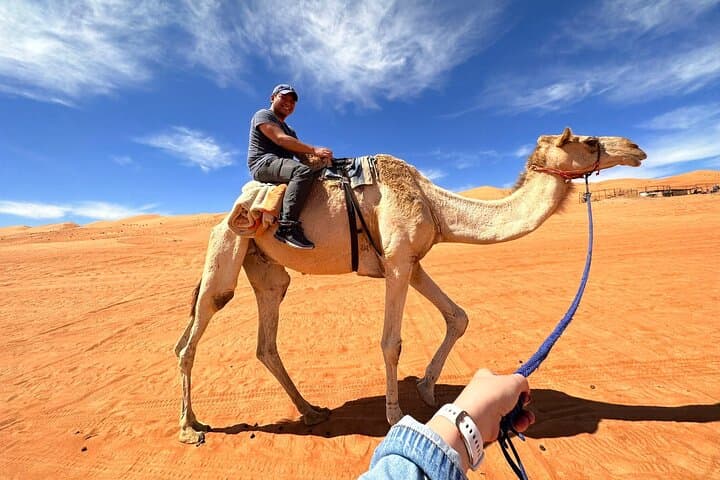
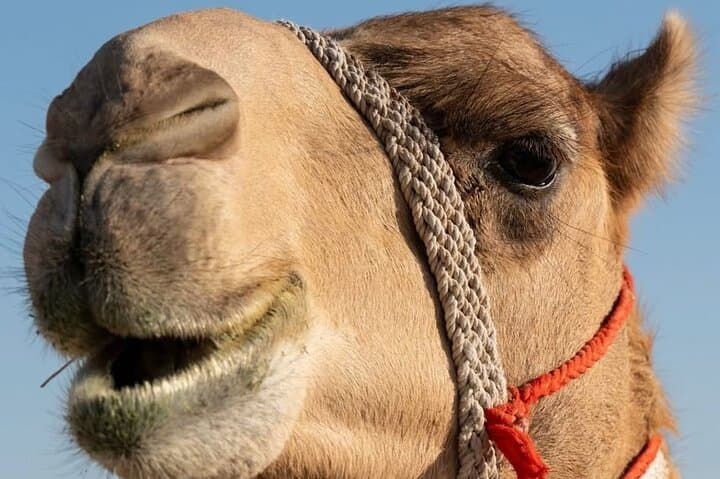
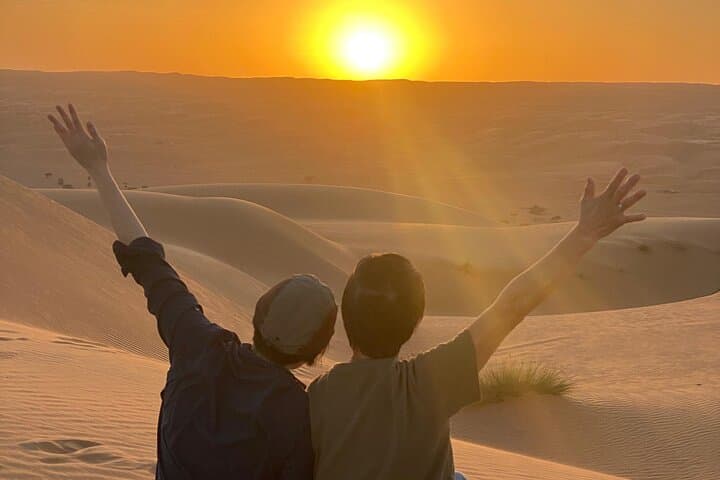
Culturally, the trip stitches modern Muscat to Bedouin life: a visit to a local house reveals Omani coffee rituals and handcrafted goods, and camel handlers continue traditions used for transport and desert economy. Expect a short 10–15 minute walk from the Wadi parking to the main pools, swimming in cool water, then a transfer into the dunes for soft-sand walking, optional camel rides (≈3 OMR), and a sunset viewpoint.
Practical guidance: wear closed shoes for the wadi approach, bring swimwear and quick-dry layers, sun protection, and at least 2 liters of water. Timing matters—midday in summer is extreme; late afternoon to sunset gives the most comfortable light and temperatures. Respect private Bedouin spaces, leave no trace, and follow guides on dune driving and parking to protect fragile desert crusts.
moderate.
8–9 hours.
Suitable for travelers with basic fitness—short walks, swimming, and standing on sand; not strenuous but long.
Expect roughly a two-hour drive to Wadi Bani Khalid from central Muscat, depending on traffic and exact pickup location.
Yes—there’s a 10–15 minute walk from the parking area to the pools and swimming is common; watch for slippery rocks and varying depths.
Camel rides are typically available on-site for about 3 OMR (~8 USD) per person; dune bashing is optional and arranged separately (the tour notes a 30 OMR, 30-minute option provided by desert camp operators).
The tour is family-friendly but requires short walks and climbs; wheelchair access is listed as available for transport but check specifics with the operator for wadi access and dune activities.
The region’s settlements grew around perennial springs and falaj systems that enabled date cultivation and nomadic routes; Bedouin hospitality traditions remain central.
Both wadis and dunes are fragile—stick to trails, avoid driving on vegetated crusts, and pack out all waste to protect aquifers and desert flora/fauna.
Oman Wadi Al Arbeieen Adventure operates guided outdoor trips and adventures with an emphasis on safety, stewardship, and memorable experiences.

The day opens on asphalt leaving Muscat behind; within two hours the city’s hum thins and the landscape tightens into rocky walls and date palms. At Wadi Bani Khalid, sunlight catches clear pools that sit like cut glass in the riverbed—you can hear water moving through narrow channels while the mountain faces watch.
The day opens on asphalt leaving Muscat behind; within two hours the city’s hum thins and the landscape tightens into rocky walls and date palms. At Wadi Bani Khalid, sunlight catches clear pools that sit like cut glass in the riverbed—you can hear water moving through narrow channels while the mountain faces watch.
Wadi Bani Khalid is part of Oman’s eastern wadi network, carved from Cretaceous and Tertiary limestones and shaped by seasonal flash floods. The area has long supported tribal settlements; small falaj channels and palm groves mark centuries of local water management. Moving from the pools into Wahiba Sands, the geology shifts to wind-sculpted erg—dunes of fine quartz sand that migrate with the monsoon-driven northwesterlies.
Culturally, the trip stitches modern Muscat to Bedouin life: a visit to a local house reveals Omani coffee rituals and handcrafted goods, and camel handlers continue traditions used for transport and desert economy. Expect a short 10–15 minute walk from the Wadi parking to the main pools, swimming in cool water, then a transfer into the dunes for soft-sand walking, optional camel rides (≈3 OMR), and a sunset viewpoint.
Practical guidance: wear closed shoes for the wadi approach, bring swimwear and quick-dry layers, sun protection, and at least 2 liters of water. Timing matters—midday in summer is extreme; late afternoon to sunset gives the most comfortable light and temperatures. Respect private Bedouin spaces, leave no trace, and follow guides on dune driving and parking to protect fragile desert crusts.