THE ADVENTURE COLLECTIVE® · Independent discovery and booking for outdoor travel

Trade the tourist trails for a raw, off-grid sweep of Wadi Araba—one full day of 4x4 exploration through hidden wadis and an overnight in a private Bedouin tent under a sky that feels impossibly close. This expedition blends geology, Bedouin culture, and the desert's quiet grandeur.
Trade the tourist trails for a raw, off-grid sweep of Wadi Araba—one full day of 4x4 exploration through hidden wadis and an overnight in a private Bedouin tent under a sky that feels impossibly close. This expedition blends geology, Bedouin culture, and the desert's quiet grandeur.
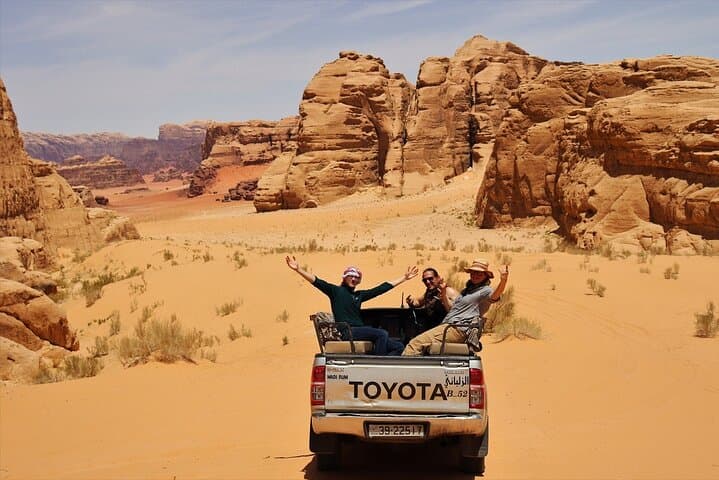
The jeep shudders, then climbs, the engine's low voice swallowed by open sky. Sand spits from under the tires as the guide angles across a white wadi; towers of red sandstone lean over the route like silent judges. By mid-afternoon the light washes the cliffs in copper, and when the vehicle eases into a sheltered hollow you feel the desert change—wind whispers, dunes hold their shape, and the horizon becomes a hard line toward Saudi Arabia.
Verified experiences and guided adventures in the surrounding area.
Operated by Wadi Rum Eco Tours · Rum Village, Ma'an Governorate
The jeep shudders, then climbs, the engine's low voice swallowed by open sky. Sand spits from under the tires as the guide angles across a white wadi; towers of red sandstone lean over the route like silent judges. By mid-afternoon the light washes the cliffs in copper, and when the vehicle eases into a sheltered hollow you feel the desert change—wind whispers, dunes hold their shape, and the horizon becomes a hard line toward Saudi Arabia.
This is Wadi Araba: an extension of the Wadi Rum protected area where geology reads like a field guide to deep time. Granite and sandstone formations—Al Daghdagh Mountain among them—have been carved by wind and rare torrents into cliffs, arches, and tafoni that glow at sunset. The route on this 24-hour expedition threads through Wadi Nuqra, Wadi Sabet, Al Kashkasheh and Sdad Altak, places that were once caravan corridors and now are quiet enough to hear the sand shift.
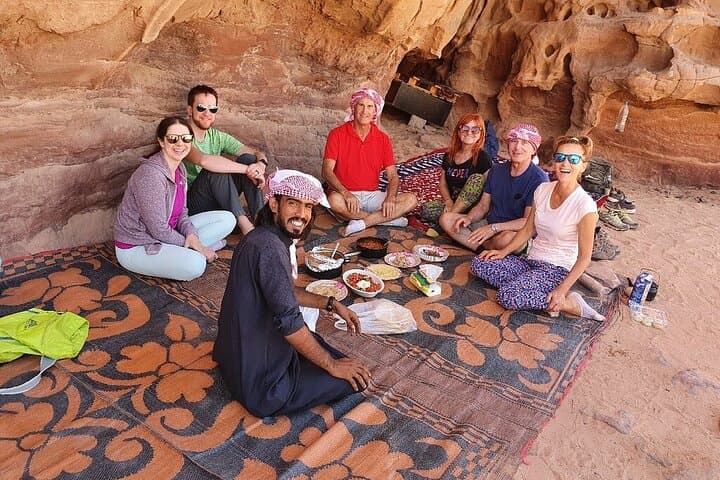
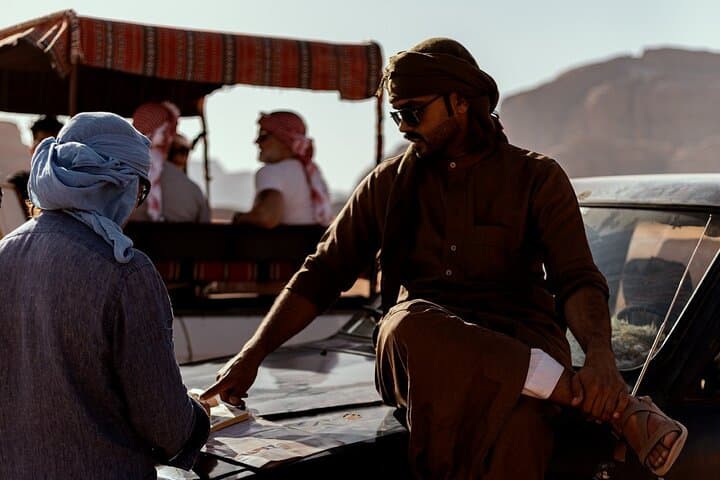
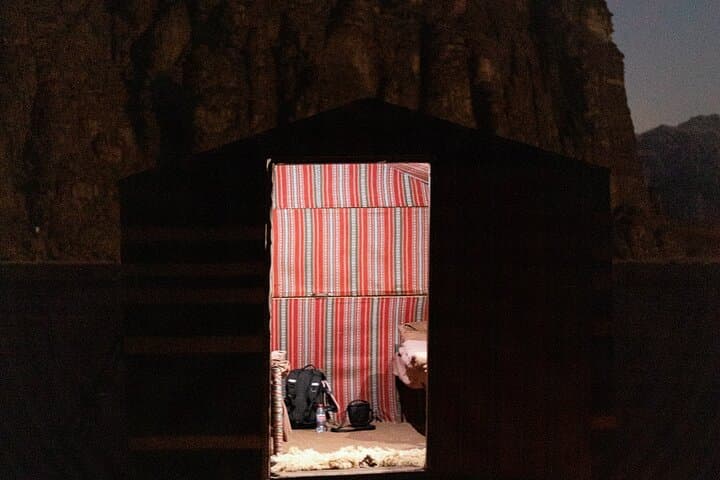
Culture here is Bedouin: practical, hospitable, and tied to the rhythms of the desert. Your guide—often a local Bedouin—will steer the jeep to isolated rock faces, point out old camel trails, and set up a private tent where the evening meal is slow-cooked over coals. The night is deliberate: a simple canvas shelter, a fire, and a sky dense with stars where constellations feel close enough to touch.
Practicalities matter in a place that can flip from comfortably warm to sharply cold. The tour meets at the Wadi Rum visitor center—allow for the last 6 km drive to Rum village where operators gather—and runs as a shared experience for up to six travelers. The package includes the jeep and guide, lunch, dinner, breakfast, the overnight tent, and a morning return to the village parking.
Expect varied terrain: packed rock, loose gravel, and soft sand. Little walking is required, but you should be prepared for short climbs and uneven ground when exploring on foot. Bring at least 2–3 liters of water, sturdy hiking shoes with good traction, sun protection, and windproof layers for the night. Photography rewards patience: dawn and dusk reveal the color and texture of the rocks; midday is harsher but can produce stark, high-contrast frames.
This trip is for travelers who want the quiet side of Wadi Rum—away from the classic tourist circuits—and who appreciate authentic Bedouin hospitality, geological spectacle, and a night under a desert sky. Plan for early starts, slow driving across the backcountry, and an appetite for simple, flavorful meals around the fire.
moderate.
24 hours.
Suitable for travelers in regular physical condition; minimal hiking but expect uneven ground and short climbs.
Meet at the Wadi Rum protected area visitor center; you should then drive the last 6 km to Rum village where the operator will meet you in their office.
The experience is 24 hours long and includes jeep transportation with a Bedouin guide, lunch, dinner, breakfast, one private tent overnight, and morning transport back to the village parking.
The route involves vehicle travel and light walking on uneven ground; it’s marketed as suitable for all fitness levels but not recommended for people with serious spinal issues.
Breathable clothing for daytime, a warm mid-layer and windproof jacket for night, sturdy shoes, hat, and sunglasses.
This itinerary goes off the main tourist loops into isolated wadis near the Saudi border—expect limited cell service and an emphasis on self-sufficiency.
Local operators typically accommodate common dietary needs if notified in advance—use the booking’s special requirements field when reserving.
This stretch of Wadi Araba sits on ancient caravan routes between Sinai and the Arabian Peninsula; rock inscriptions and worn trails mark centuries of passage.
Wadi Rum is a protected area—stay on recorded routes, avoid collecting artifacts, and minimize campfire impact by using established fire spots and responsible waste packing.
Wadi Rum Eco Tours operates guided outdoor trips and adventures with an emphasis on safety, stewardship, and memorable experiences.
The jeep shudders, then climbs, the engine's low voice swallowed by open sky. Sand spits from under the tires as the guide angles across a white wadi; towers of red sandstone lean over the route like silent judges. By mid-afternoon the light washes the cliffs in copper, and when the vehicle eases into a sheltered hollow you feel the desert change—wind whispers, dunes hold their shape, and the horizon becomes a hard line toward Saudi Arabia.
The jeep shudders, then climbs, the engine's low voice swallowed by open sky. Sand spits from under the tires as the guide angles across a white wadi; towers of red sandstone lean over the route like silent judges. By mid-afternoon the light washes the cliffs in copper, and when the vehicle eases into a sheltered hollow you feel the desert change—wind whispers, dunes hold their shape, and the horizon becomes a hard line toward Saudi Arabia.
This is Wadi Araba: an extension of the Wadi Rum protected area where geology reads like a field guide to deep time. Granite and sandstone formations—Al Daghdagh Mountain among them—have been carved by wind and rare torrents into cliffs, arches, and tafoni that glow at sunset. The route on this 24-hour expedition threads through Wadi Nuqra, Wadi Sabet, Al Kashkasheh and Sdad Altak, places that were once caravan corridors and now are quiet enough to hear the sand shift.
Culture here is Bedouin: practical, hospitable, and tied to the rhythms of the desert. Your guide—often a local Bedouin—will steer the jeep to isolated rock faces, point out old camel trails, and set up a private tent where the evening meal is slow-cooked over coals. The night is deliberate: a simple canvas shelter, a fire, and a sky dense with stars where constellations feel close enough to touch.
Practicalities matter in a place that can flip from comfortably warm to sharply cold. The tour meets at the Wadi Rum visitor center—allow for the last 6 km drive to Rum village where operators gather—and runs as a shared experience for up to six travelers. The package includes the jeep and guide, lunch, dinner, breakfast, the overnight tent, and a morning return to the village parking.
Expect varied terrain: packed rock, loose gravel, and soft sand. Little walking is required, but you should be prepared for short climbs and uneven ground when exploring on foot. Bring at least 2–3 liters of water, sturdy hiking shoes with good traction, sun protection, and windproof layers for the night. Photography rewards patience: dawn and dusk reveal the color and texture of the rocks; midday is harsher but can produce stark, high-contrast frames.
This trip is for travelers who want the quiet side of Wadi Rum—away from the classic tourist circuits—and who appreciate authentic Bedouin hospitality, geological spectacle, and a night under a desert sky. Plan for early starts, slow driving across the backcountry, and an appetite for simple, flavorful meals around the fire.