THE ADVENTURE COLLECTIVE® · Independent discovery and booking for outdoor travel

Drive from Cairo into the western desert to Wadi Al Hitan, an open-air museum of 40-million-year-old whale fossils. This full-day 4x4 adventure combines off-road driving, short fossil walks, a visit to the local museum, and close-up encounters with a landscape shaped by ancient seas.
Drive from Cairo into the western desert to Wadi Al Hitan, an open-air museum of 40-million-year-old whale fossils. This full-day 4x4 adventure combines off-road driving, short fossil walks, a visit to the local museum, and close-up encounters with a landscape shaped by ancient seas.
A dawn convoy rolls out of Cairo and the highway gives way to pale desert ribs; the air thins, the sky widens, and the world narrows to the single-track rutted road that leads to Wadi Al Hitan. By midmorning your 4x4 skids into an open basin of flattened sandstone where ancient whale bones sit like strange, quiet machinery beneath the sun.
Verified experiences and guided adventures in the surrounding area.
Operated by Marsa Alam Tours · Tunis (Fayoum), Al Fayyum Governorate
A dawn convoy rolls out of Cairo and the highway gives way to pale desert ribs; the air thins, the sky widens, and the world narrows to the single-track rutted road that leads to Wadi Al Hitan. By midmorning your 4x4 skids into an open basin of flattened sandstone where ancient whale bones sit like strange, quiet machinery beneath the sun.
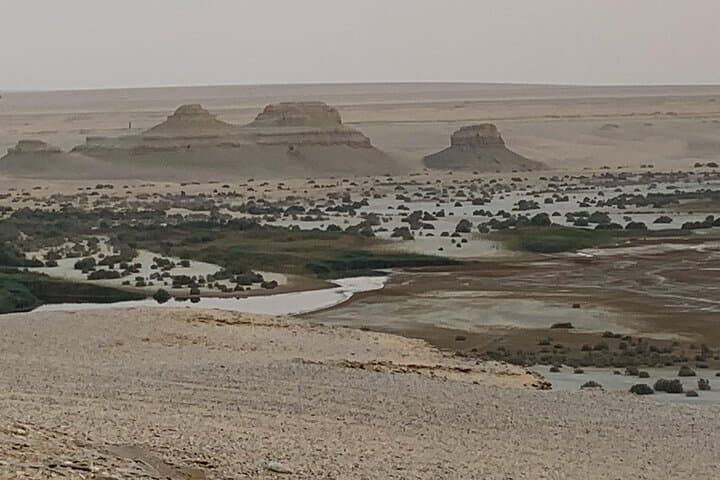
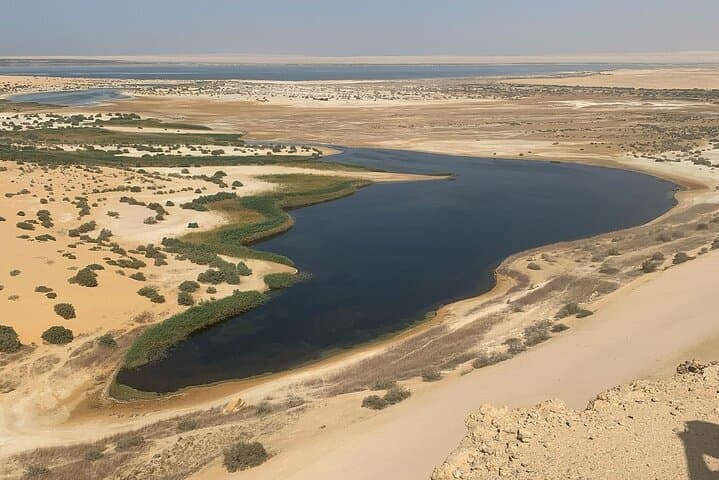
Wadi Al Hitan (Valley of the Whales) was inscribed as a UNESCO World Heritage Site in 2005. The exposed skeletons—partial archaeocetes dating to roughly 40–45 million years ago—tell the story of a time when this basin was a shallow ocean. The geology here is dominated by soft sedimentary rock that preserves shells, shark teeth and fossilized mangrove roots; nearby Wadi El-Rayan and Mudawara Mountain add contrasting wetlands and cliffs for quick side visits.
Culturally, this is pastoral Egypt: small farming villages, local guides who know routes through sand and stone, and a rest house that doubles as the Fossil & Climate Change Museum. The landscape moves and pushes you—sand drifts dare a steady step; wind scours the rock faces.
Practical guidance: the trip is a full 12-hour day from Cairo in an air-conditioned car and sections by 4x4; expect bumpy roads and short walks on uneven ground. Bring sun protection, a refillable water bottle, sturdy shoes, and layers for sharp temperature swings between noon heat and cool desert evenings. Respect the site: fossils are protected; don’t remove anything. Confirm pickup times and whether the operator is running a daytime tour or an overnight camp option before you book.
easy.
12 hours.
Suitable for most travelers; requires short walks on uneven sand and rock and the ability to climb low slopes.
Expect roughly 1.5–2 hours to reach Tunis village and another 1–1.5 hours by 4x4 into the fossil area depending on traffic and road conditions.
No—Wadi Al Hitan is a protected UNESCO site and removing fossils or artifacts is illegal and harms scientific study.
This listing is presented as a full-day excursion; some operators offer an overnight camping option—confirm with the supplier if you want to camp in the desert.
Light stroller access is possible on flat sections, but much of the site requires walking over uneven ground; infants may need to be carried for fossil areas.
The area preserves archaeocete whale fossils from the Eocene epoch (about 40–45 million years ago); discoveries attracted scientific attention in the 20th century and UNESCO recognition in 2005.
Wadi Al Hitan is fragile; stay on designated routes, avoid touching fossils, and pack out all trash to protect scientific resources and local ecosystems.
Marsa Alam Tours operates guided outdoor trips and adventures with an emphasis on safety, stewardship, and memorable experiences.
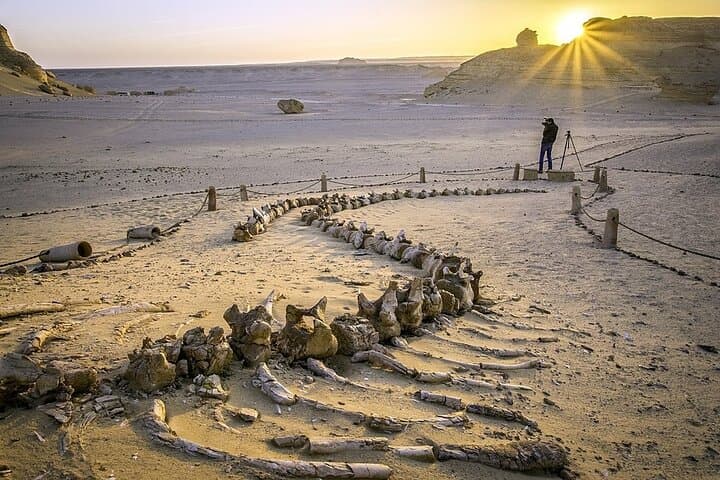
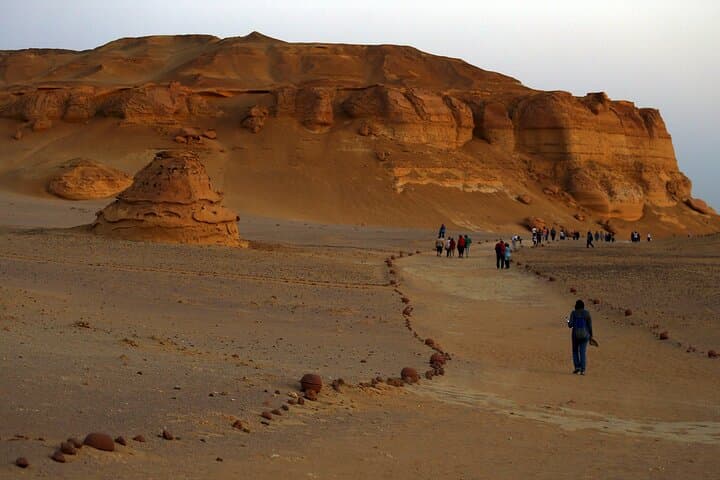
A dawn convoy rolls out of Cairo and the highway gives way to pale desert ribs; the air thins, the sky widens, and the world narrows to the single-track rutted road that leads to Wadi Al Hitan. By midmorning your 4x4 skids into an open basin of flattened sandstone where ancient whale bones sit like strange, quiet machinery beneath the sun.
A dawn convoy rolls out of Cairo and the highway gives way to pale desert ribs; the air thins, the sky widens, and the world narrows to the single-track rutted road that leads to Wadi Al Hitan. By midmorning your 4x4 skids into an open basin of flattened sandstone where ancient whale bones sit like strange, quiet machinery beneath the sun.
Wadi Al Hitan (Valley of the Whales) was inscribed as a UNESCO World Heritage Site in 2005. The exposed skeletons—partial archaeocetes dating to roughly 40–45 million years ago—tell the story of a time when this basin was a shallow ocean. The geology here is dominated by soft sedimentary rock that preserves shells, shark teeth and fossilized mangrove roots; nearby Wadi El-Rayan and Mudawara Mountain add contrasting wetlands and cliffs for quick side visits.
Culturally, this is pastoral Egypt: small farming villages, local guides who know routes through sand and stone, and a rest house that doubles as the Fossil & Climate Change Museum. The landscape moves and pushes you—sand drifts dare a steady step; wind scours the rock faces.
Practical guidance: the trip is a full 12-hour day from Cairo in an air-conditioned car and sections by 4x4; expect bumpy roads and short walks on uneven ground. Bring sun protection, a refillable water bottle, sturdy shoes, and layers for sharp temperature swings between noon heat and cool desert evenings. Respect the site: fossils are protected; don’t remove anything. Confirm pickup times and whether the operator is running a daytime tour or an overnight camp option before you book.