THE ADVENTURE COLLECTIVE® · Independent discovery and booking for outdoor travel

Three hours of vineyard trails, river views and a 13th‑century ruin: this easy walk from Spitz highlights the Wachau’s geology, viticulture and sweeping Danube panoramas. Practical tips and what to expect on the trail.
Three hours of vineyard trails, river views and a 13th‑century ruin: this easy walk from Spitz highlights the Wachau’s geology, viticulture and sweeping Danube panoramas. Practical tips and what to expect on the trail.
Fog lifts off the Danube as you step out in Spitz: grape terraces slope away like folded stairs, and a single tower of the ruin Hinterhaus watches over the river. The path quickly narrows into a sun-dappled trail that climbs through orchards and vine rows, giving you a stream of changing views—Spitz below, the Thousand-Year Mountain opposite, and the Danube cutting a silver line through limestone slopes.
Verified experiences and guided adventures in the surrounding area.
Operated by Wiener Wandern · Spitz, Lower Austria
Fog lifts off the Danube as you step out in Spitz: grape terraces slope away like folded stairs, and a single tower of the ruin Hinterhaus watches over the river. The path quickly narrows into a sun-dappled trail that climbs through orchards and vine rows, giving you a stream of changing views—Spitz below, the Thousand-Year Mountain opposite, and the Danube cutting a silver line through limestone slopes.
This short circuit through the Wachau covers living history and layered geology. The valley’s terraced vineyards are a product of medieval husbandry and Roman-era cultivation; the ruin Hinterhaus traces to the 13th century and sits on weathered sandstone that peels into small crags. Local culture here is vine-forward: you’ll pass small Heurigen (wine taverns), stone walls marked by lichen, and fruit trees used for schnapps and preserves.
Expect an easy but active outing: three hours of hiking with roughly 200 meters of elevation gain over uneven, sometimes steep sections and steps. The guide points out viewpoints like the “Red Gate,” explains vineyard practices, and frames the region’s UNESCO-listed landscape so the geology makes sense in human terms.
Practical: wear sturdy mountain boots, bring 1–2 liters of water, and layer for wind on ridge tops. Morning light is best for photos and cooler hiking; late afternoon brings warmer river breezes and golden vineyard color. The route suits beginners and families with moderate fitness, but recent rain can make rock and clay slippery—good traction matters. This is a compact Wachau experience that balances scenery, history, and manageable effort.
easy.
3 hours (hike); up to 6–7 hours including transfer from Vienna.
Basic cardio and the ability to handle short climbs and steps; suitable for active families and beginners
The tour description notes round‑trip shared transfer or pickup from a designated meeting point; confirm pickup details at booking.
Yes—this route is family‑friendly but children should be comfortable with short climbs and uneven paths; children must be accompanied by an adult.
Mountain boots or sturdy hiking shoes with tread are strongly recommended due to steeper, rocky, or clay sections.
It operates year‑round but may require additional winter equipment (snowshoes or chains) and the operator will notify you if itinerary adjustments are needed.
The Wachau’s terraces and small fortified sites date from medieval viticulture and earlier Roman influence; Spitz functions historically as a river‑side market town tied to wine trade.
Vineyard terraces are managed intensively—stay on paths to avoid damaging young vines and follow leave‑no‑trace principles to protect soil and local biodiversity.
Wiener Wandern operates guided outdoor trips and adventures with an emphasis on safety, stewardship, and memorable experiences.
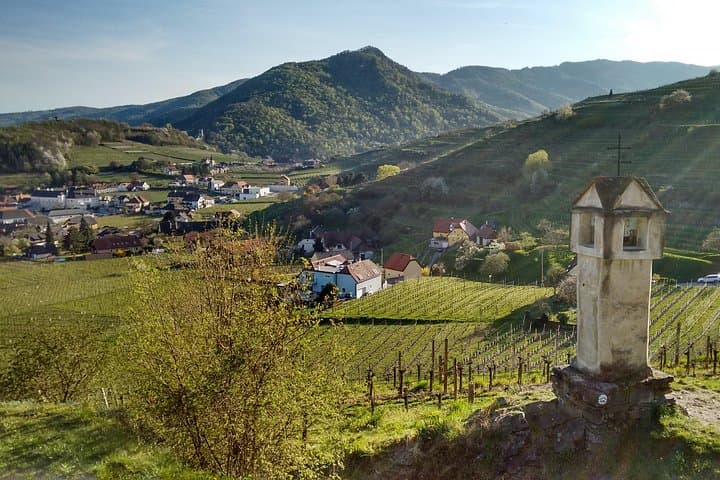
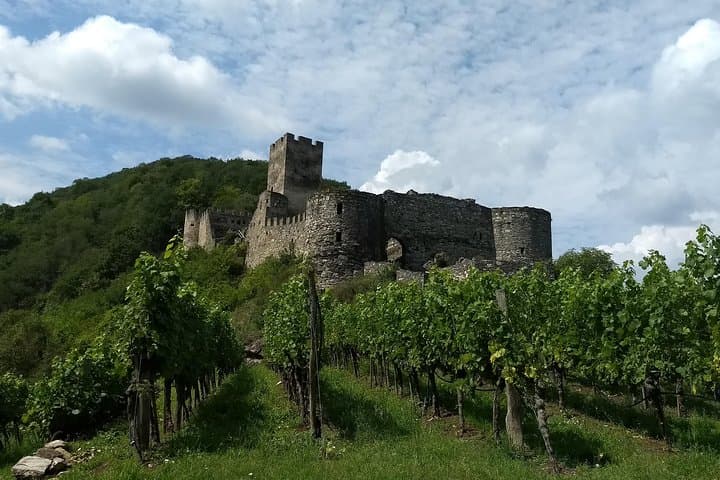
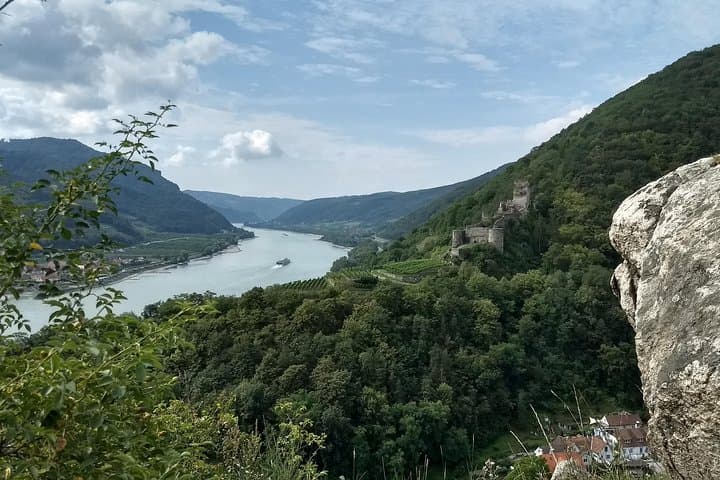
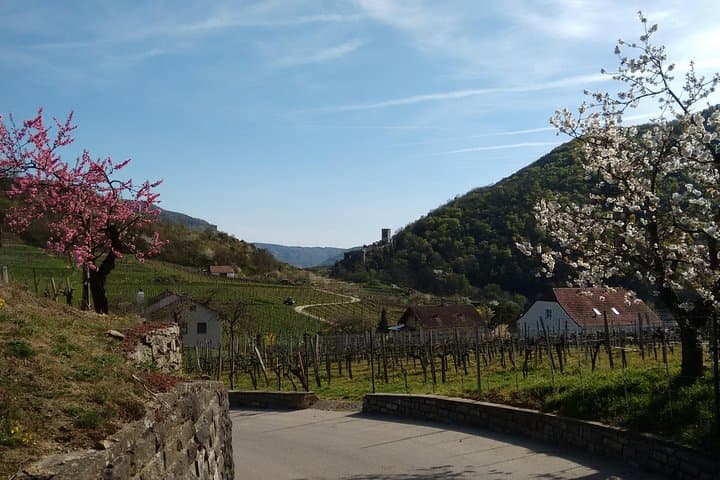
Fog lifts off the Danube as you step out in Spitz: grape terraces slope away like folded stairs, and a single tower of the ruin Hinterhaus watches over the river. The path quickly narrows into a sun-dappled trail that climbs through orchards and vine rows, giving you a stream of changing views—Spitz below, the Thousand-Year Mountain opposite, and the Danube cutting a silver line through limestone slopes.
Fog lifts off the Danube as you step out in Spitz: grape terraces slope away like folded stairs, and a single tower of the ruin Hinterhaus watches over the river. The path quickly narrows into a sun-dappled trail that climbs through orchards and vine rows, giving you a stream of changing views—Spitz below, the Thousand-Year Mountain opposite, and the Danube cutting a silver line through limestone slopes.
This short circuit through the Wachau covers living history and layered geology. The valley’s terraced vineyards are a product of medieval husbandry and Roman-era cultivation; the ruin Hinterhaus traces to the 13th century and sits on weathered sandstone that peels into small crags. Local culture here is vine-forward: you’ll pass small Heurigen (wine taverns), stone walls marked by lichen, and fruit trees used for schnapps and preserves.
Expect an easy but active outing: three hours of hiking with roughly 200 meters of elevation gain over uneven, sometimes steep sections and steps. The guide points out viewpoints like the “Red Gate,” explains vineyard practices, and frames the region’s UNESCO-listed landscape so the geology makes sense in human terms.
Practical: wear sturdy mountain boots, bring 1–2 liters of water, and layer for wind on ridge tops. Morning light is best for photos and cooler hiking; late afternoon brings warmer river breezes and golden vineyard color. The route suits beginners and families with moderate fitness, but recent rain can make rock and clay slippery—good traction matters. This is a compact Wachau experience that balances scenery, history, and manageable effort.