THE ADVENTURE COLLECTIVE® · Independent discovery and booking for outdoor travel

Step onto Sólheimajökull with a private guide and learn basic glacier travel while exploring crevasses, ice ridges and sculpted blue ice. This short, guided hike is tailored for all fitness levels and includes all safety gear.
Step onto Sólheimajökull with a private guide and learn basic glacier travel while exploring crevasses, ice ridges and sculpted blue ice. This short, guided hike is tailored for all fitness levels and includes all safety gear.
A cold wind from the glacier meets you as you step from the parking lot onto the black volcanic gravel, and the blue ice of Sólheimajökull looms ahead—ridges and serrated crevasses cleaving the landscape like frozen rivers. Your guide fits your crampons and discusses rope protocols; the first crunch of ice underfoot is immediate and steady, a tactile bass that keeps time with each careful step.
Verified experiences and guided adventures in the surrounding area.
Operated by Vivid Iceland · Vík, Southern Region
A cold wind from the glacier meets you as you step from the parking lot onto the black volcanic gravel, and the blue ice of Sólheimajökull looms ahead—ridges and serrated crevasses cleaving the landscape like frozen rivers. Your guide fits your crampons and discusses rope protocols; the first crunch of ice underfoot is immediate and steady, a tactile bass that keeps time with each careful step.
Sólheimajökull is the southern outlet of Mýrdalsjökull, carved from centuries of snowfall and seasonal melt. Geology here is raw: layers of ash from nearby eruptions alternate with dense glacial ice, and the glacier’s rapid retreat over recent decades is visible in the exposed moraine. Culturally, the area is tied to rural Icelandic farming communities and the dramatic eruptions of Eyjafjallajökull and Katla that have shaped local routes and stories.
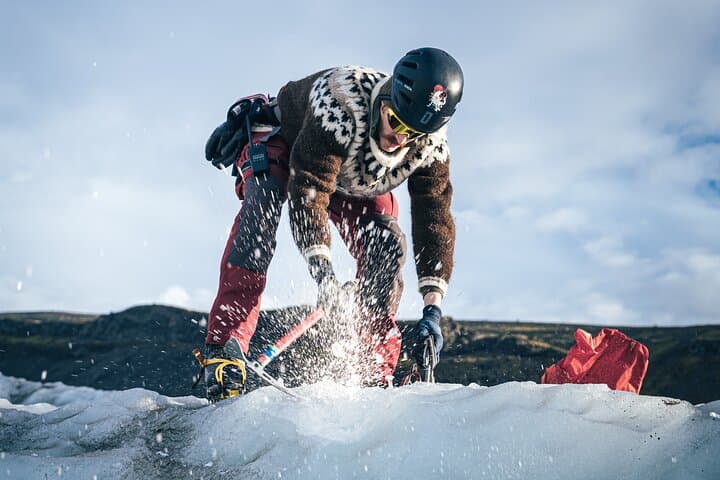
Practically, expect a 1–1.5 hour walk on the ice framed by a short approach and return to the parking area; guides provide helmets, harnesses, crampons and ice axes, and will teach basic footwork and self-arrest technique. Terrain includes packed blue ice, fragile snow bridges, and shallow crevasse fields—conditions change daily, so the guide adapts the route.
Plan layers for wind and moisture, sturdy insulated boots, and glasses for low-angle sun glare. Photography is constant but keep distance from edges and follow rope commands. Morning tours often have quieter ice and crisper light; afternoons can bring more melt and surface slush. For many visitors, the hike balances straightforward skill-building with unforgettable glacial detail—sulphur-streaked ice, moulins drinking meltwater, and the big, slow movement that still defines Iceland’s living ice.
moderate.
2–3 hours.
Comfortable walking fitness — able to hike on uneven, icy surfaces for up to 90 minutes
No — guides provide instruction on crampon use, rope protocol and basic self-arrest techniques; the tour is suitable for beginners with reasonable mobility.
Safety equipment (helmets, harnesses, crampons) and a certified glacier guide are included; check with the operator for transportation or snacks.
Yes — glacier conditions can change rapidly; operators may cancel for safety reasons and typically offer a refund or rebooking per their policy.
Temperatures on the ice are often a few degrees colder than nearby lowlands and can be windy; dress in layers and assume wind chill will make it feel significantly colder.
Sólheimajökull is an outlet glacier of Mýrdalsjökull; its shape and recent retreat record the interaction of volcanic eruptions and warming climate in southern Iceland.
Glaciers here are retreating rapidly; staying on routes, using guided operators, and minimizing foot traffic off established approaches help reduce erosion and safety impacts.
Vivid Iceland operates guided outdoor trips and adventures with an emphasis on safety, stewardship, and memorable experiences.
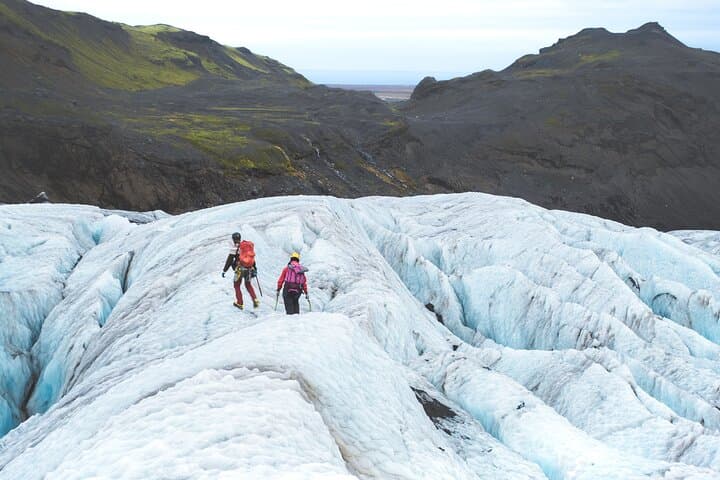
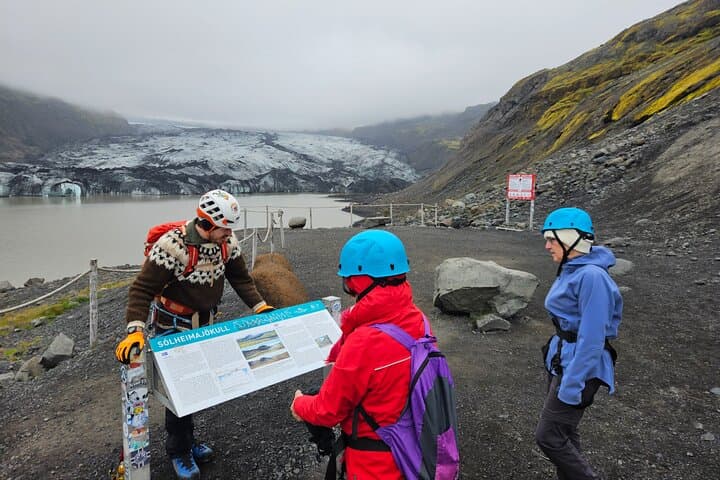
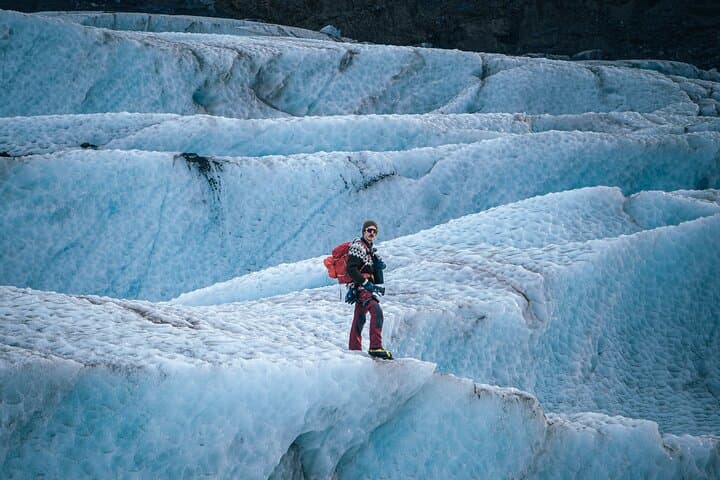
A cold wind from the glacier meets you as you step from the parking lot onto the black volcanic gravel, and the blue ice of Sólheimajökull looms ahead—ridges and serrated crevasses cleaving the landscape like frozen rivers. Your guide fits your crampons and discusses rope protocols; the first crunch of ice underfoot is immediate and steady, a tactile bass that keeps time with each careful step.
A cold wind from the glacier meets you as you step from the parking lot onto the black volcanic gravel, and the blue ice of Sólheimajökull looms ahead—ridges and serrated crevasses cleaving the landscape like frozen rivers. Your guide fits your crampons and discusses rope protocols; the first crunch of ice underfoot is immediate and steady, a tactile bass that keeps time with each careful step.
Sólheimajökull is the southern outlet of Mýrdalsjökull, carved from centuries of snowfall and seasonal melt. Geology here is raw: layers of ash from nearby eruptions alternate with dense glacial ice, and the glacier’s rapid retreat over recent decades is visible in the exposed moraine. Culturally, the area is tied to rural Icelandic farming communities and the dramatic eruptions of Eyjafjallajökull and Katla that have shaped local routes and stories.
Practically, expect a 1–1.5 hour walk on the ice framed by a short approach and return to the parking area; guides provide helmets, harnesses, crampons and ice axes, and will teach basic footwork and self-arrest technique. Terrain includes packed blue ice, fragile snow bridges, and shallow crevasse fields—conditions change daily, so the guide adapts the route.
Plan layers for wind and moisture, sturdy insulated boots, and glasses for low-angle sun glare. Photography is constant but keep distance from edges and follow rope commands. Morning tours often have quieter ice and crisper light; afternoons can bring more melt and surface slush. For many visitors, the hike balances straightforward skill-building with unforgettable glacial detail—sulphur-streaked ice, moulins drinking meltwater, and the big, slow movement that still defines Iceland’s living ice.