THE ADVENTURE COLLECTIVE® · Independent discovery and booking for outdoor travel

Explore Vyšehrad’s fortress, basilica and famed cemetery on a 90‑minute private guided walk that combines high‑view panoramas of Prague with close study of Romanesque and neo‑Gothic architecture. Ideal for history and photography-minded travelers.
Explore Vyšehrad’s fortress, basilica and famed cemetery on a 90‑minute private guided walk that combines high‑view panoramas of Prague with close study of Romanesque and neo‑Gothic architecture. Ideal for history and photography-minded travelers.
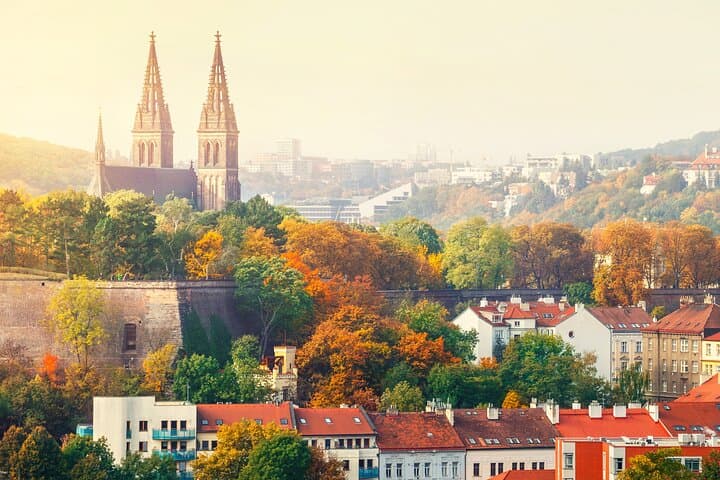
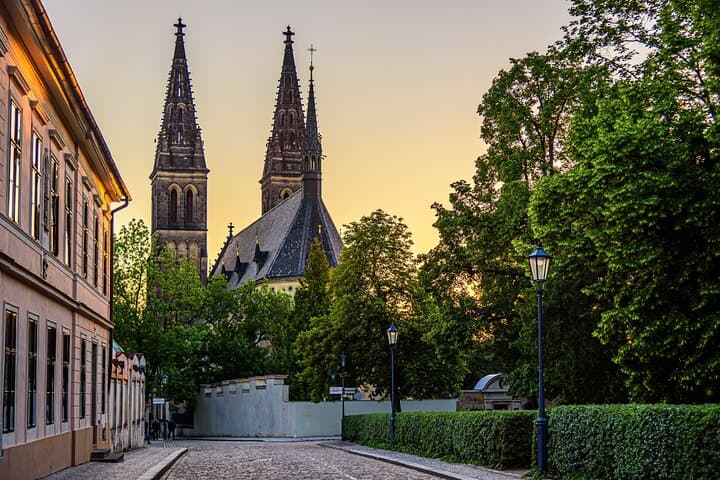
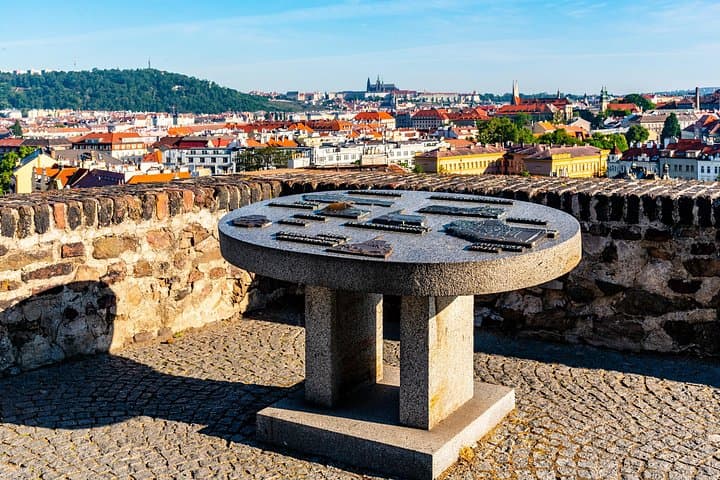
A wind off the Vltava pushes up the hill and the first view of Prague’s red roofs opens like a map. On a 90-minute private guided tour of Vyšehrad, visitors move from rampart to rotunda, listening as stone and river trade stories: siege, royal residence, rebirth as a public park. The basilica of St. Peter and St. Paul rises with its twin 58 m towers and neo‑Gothic façade, while the rounded silhouette of St. Martin’s Rotunda—one of Prague’s oldest Romanesque buildings—holds cannon scars from a turbulent past.
Verified experiences and guided adventures in the surrounding area.
Operated by beertours.cz · Prague, Prague
A wind off the Vltava pushes up the hill and the first view of Prague’s red roofs opens like a map. On a 90-minute private guided tour of Vyšehrad, visitors move from rampart to rotunda, listening as stone and river trade stories: siege, royal residence, rebirth as a public park. The basilica of St. Peter and St. Paul rises with its twin 58 m towers and neo‑Gothic façade, while the rounded silhouette of St. Martin’s Rotunda—one of Prague’s oldest Romanesque buildings—holds cannon scars from a turbulent past.
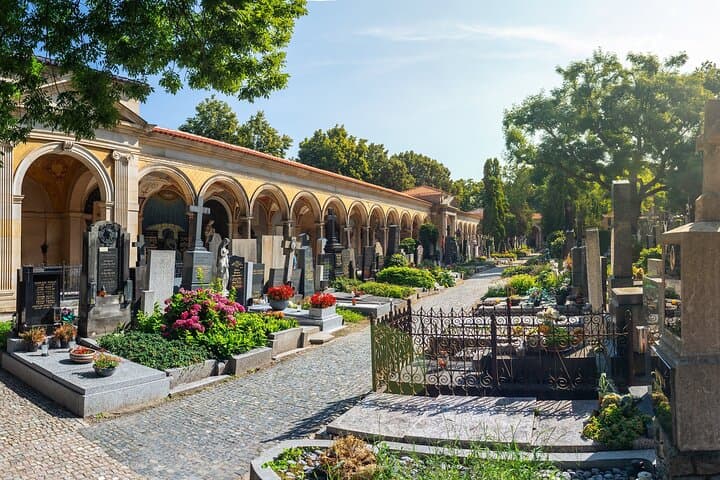
Vyšehrad’s layered history spans probable 10th-century fortifications, medieval churches, and a 19th-century cultural revival that made the hill a pantheon for Czech artists. The Slavín tomb and the cemetery contain graves of Dvořák, Smetana and Mucha; nearby, neo‑Gothic mosaics and panoramic terraces frame Prague Castle and Charles Bridge across the river.
Terrain is primarily paved paths, park lawns and short flights of stone steps; expect modest climbs and vantage points that reward a steady pace. Guides will point out architectural details, tell legends, and place the site in Prague’s broader urban geology—how the Vltava carved the city’s curves and how the fortress watched them.
Practical: wear comfortable walking shoes, bring a water bottle and a light layer for changing weather. Early morning or late afternoon minimizes crowds and gives softer light for photos. The tour is private, instant confirmation is typical, and public transit connects close to the entrance; note the route includes stair sections and some uneven stone surfaces.
easy.
1–1.5 hours.
Suitable for most travelers who can handle 30–60 minutes of walking and short flights of stairs.
This private guided tour covers outdoor areas and viewpoints; access to interior spaces depends on opening hours and may require separate admission—confirm with the operator.
Paths are mostly paved but include steps and uneven stone; those with significant mobility limitations should check specifics with the guide and consider nearby riverfront routes with fewer steps.
Meeting points are typically near public-transport stops by the fortress; Prague’s tram and metro network connect close to Vyšehrad—details are provided after booking.
Yes—private tours are often flexible; request a photography‑focused route or a family‑friendly pace when booking.
Vyšehrad likely began as a fortified site in the 10th century and later became a symbolic burial place for Czech cultural figures during a 19th-century national revival.
Stay on paths and avoid touching fragile stonework; the site balances heavy visitor traffic with ongoing preservation of historic masonry and monuments.
beertours.cz operates guided outdoor trips and adventures with an emphasis on safety, stewardship, and memorable experiences.
A wind off the Vltava pushes up the hill and the first view of Prague’s red roofs opens like a map. On a 90-minute private guided tour of Vyšehrad, visitors move from rampart to rotunda, listening as stone and river trade stories: siege, royal residence, rebirth as a public park. The basilica of St. Peter and St. Paul rises with its twin 58 m towers and neo‑Gothic façade, while the rounded silhouette of St. Martin’s Rotunda—one of Prague’s oldest Romanesque buildings—holds cannon scars from a turbulent past.
A wind off the Vltava pushes up the hill and the first view of Prague’s red roofs opens like a map. On a 90-minute private guided tour of Vyšehrad, visitors move from rampart to rotunda, listening as stone and river trade stories: siege, royal residence, rebirth as a public park. The basilica of St. Peter and St. Paul rises with its twin 58 m towers and neo‑Gothic façade, while the rounded silhouette of St. Martin’s Rotunda—one of Prague’s oldest Romanesque buildings—holds cannon scars from a turbulent past.
Vyšehrad’s layered history spans probable 10th-century fortifications, medieval churches, and a 19th-century cultural revival that made the hill a pantheon for Czech artists. The Slavín tomb and the cemetery contain graves of Dvořák, Smetana and Mucha; nearby, neo‑Gothic mosaics and panoramic terraces frame Prague Castle and Charles Bridge across the river.
Terrain is primarily paved paths, park lawns and short flights of stone steps; expect modest climbs and vantage points that reward a steady pace. Guides will point out architectural details, tell legends, and place the site in Prague’s broader urban geology—how the Vltava carved the city’s curves and how the fortress watched them.
Practical: wear comfortable walking shoes, bring a water bottle and a light layer for changing weather. Early morning or late afternoon minimizes crowds and gives softer light for photos. The tour is private, instant confirmation is typical, and public transit connects close to the entrance; note the route includes stair sections and some uneven stone surfaces.