THE ADVENTURE COLLECTIVE® · Independent discovery and booking for outdoor travel

Skip the busiest routes and head to Vyšehrad, a fortress-park perched above the Vltava with neo‑Gothic interiors, underground casemates, and panoramic city views. This guided walk mixes history, art, and quiet overlooks in about 2–3 hours.
Skip the busiest routes and head to Vyšehrad, a fortress-park perched above the Vltava with neo‑Gothic interiors, underground casemates, and panoramic city views. This guided walk mixes history, art, and quiet overlooks in about 2–3 hours.
You arrive at the top of Wenceslas Square and the city opens out below — red roofs, the Vltava threading through stone bridges, and Vyšehrad rising like an old guardian on a rocky spur. A short metro ride and a steady climb put you inside a baroque fortress ringed by a broad park where wind and city meet.
Verified experiences and guided adventures in the surrounding area.
Operated by Fun in Prague, s.r.o. · Prague, Prague
You arrive at the top of Wenceslas Square and the city opens out below — red roofs, the Vltava threading through stone bridges, and Vyšehrad rising like an old guardian on a rocky spur. A short metro ride and a steady climb put you inside a baroque fortress ringed by a broad park where wind and city meet.
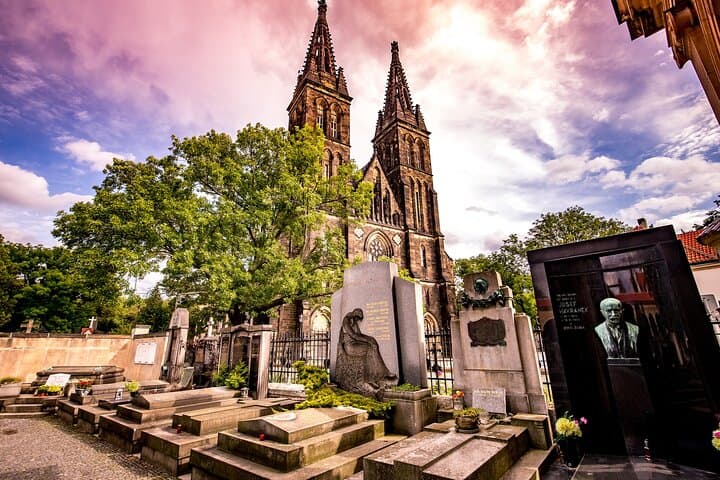
Vyšehrad’s story runs from 11th-century Romanesque foundations through Renaissance and Baroque fortifications to a 19th-century neo‑Gothic rebuilding of the Collegiate Church of Saints Peter and Paul. The cemetery nearby reads like a who's who of Czech culture; the casemates beneath the fort store original Baroque statues once set on Charles Bridge, relics that survived the city’s shifting tides.
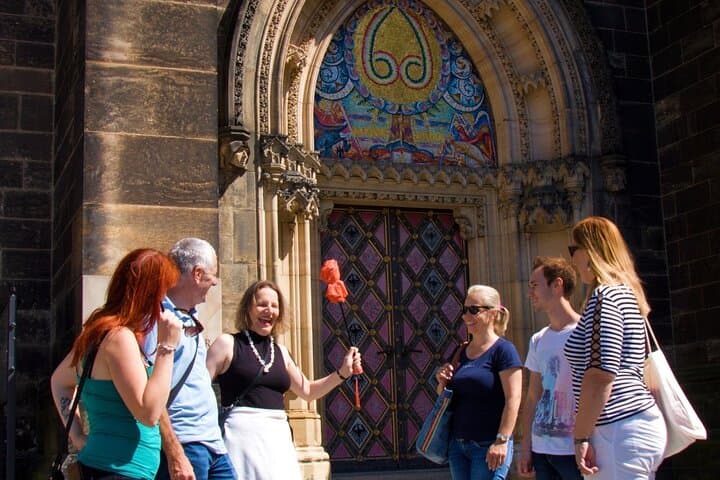
Geologically the site sits on a resilient outcrop above the Vltava; its elevation gives sweeping urban panoramas and quieter, tree-lined paths away from the tourist throngs. Locals use the park for runs and late-afternoon walks; the basilica’s Art Nouveau frescoes add an unexpected modernist flourish to a medieval footprint.
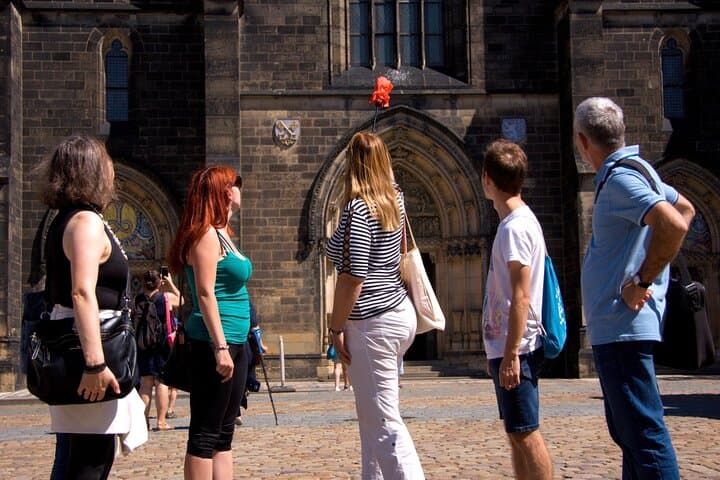
Practically, expect paved paths, some short flights of stone steps, and cool, dim corridors inside the casemates. Guided visits include admission and a metro ticket; small-group pacing means time to ask about names on the graves and to linger at the viewpoints. Bring layered clothing for wind on exposed terraces, comfortable shoes for uneven paving, and a fully charged camera — the light across the Vltava can change from pale to golden in minutes. With about 2–3 hours on site, this is a compact, accessible slice of Prague that favors curiosity over haste.
easy.
2–3 hours.
Suitable for most fitness levels; involves short walks and stair sections but no sustained climbing.
Yes — the tour includes admission to St. Peter and Paul’s Basilica and the Vyšehrad casemates as listed on the booking inclusions.
Meet at the top of Wenceslas Square in front of the National Museum; the metro (Můstek/Wenceslas Square stations) provides the fastest access.
The route is family-friendly but the casemates and some cemetery pathways have steps and narrow passages that limit stroller access.
Yes — there are cafés and public restrooms near the park and at nearby tourist facilities, but availability can be limited during early openings.
Vyšehrad was an early seat of Bohemian rulers and later fortified in the Baroque era; the site evolved into a national pantheon in the 19th century.
The fortress park is maintained by Prague authorities and benefits from careful footpath management; visitors are asked to stay on marked paths and respect memorial sites.
Fun in Prague, s.r.o. operates guided outdoor trips and adventures with an emphasis on safety, stewardship, and memorable experiences.
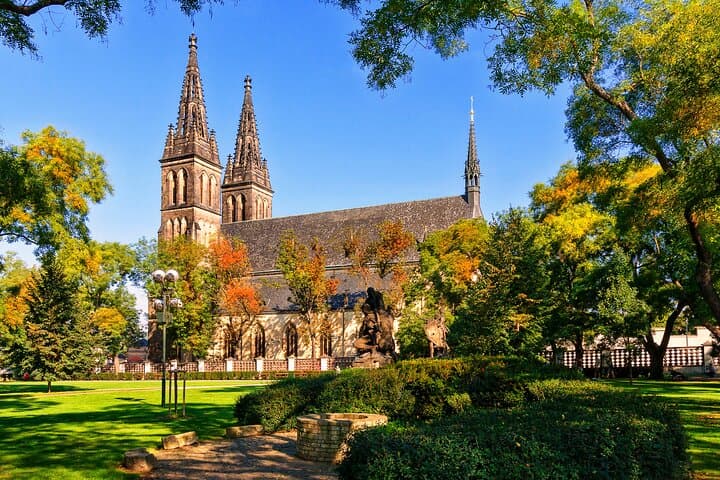
You arrive at the top of Wenceslas Square and the city opens out below — red roofs, the Vltava threading through stone bridges, and Vyšehrad rising like an old guardian on a rocky spur. A short metro ride and a steady climb put you inside a baroque fortress ringed by a broad park where wind and city meet.
You arrive at the top of Wenceslas Square and the city opens out below — red roofs, the Vltava threading through stone bridges, and Vyšehrad rising like an old guardian on a rocky spur. A short metro ride and a steady climb put you inside a baroque fortress ringed by a broad park where wind and city meet.
Vyšehrad’s story runs from 11th-century Romanesque foundations through Renaissance and Baroque fortifications to a 19th-century neo‑Gothic rebuilding of the Collegiate Church of Saints Peter and Paul. The cemetery nearby reads like a who's who of Czech culture; the casemates beneath the fort store original Baroque statues once set on Charles Bridge, relics that survived the city’s shifting tides.
Geologically the site sits on a resilient outcrop above the Vltava; its elevation gives sweeping urban panoramas and quieter, tree-lined paths away from the tourist throngs. Locals use the park for runs and late-afternoon walks; the basilica’s Art Nouveau frescoes add an unexpected modernist flourish to a medieval footprint.
Practically, expect paved paths, some short flights of stone steps, and cool, dim corridors inside the casemates. Guided visits include admission and a metro ticket; small-group pacing means time to ask about names on the graves and to linger at the viewpoints. Bring layered clothing for wind on exposed terraces, comfortable shoes for uneven paving, and a fully charged camera — the light across the Vltava can change from pale to golden in minutes. With about 2–3 hours on site, this is a compact, accessible slice of Prague that favors curiosity over haste.