THE ADVENTURE COLLECTIVE® · Independent discovery and booking for outdoor travel

Trace steam-scented paths across lunar slopes and fragrant woodland on Vulcano. This half-day trek visits Red Caves, volcanic tuffs and reaches Monte Saraceno for sweeping Aeolian views—ideal for hikers who want geology, thermal dips and local legend.
Trace steam-scented paths across lunar slopes and fragrant woodland on Vulcano. This half-day trek visits Red Caves, volcanic tuffs and reaches Monte Saraceno for sweeping Aeolian views—ideal for hikers who want geology, thermal dips and local legend.
You step off the ferry into wind-swept salt air and the low rumble of an island that still remembers fire.
Verified experiences and guided adventures in the surrounding area.
Operated by Empeeria · Vulcano Porto, Sicily
You step off the ferry into wind-swept salt air and the low rumble of an island that still remembers fire.
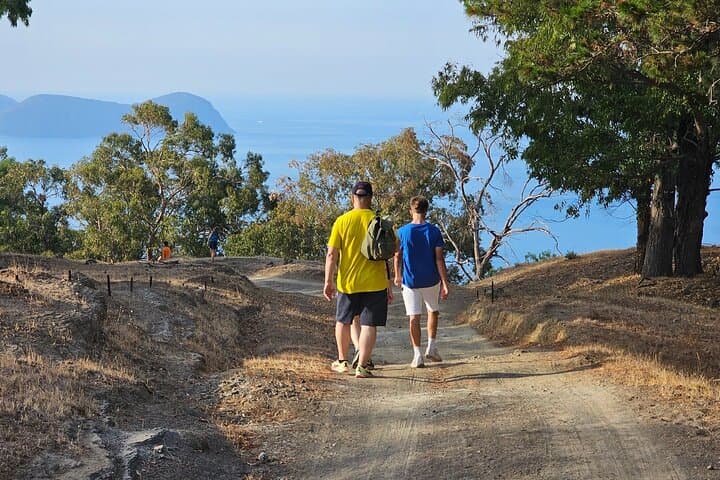
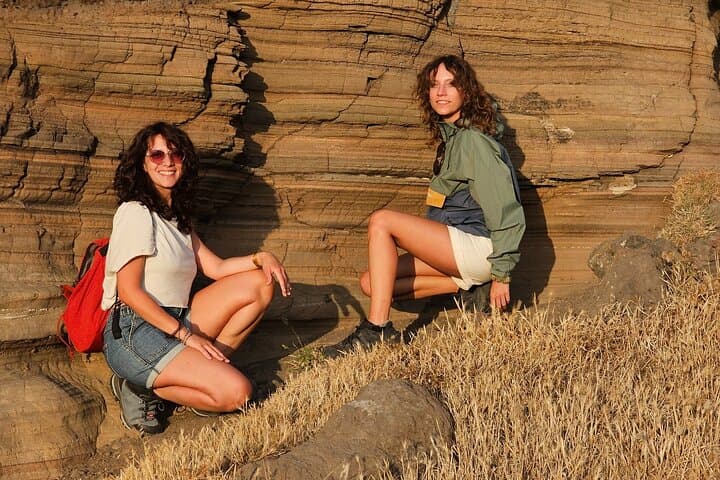
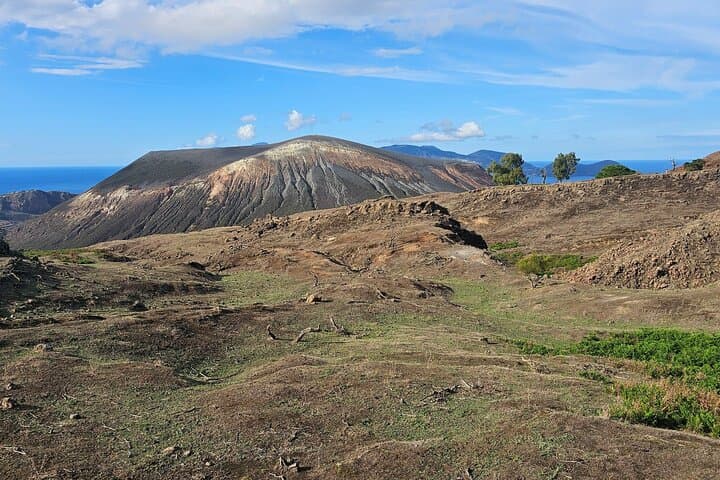
The route threads from the port through low Mediterranean scrub into unexpected pockets of pine and laurel, then opens onto ash-strewn slopes where fumaroles huff steam like a living map of the volcano’s history. Early on you visit the Red Caves, their oxidized walls whispering the island’s volcanic chemistry; later the trail crosses patches of volcanic tuff and scattered crystals, small geological archives beneath your boots.
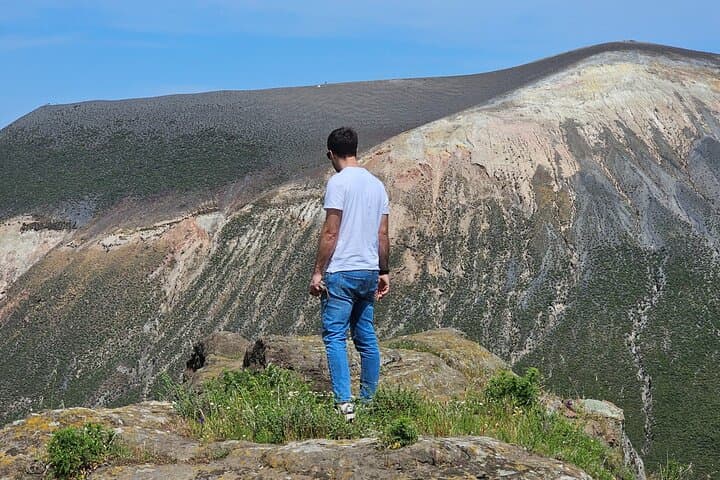
Vulcano’s name comes from the Roman god of fire, and the island wears that legacy plainly: thermal muds and warm tidal pools have drawn visitors since antiquity and shaped local lore. Monte Saraceno, the day’s high point at roughly 480 meters, rewards the climb with sweeping views of the Aeolian chain, Sicily’s coastline and the blue that separates them.
Practical notes: the terrain alternates hard-packed trail, loose scoria and short rocky scrambles—sturdy footwear is non-negotiable. Bring at least 1–1.5 liters of water, sun protection and a light wind layer; fumaroles can make sheltered pockets surprisingly steamy while coastal wind chills your descent. Start early to avoid midday heat and to catch the clearest views.
Respect closed areas around active vents and stay on marked paths to protect fragile soils and thermal features. The hike fits a broad range of fitness levels but rewards steady pacing—move deliberately, look down for crystals, look up for panoramas, and let the island’s volcanic voice lead the way.
moderate.
3–4 hours.
Suitable for most people with regular activity; expect short steep sections and uneven footing.
Moderate: total walking time is roughly 3–4 hours with some short steep sections and loose volcanic material—suitable for most walkers in decent shape.
Many itineraries allow a post-hike visit to warm muds or thermal pools near the shoreline, but access depends on local conditions and safety advisories.
Yes if you stay on marked trails; fumaroles can be hot and unstable—do not approach vents, and follow your guide’s instructions.
Older children accustomed to hiking and uneven terrain can usually participate; supervise closely around steep drops and thermal areas.
Vulcano’s thermal activity has been recorded since antiquity and inspired Roman myths about the god Vulcan; names and small archaeological finds on the island reflect long human interaction with its volcanic resources.
Stay on trails to prevent erosion of fragile volcanic soils and avoid disturbing fumarole areas; local guides emphasize Leave No Trace and minimizing use of soaps in thermal waters.
Empeeria operates guided outdoor trips and adventures with an emphasis on safety, stewardship, and memorable experiences.
You step off the ferry into wind-swept salt air and the low rumble of an island that still remembers fire.
You step off the ferry into wind-swept salt air and the low rumble of an island that still remembers fire.
The route threads from the port through low Mediterranean scrub into unexpected pockets of pine and laurel, then opens onto ash-strewn slopes where fumaroles huff steam like a living map of the volcano’s history. Early on you visit the Red Caves, their oxidized walls whispering the island’s volcanic chemistry; later the trail crosses patches of volcanic tuff and scattered crystals, small geological archives beneath your boots.
Vulcano’s name comes from the Roman god of fire, and the island wears that legacy plainly: thermal muds and warm tidal pools have drawn visitors since antiquity and shaped local lore. Monte Saraceno, the day’s high point at roughly 480 meters, rewards the climb with sweeping views of the Aeolian chain, Sicily’s coastline and the blue that separates them.
Practical notes: the terrain alternates hard-packed trail, loose scoria and short rocky scrambles—sturdy footwear is non-negotiable. Bring at least 1–1.5 liters of water, sun protection and a light wind layer; fumaroles can make sheltered pockets surprisingly steamy while coastal wind chills your descent. Start early to avoid midday heat and to catch the clearest views.
Respect closed areas around active vents and stay on marked paths to protect fragile soils and thermal features. The hike fits a broad range of fitness levels but rewards steady pacing—move deliberately, look down for crystals, look up for panoramas, and let the island’s volcanic voice lead the way.