THE ADVENTURE COLLECTIVE® · Independent discovery and booking for outdoor travel

Spend a full day volunteering at the Dujiangyan Panda Base: cleaning enclosures, preparing food, and observing panda behavior under keeper guidance. This private day trip from Chengdu combines hands-on conservation work with local cultural context and transport included.
Spend a full day volunteering at the Dujiangyan Panda Base: cleaning enclosures, preparing food, and observing panda behavior under keeper guidance. This private day trip from Chengdu combines hands-on conservation work with local cultural context and transport included.
Morning light filters through bamboo groves as a private vehicle leaves Chengdu and climbs toward Dujiangyan, the city whose ancient irrigation works still bend the Min River. By midmorning volunteers change into sanitized uniforms and step into a working conservation center: cement walkways, indoor enclosures, and the constant rustle of bamboo. The day alternates hands-on chores—sweeping enclosures, preparing panda cakes, carrying fresh bamboo—and quieter lessons in husbandry and behavior observation.
Verified experiences and guided adventures in the surrounding area.
Operated by TWT Travel · Dujiangyan, Sichuan
Morning light filters through bamboo groves as a private vehicle leaves Chengdu and climbs toward Dujiangyan, the city whose ancient irrigation works still bend the Min River. By midmorning volunteers change into sanitized uniforms and step into a working conservation center: cement walkways, indoor enclosures, and the constant rustle of bamboo. The day alternates hands-on chores—sweeping enclosures, preparing panda cakes, carrying fresh bamboo—and quieter lessons in husbandry and behavior observation.
The Dujiangyan Panda Base is part of China’s network of research and breeding centers born from decades of conservation after wild populations plummeted. The surrounding Sichuan foothills are Himalayan fringe geology—steep, forested slopes carved by rivers—habitat that once supported pandas and other montane species. Local culture here blends modern research with centuries-old agricultural practices; Dujiangyan’s millennia-old irrigation project sits within easy reach.
Practically, expect a full eight-hour day with structured shifts and short training briefings. The center requires health documentation and enforces hygiene: uniforms, hand-washing, and limited physical contact. Photography is allowed but always follow keeper directions; animal welfare takes precedence. Lunch is provided at the base cafeteria.
For travelers, the day delivers rare proximity to giant pandas and insight into daily care, paired with the satisfaction of contributing financially and physically to conservation. Pace the day: bring closed-toe shoes, a small daypack, and patience for routine tasks. The experience suits those curious about wildlife work who want a concrete, educational, and responsible way to spend a day outside Chengdu.
easy.
8 hours.
Suitable for most fitness levels; tasks involve light physical work like sweeping, bending, and carrying moderate loads.
Direct physical contact is tightly restricted; most volunteer duties are cleaning, food prep, and supervised feeding routines with limited contact, depending on the base's current protocols.
You must provide passport details, a health certificate, and other ID as requested—book at least five days in advance to submit documents.
Yes; the program fee includes a compulsory donation to the Panda Foundation that supports research and care at the center.
Participation is not recommended for pregnant travelers due to biosecurity and physical task requirements.
The Dujiangyan Base is part of China’s network of panda research centers developed after mid-20th-century declines in wild populations; Dujiangyan city itself is famous for an irrigation system built over 2,000 years ago.
Volunteer fees include donations that fund captive breeding, veterinary care, and field research; the base enforces strict hygiene and quota limits to minimize disease risk and stress to animals.
TWT Travel operates guided outdoor trips and adventures with an emphasis on safety, stewardship, and memorable experiences.
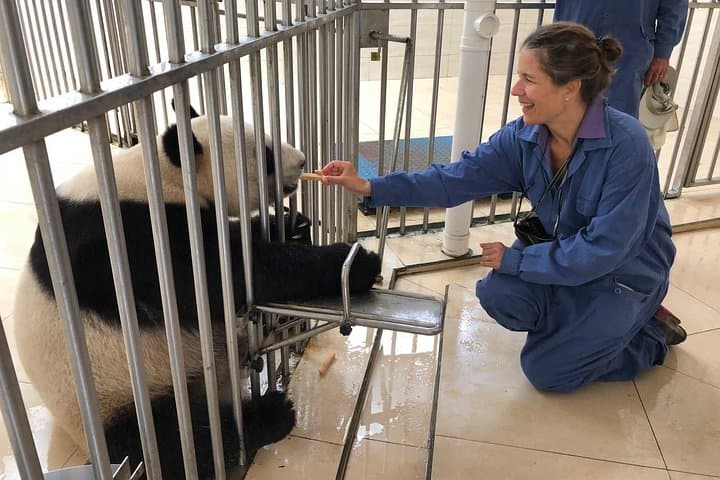
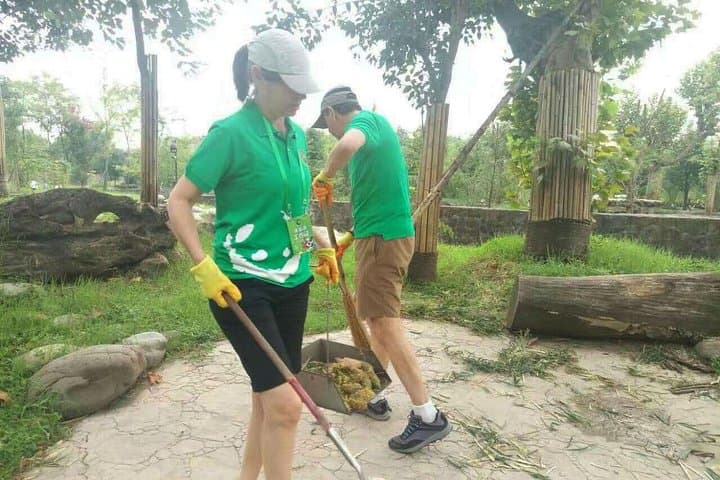
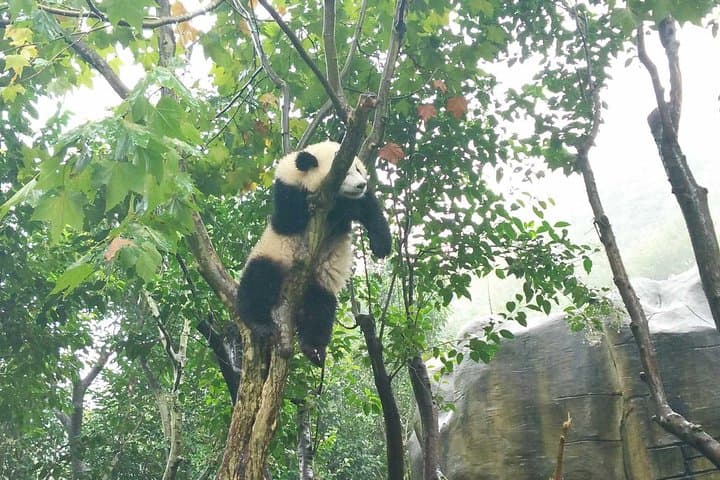

Morning light filters through bamboo groves as a private vehicle leaves Chengdu and climbs toward Dujiangyan, the city whose ancient irrigation works still bend the Min River. By midmorning volunteers change into sanitized uniforms and step into a working conservation center: cement walkways, indoor enclosures, and the constant rustle of bamboo. The day alternates hands-on chores—sweeping enclosures, preparing panda cakes, carrying fresh bamboo—and quieter lessons in husbandry and behavior observation.
Morning light filters through bamboo groves as a private vehicle leaves Chengdu and climbs toward Dujiangyan, the city whose ancient irrigation works still bend the Min River. By midmorning volunteers change into sanitized uniforms and step into a working conservation center: cement walkways, indoor enclosures, and the constant rustle of bamboo. The day alternates hands-on chores—sweeping enclosures, preparing panda cakes, carrying fresh bamboo—and quieter lessons in husbandry and behavior observation.
The Dujiangyan Panda Base is part of China’s network of research and breeding centers born from decades of conservation after wild populations plummeted. The surrounding Sichuan foothills are Himalayan fringe geology—steep, forested slopes carved by rivers—habitat that once supported pandas and other montane species. Local culture here blends modern research with centuries-old agricultural practices; Dujiangyan’s millennia-old irrigation project sits within easy reach.
Practically, expect a full eight-hour day with structured shifts and short training briefings. The center requires health documentation and enforces hygiene: uniforms, hand-washing, and limited physical contact. Photography is allowed but always follow keeper directions; animal welfare takes precedence. Lunch is provided at the base cafeteria.
For travelers, the day delivers rare proximity to giant pandas and insight into daily care, paired with the satisfaction of contributing financially and physically to conservation. Pace the day: bring closed-toe shoes, a small daypack, and patience for routine tasks. The experience suits those curious about wildlife work who want a concrete, educational, and responsible way to spend a day outside Chengdu.