THE ADVENTURE COLLECTIVE® · Independent discovery and booking for outdoor travel

Trade Puebla's plaza for a high-mountain saddle between two famous volcanoes. This guided day-hike into Iztaccíhuatl and Popocatépetl National Park blends geology, legend and alpine forest trails with practical safety and transport from Puebla.
Trade Puebla's plaza for a high-mountain saddle between two famous volcanoes. This guided day-hike into Iztaccíhuatl and Popocatépetl National Park blends geology, legend and alpine forest trails with practical safety and transport from Puebla.
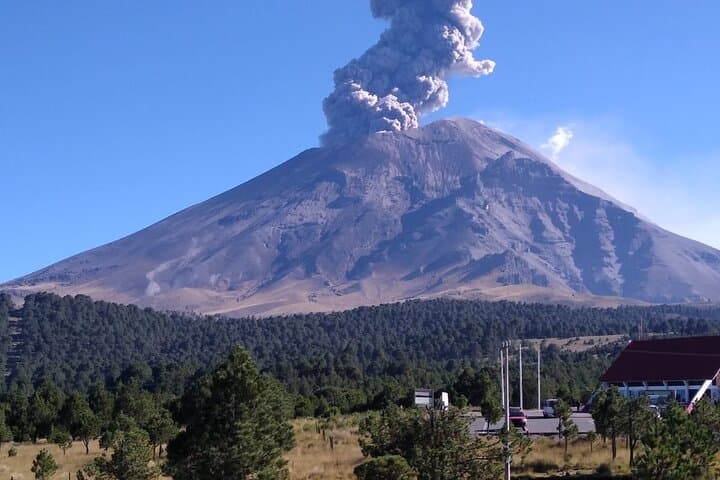
The day begins under Puebla's stone facades, where the fountain in the Zócalo becomes a small island of chatter and thermos coffee. Guides check packs and passports while the city still yawns; in the rearview, colonial roofs shrink and the road climbs toward a high saddle between two giants. By the time the bus unloads at Paso de Cortés, the air is thinner and the two volcanoes dominate the sky: Popocatépetl — always smoking, always watchful — and Iztaccíhuatl, whose ridgeline looks like a sleeping woman from many angles.
Verified experiences and guided adventures in the surrounding area.
Operated by Arissa Tours · Puebla, Puebla
The day begins under Puebla's stone facades, where the fountain in the Zócalo becomes a small island of chatter and thermos coffee. Guides check packs and passports while the city still yawns; in the rearview, colonial roofs shrink and the road climbs toward a high saddle between two giants. By the time the bus unloads at Paso de Cortés, the air is thinner and the two volcanoes dominate the sky: Popocatépetl — always smoking, always watchful — and Iztaccíhuatl, whose ridgeline looks like a sleeping woman from many angles.
The route threads through Iztaccíhuatl and Popocatépetl National Park, a landscape of volcanic rock, obsidian outcrops and remnant pine forest. Geologically these are stratovolcanoes formed in the subduction zone where the Cocos Plate dives beneath North America; the park is an active landscape, with Popocatépetl still venting steam and ash that remind hikers to keep their distance and follow ranger guidance.
Culturally the mountains are charged with meaning: the Aztec and later Nahua myth of Iztaccíhuatl and Popocatépetl tells of lovers frozen in stone — a story guides share while pointing out ridgelines and vantage points. Small highland communities around Puebla and Amecameca have farmed these slopes for centuries, and the day's lunch stop often features hearty regional dishes and wood-fired flavors that feel earned after altitude and effort.
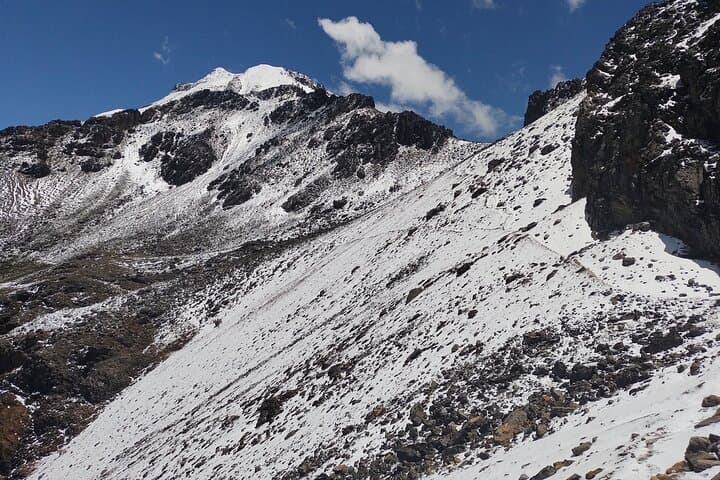
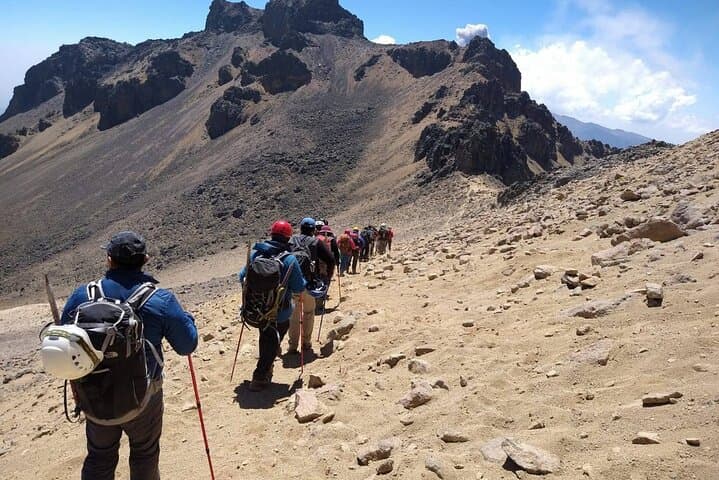
The hike itself is strenuous but accessible: expect 8–10 hours door-to-door with roughly 800–1,000 meters of elevation change depending on how far into the park you go. Trails alternate between hard-packed dirt, volcanic scree and forested switchbacks. Along the way you may pass llamas or grazing sheep tended by local herders, and birds that bob between juniper and pine. Guides register groups at the park office and use a scale model of the volcanoes to brief visitors on route and safety — a useful pause before the thin-air work begins.
Practical edge: start early to avoid midday wind and to get clearer views of Popocatépetl’s fumaroles. Hydrate before you leave Puebla, and treat altitude like another trail section — slow your pace, short steps, frequent rests. Layering is essential; mornings sit near freezing, but exertion warms you quickly and gusts can bring sleet even in summer months. The operator provides private transport and bottled water; they also offer bilingual guides and flexible hotel pickup, which simplifies logistics for those short on acclimatization time.
This is a day for steady effort more than technical skill. With good footwear, respect for volcanic warnings and a willingness to move deliberately, hikers walk away with a deep sense of place: two living mountains that shape weather, story and the skyline of central Mexico.
moderate.
8–10 hours.
Should be comfortable walking uphill for multiple hours and handling 800–1,000 m of elevation gain; regular cardio helps.
The full experience is a roughly 8–10 hour day from Puebla, with early morning pickup; the operator lists a 10-hour itinerary including transport and breaks.
Guides monitor volcanic alerts and follow park restrictions; visibility of fumaroles is from a safe distance and access may be altered for safety.
No technical climbing skills are required, but participants should have moderate fitness and be comfortable with sustained uphill walking at altitude.
Bottled water is provided; there is a lunch stop at a forest restaurant included in the itinerary where you can purchase a meal.
Yes — the tour offers hotel pickup across Puebla and can also meet at the central plaza meeting point.
Notify your guide immediately; they’re trained to respond and can descend you to lower elevation and administer basic care or arrange transport.
The peaks feature in Nahua legend as two lovers; historically the saddle has been a trade and pilgrimage corridor between Puebla and the Valley of Mexico.
The national park protects fragile alpine habitat and endemic species; visitors should stay on trails, pack out trash and respect temporary closures due to volcanic activity.
Arissa Tours operates guided outdoor trips and adventures with an emphasis on safety, stewardship, and memorable experiences.
The day begins under Puebla's stone facades, where the fountain in the Zócalo becomes a small island of chatter and thermos coffee. Guides check packs and passports while the city still yawns; in the rearview, colonial roofs shrink and the road climbs toward a high saddle between two giants. By the time the bus unloads at Paso de Cortés, the air is thinner and the two volcanoes dominate the sky: Popocatépetl — always smoking, always watchful — and Iztaccíhuatl, whose ridgeline looks like a sleeping woman from many angles.
The day begins under Puebla's stone facades, where the fountain in the Zócalo becomes a small island of chatter and thermos coffee. Guides check packs and passports while the city still yawns; in the rearview, colonial roofs shrink and the road climbs toward a high saddle between two giants. By the time the bus unloads at Paso de Cortés, the air is thinner and the two volcanoes dominate the sky: Popocatépetl — always smoking, always watchful — and Iztaccíhuatl, whose ridgeline looks like a sleeping woman from many angles.
The route threads through Iztaccíhuatl and Popocatépetl National Park, a landscape of volcanic rock, obsidian outcrops and remnant pine forest. Geologically these are stratovolcanoes formed in the subduction zone where the Cocos Plate dives beneath North America; the park is an active landscape, with Popocatépetl still venting steam and ash that remind hikers to keep their distance and follow ranger guidance.
Culturally the mountains are charged with meaning: the Aztec and later Nahua myth of Iztaccíhuatl and Popocatépetl tells of lovers frozen in stone — a story guides share while pointing out ridgelines and vantage points. Small highland communities around Puebla and Amecameca have farmed these slopes for centuries, and the day's lunch stop often features hearty regional dishes and wood-fired flavors that feel earned after altitude and effort.
The hike itself is strenuous but accessible: expect 8–10 hours door-to-door with roughly 800–1,000 meters of elevation change depending on how far into the park you go. Trails alternate between hard-packed dirt, volcanic scree and forested switchbacks. Along the way you may pass llamas or grazing sheep tended by local herders, and birds that bob between juniper and pine. Guides register groups at the park office and use a scale model of the volcanoes to brief visitors on route and safety — a useful pause before the thin-air work begins.
Practical edge: start early to avoid midday wind and to get clearer views of Popocatépetl’s fumaroles. Hydrate before you leave Puebla, and treat altitude like another trail section — slow your pace, short steps, frequent rests. Layering is essential; mornings sit near freezing, but exertion warms you quickly and gusts can bring sleet even in summer months. The operator provides private transport and bottled water; they also offer bilingual guides and flexible hotel pickup, which simplifies logistics for those short on acclimatization time.
This is a day for steady effort more than technical skill. With good footwear, respect for volcanic warnings and a willingness to move deliberately, hikers walk away with a deep sense of place: two living mountains that shape weather, story and the skyline of central Mexico.