THE ADVENTURE COLLECTIVE® · Independent discovery and booking for outdoor travel

Navigate Vitoria-Gasteiz by riddle and route on a self-guided scavenger hunt that highlights the Gothic cathedral, Virgen Blanca and hidden courtyards. Perfect for curious walkers who want history, puzzles and local flavor at their own pace.
Navigate Vitoria-Gasteiz by riddle and route on a self-guided scavenger hunt that highlights the Gothic cathedral, Virgen Blanca and hidden courtyards. Perfect for curious walkers who want history, puzzles and local flavor at their own pace.
The morning air in Vitoria-Gasteiz carries a quiet confidence: cobbled alleys unfurl from Plaza de la Virgen Blanca and the city’s stone faces seem to watch you with a knowing patience. On this self-guided scavenger hunt you move at your own pace, phone in hand, following clues that point to cloistered courtyards, ornate façades and a cathedral that stands like a local philosopher, patient and old.
Verified experiences and guided adventures in the surrounding area.
Operated by Explorial · Vitoria-Gasteiz, Álava
The morning air in Vitoria-Gasteiz carries a quiet confidence: cobbled alleys unfurl from Plaza de la Virgen Blanca and the city’s stone faces seem to watch you with a knowing patience. On this self-guided scavenger hunt you move at your own pace, phone in hand, following clues that point to cloistered courtyards, ornate façades and a cathedral that stands like a local philosopher, patient and old.
Vitoria-Gasteiz grew from a 12th-century market town into the administrative capital of Álava and the Basque Autonomous Community. Geologically it sits on a flat high plain bordered by low mountains and threaded by the Zadorra and Bayas rivers—streams that historically shaped settlement and agriculture here. Culturally the city balances Basque language and traditions with Castilian influences; expect bilingual signs and a strong pintxo culture at bars near the old quarter.
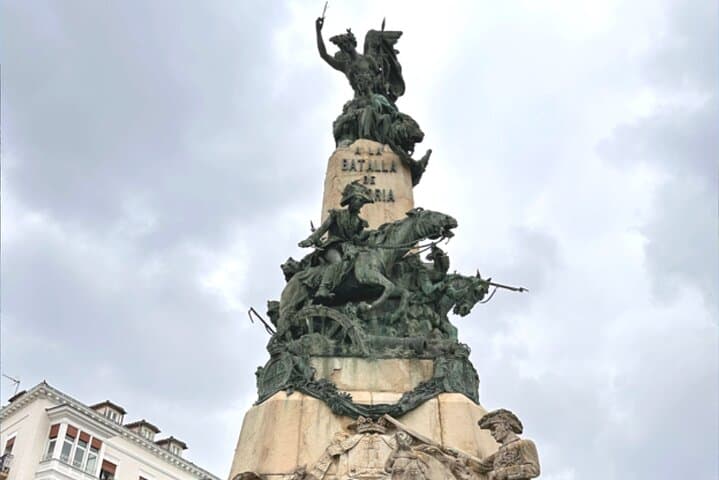
The scavenger hunt threads through landmarks: Santa María Cathedral’s Gothic stonework, Palacio Escoriaza-Esquivel’s carved portal and the Plaza de la Virgen Blanca, where statues and local rhythms mark meeting points. Along the way, small plazas and pocket parks offer moments to pause; benches and fountains invite a deliberate slowdown.
Practical notes: the experience runs about 1–2 hours depending on stops. Download the app, charge your phone and bring comfortable shoes—cobblestones and narrow streets demand steady footing. Midweek mornings are quieter for photos; late afternoons pulse with locals and tapa crawls. Public transit connects easily to the starting point, and the route is flexible for families or slower walkers. Keep the city clean—pack out wrappers and stay aware of traffic on shared streets.
easy.
1–2 hours.
Suitable for most fitness levels; requires walking on uneven cobbles for up to two hours.
No—after purchase you receive an access code to use the app and can start at your convenience within the booking window.
Yes—the scavenger hunt is offered in both Spanish and English in the app.
Parts of the historic center include narrow streets and steps; the experience is not fully wheelchair accessible.
Yes—the self-guided format lets you take breaks and resume; total playtime typically falls between one and two hours depending on stops.
Vitoria-Gasteiz expanded from a medieval market and later became the political capital of Álava and the Basque Autonomous Community, preserving a compact medieval quarter.
The old town is protected and cared for by local conservation rules—stay on marked paths, avoid touching fragile stonework and carry out any trash to minimize impact.
Explorial operates guided outdoor trips and adventures with an emphasis on safety, stewardship, and memorable experiences.
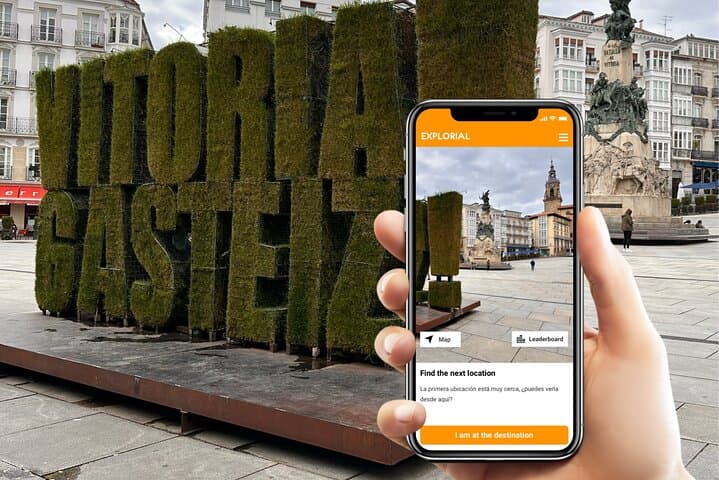
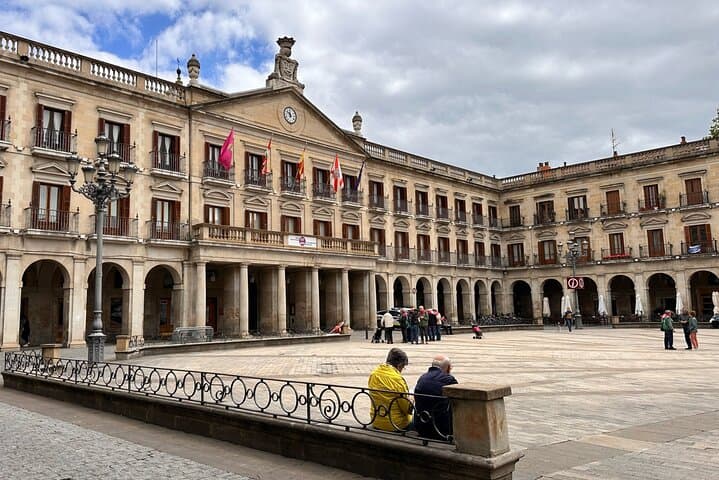
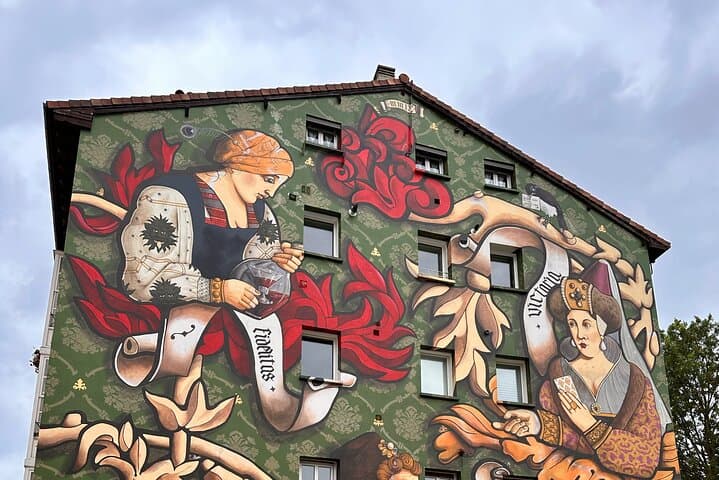
The morning air in Vitoria-Gasteiz carries a quiet confidence: cobbled alleys unfurl from Plaza de la Virgen Blanca and the city’s stone faces seem to watch you with a knowing patience. On this self-guided scavenger hunt you move at your own pace, phone in hand, following clues that point to cloistered courtyards, ornate façades and a cathedral that stands like a local philosopher, patient and old.
The morning air in Vitoria-Gasteiz carries a quiet confidence: cobbled alleys unfurl from Plaza de la Virgen Blanca and the city’s stone faces seem to watch you with a knowing patience. On this self-guided scavenger hunt you move at your own pace, phone in hand, following clues that point to cloistered courtyards, ornate façades and a cathedral that stands like a local philosopher, patient and old.
Vitoria-Gasteiz grew from a 12th-century market town into the administrative capital of Álava and the Basque Autonomous Community. Geologically it sits on a flat high plain bordered by low mountains and threaded by the Zadorra and Bayas rivers—streams that historically shaped settlement and agriculture here. Culturally the city balances Basque language and traditions with Castilian influences; expect bilingual signs and a strong pintxo culture at bars near the old quarter.
The scavenger hunt threads through landmarks: Santa María Cathedral’s Gothic stonework, Palacio Escoriaza-Esquivel’s carved portal and the Plaza de la Virgen Blanca, where statues and local rhythms mark meeting points. Along the way, small plazas and pocket parks offer moments to pause; benches and fountains invite a deliberate slowdown.
Practical notes: the experience runs about 1–2 hours depending on stops. Download the app, charge your phone and bring comfortable shoes—cobblestones and narrow streets demand steady footing. Midweek mornings are quieter for photos; late afternoons pulse with locals and tapa crawls. Public transit connects easily to the starting point, and the route is flexible for families or slower walkers. Keep the city clean—pack out wrappers and stay aware of traffic on shared streets.