THE ADVENTURE COLLECTIVE® · Independent discovery and booking for outdoor travel

Walk through 1,000 years of British history at the Tower of London — from the imposing White Tower to the dazzling Crown Jewels and the Yeoman Warders’ tales. This guide explains what to expect, how to plan your visit, and practical tips for making the most of your time.
Walk through 1,000 years of British history at the Tower of London — from the imposing White Tower to the dazzling Crown Jewels and the Yeoman Warders’ tales. This guide explains what to expect, how to plan your visit, and practical tips for making the most of your time.
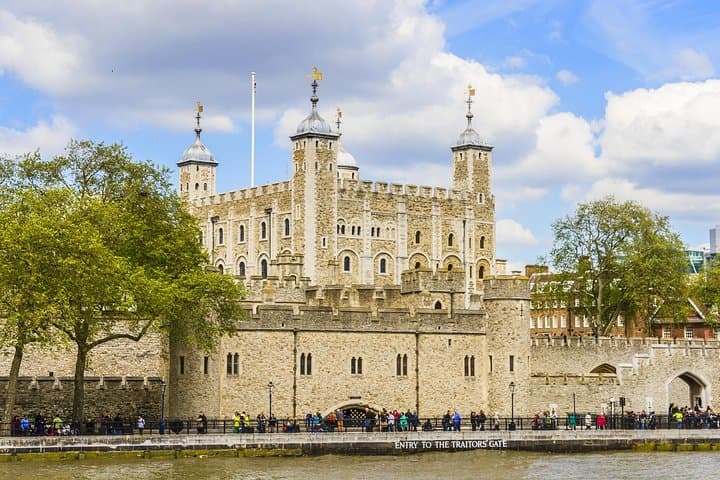
A cold wind rolls off the Thames and the White Tower stands like an old guard over the river — visitors move between stout stone walls and iron-studded gates, binoculars lifted toward the jewel display and Beefeaters leading stories that still edge toward the macabre.
Verified experiences and guided adventures in the surrounding area.
Operated by Historic Royal Palaces · London, England
A cold wind rolls off the Thames and the White Tower stands like an old guard over the river — visitors move between stout stone walls and iron-studded gates, binoculars lifted toward the jewel display and Beefeaters leading stories that still edge toward the macabre.
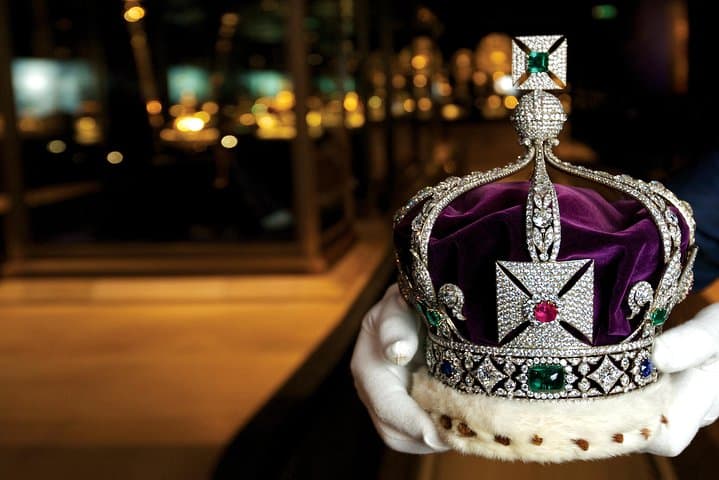
The Tower of London began as William the Conqueror’s keep in the 11th century and evolved into a royal palace, prison, mint and menagerie. Its Norman masonry and the White Tower’s Romanesque arches reveal layers of medieval warfare and royal ceremony, while the Crown Jewels — cut diamonds, crowns and sceptres — reflect Britain’s dynastic theatre.
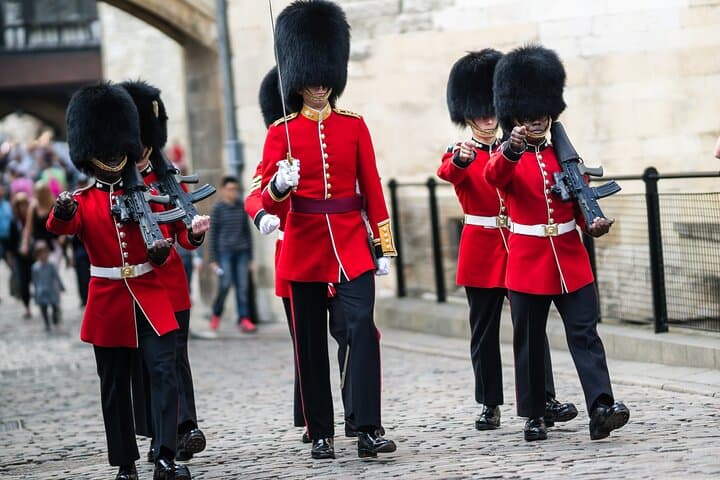
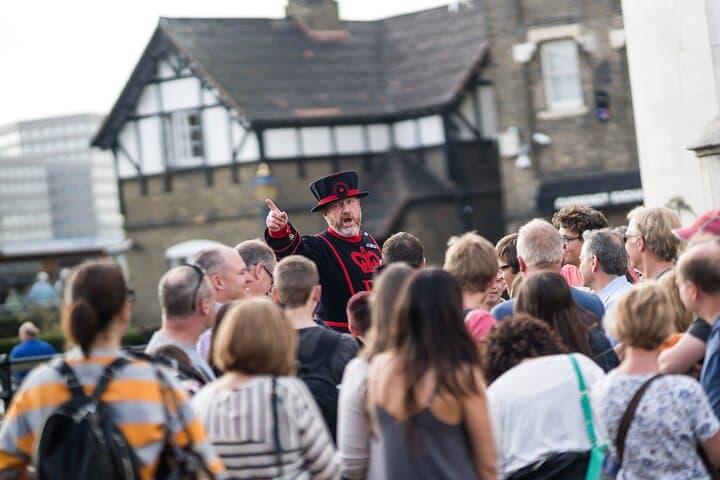
Culturally, the Tower has long shaped London’s identity: executions at Tower Hill, the ravens that folklore says must remain to preserve the realm, and the Yeoman Warders (Beefeaters) whose very uniforms are a living link to Tudor pageantry.
Practical guidance: allow 2–4 hours to see the major displays and join a Beefeater talk (tours run roughly every 30 minutes from the moat). Peak times are late morning and early afternoon; mornings at opening or late afternoon are quieter. Wear comfortable, grippy shoes for cobbles and ramps; bring a compact bag — security checks are standard. Cameras are allowed but expect lines at the Crown Jewels display and limited space inside the White Tower.
For first-timers, prioritize the Crown Jewels, the White Tower’s Line of Kings, and a timed Beefeater briefing; cap the visit with a stroll along Tower Wharf for big-city river views.
easy.
2–4 hours.
Minimal fitness required; expect walking on cobbles and short staircases
Yes; Yeoman Warder (Beefeater) tours are included and typically start every 30 minutes from the Tower moat—check the signposted meeting point on arrival.
Most visitors spend 2–4 hours to see the Crown Jewels, White Tower and one Beefeater tour; history enthusiasts may stay longer.
Tickets are mobile or paper and grant entry for the day; skipping long waits at peak exhibits is not guaranteed—book in advance to secure entry on busy days.
The Tower provides access options but many historic areas have narrow staircases and uneven floors; contact admissions ahead for specific accessibility assistance.
Constructed after the Norman Conquest, the Tower has served as royal residence, prison and armory; its Crown Jewels collection grew from ceremonial regalia accumulated over centuries.
Historic England manages preservation efforts to limit wear on ancient masonry; visitors are encouraged to stay on paths and refrain from touching vulnerable carvings.
Historic Royal Palaces operates guided outdoor trips and adventures with an emphasis on safety, stewardship, and memorable experiences.
A cold wind rolls off the Thames and the White Tower stands like an old guard over the river — visitors move between stout stone walls and iron-studded gates, binoculars lifted toward the jewel display and Beefeaters leading stories that still edge toward the macabre.
A cold wind rolls off the Thames and the White Tower stands like an old guard over the river — visitors move between stout stone walls and iron-studded gates, binoculars lifted toward the jewel display and Beefeaters leading stories that still edge toward the macabre.
The Tower of London began as William the Conqueror’s keep in the 11th century and evolved into a royal palace, prison, mint and menagerie. Its Norman masonry and the White Tower’s Romanesque arches reveal layers of medieval warfare and royal ceremony, while the Crown Jewels — cut diamonds, crowns and sceptres — reflect Britain’s dynastic theatre.
Culturally, the Tower has long shaped London’s identity: executions at Tower Hill, the ravens that folklore says must remain to preserve the realm, and the Yeoman Warders (Beefeaters) whose very uniforms are a living link to Tudor pageantry.
Practical guidance: allow 2–4 hours to see the major displays and join a Beefeater talk (tours run roughly every 30 minutes from the moat). Peak times are late morning and early afternoon; mornings at opening or late afternoon are quieter. Wear comfortable, grippy shoes for cobbles and ramps; bring a compact bag — security checks are standard. Cameras are allowed but expect lines at the Crown Jewels display and limited space inside the White Tower.
For first-timers, prioritize the Crown Jewels, the White Tower’s Line of Kings, and a timed Beefeater briefing; cap the visit with a stroll along Tower Wharf for big-city river views.