THE ADVENTURE COLLECTIVE® · Independent discovery and booking for outdoor travel

Stand on the glass bridge of a 150 m golden frame and watch Old Dubai and the ultramodern skyline meet. This practical guide covers what you'll see, when to go, and how to plan a smooth visit to Zabeel Park's most talked-about landmark.
Stand on the glass bridge of a 150 m golden frame and watch Old Dubai and the ultramodern skyline meet. This practical guide covers what you'll see, when to go, and how to plan a smooth visit to Zabeel Park's most talked-about landmark.
You step onto the elevated walkway and the city rearranges itself: to one side, low-rise wind-towered houses and the ochre ribbon of Dubai Creek; to the other, glass needles of a skyline that seems to have grown overnight. The Dubai Frame frames that contrast literally — a 150 m (492 ft) tall, 93 m (305 ft) wide golden rectangle that lifts you above Zabeel Park to a glass-floored viewing gallery.
Verified experiences and guided adventures in the surrounding area.
Operated by Rathin Tourism · Dubai, Dubai
You step onto the elevated walkway and the city rearranges itself: to one side, low-rise wind-towered houses and the ochre ribbon of Dubai Creek; to the other, glass needles of a skyline that seems to have grown overnight. The Dubai Frame frames that contrast literally — a 150 m (492 ft) tall, 93 m (305 ft) wide golden rectangle that lifts you above Zabeel Park to a glass-floored viewing gallery.
Opened in 2018 as a civic landmark, the Frame was conceived to connect Dubai’s past and present. The structure sits on Dubai’s flat coastal plain near the Creek, where reclaimed soils and engineered foundations support its cantilevered platforms. Nearby Al Fahidi and the historic souks offer cultural context: one view looks to traditional commerce, the other to high-rise commerce and tourism.
On the Glass Bridge, the city feels kinetic; the glass pushes you to look down, across, and back. Inside the lower exhibition, multimedia displays chart rapid urban growth and the project's architectural debates. Local insights: photographers favor golden hour for balanced light across both vistas, while families use the surrounding park and play areas to extend the visit.
Practical guidance: tickets are timed and often sold in advance; allow about two hours for entry, the walkway, and exhibits. The site is fully accessible with elevators and flat routes through Zabeel Park. Wear comfortable shoes for walking in the park, bring sun protection in summer, and be ready for crowds at peak times. Respect signage on the glass floor — it’s safe, but cautious pacing makes the experience better for everyone.
easy.
2 hours.
Suitable for all fitness levels; requires short walks and elevator access.
Yes — entry is timed and popular slots (especially sunset) sell out; booking online guarantees entry and reduces wait time.
Yes — elevators, ramps, and wheelchair-accessible paths are provided; staff can assist with access if needed.
Plan about 1.5–2 hours to view the exhibits, walk the glass bridge, and enjoy nearby park areas.
The glass is engineered for public use and regularly inspected; cautious pacing and supervision for children are recommended.
Opened in 2018 by Dubai Municipality as a symbolic frame between old and new city districts, the project sparked debate over design credit and rapid urban change.
Zabeel Park manages visitor flow and encourages waste separation; follow park rules to reduce litter and protect planted habitats.
Rathin Tourism operates guided outdoor trips and adventures with an emphasis on safety, stewardship, and memorable experiences.
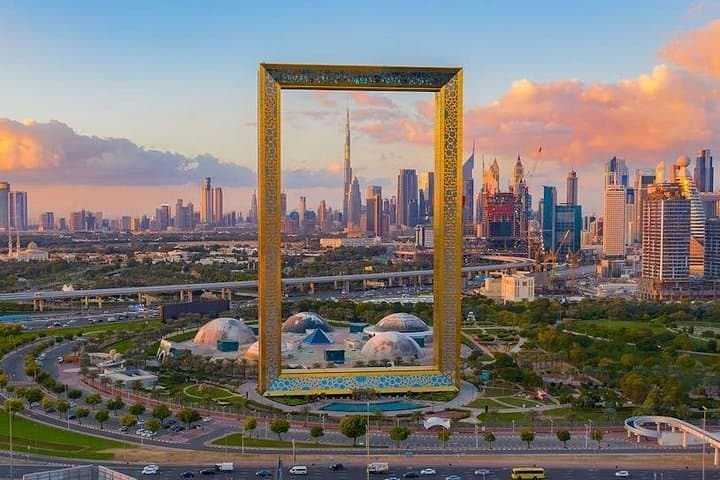
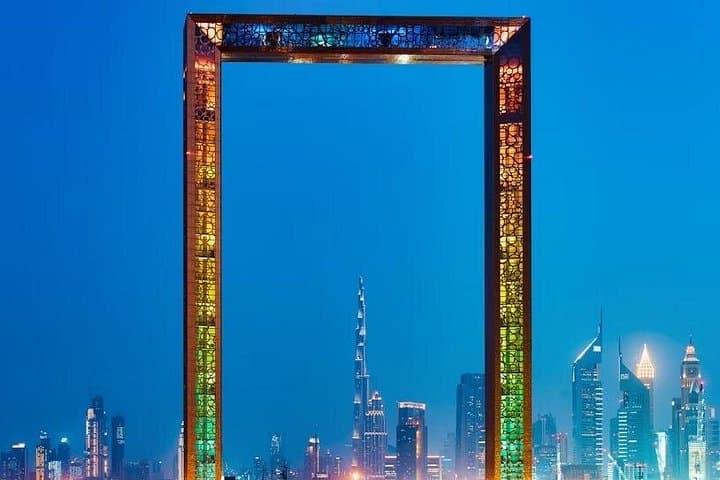
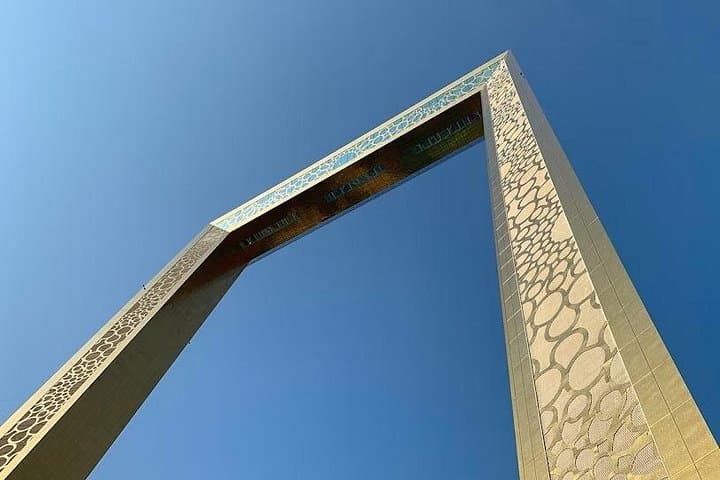
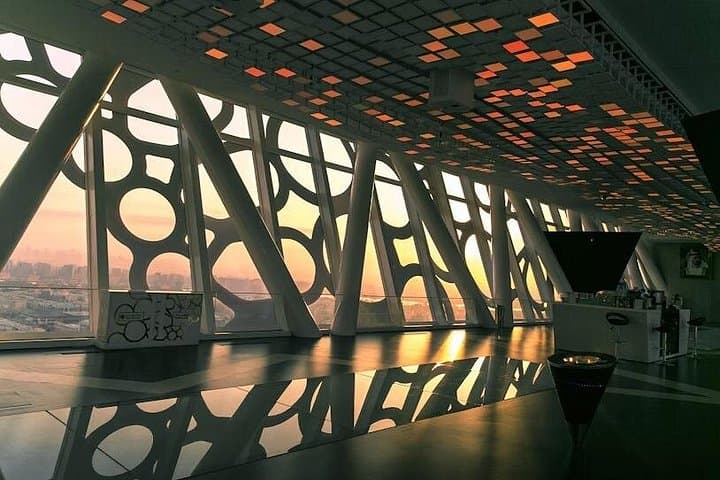
You step onto the elevated walkway and the city rearranges itself: to one side, low-rise wind-towered houses and the ochre ribbon of Dubai Creek; to the other, glass needles of a skyline that seems to have grown overnight. The Dubai Frame frames that contrast literally — a 150 m (492 ft) tall, 93 m (305 ft) wide golden rectangle that lifts you above Zabeel Park to a glass-floored viewing gallery.
You step onto the elevated walkway and the city rearranges itself: to one side, low-rise wind-towered houses and the ochre ribbon of Dubai Creek; to the other, glass needles of a skyline that seems to have grown overnight. The Dubai Frame frames that contrast literally — a 150 m (492 ft) tall, 93 m (305 ft) wide golden rectangle that lifts you above Zabeel Park to a glass-floored viewing gallery.
Opened in 2018 as a civic landmark, the Frame was conceived to connect Dubai’s past and present. The structure sits on Dubai’s flat coastal plain near the Creek, where reclaimed soils and engineered foundations support its cantilevered platforms. Nearby Al Fahidi and the historic souks offer cultural context: one view looks to traditional commerce, the other to high-rise commerce and tourism.
On the Glass Bridge, the city feels kinetic; the glass pushes you to look down, across, and back. Inside the lower exhibition, multimedia displays chart rapid urban growth and the project's architectural debates. Local insights: photographers favor golden hour for balanced light across both vistas, while families use the surrounding park and play areas to extend the visit.
Practical guidance: tickets are timed and often sold in advance; allow about two hours for entry, the walkway, and exhibits. The site is fully accessible with elevators and flat routes through Zabeel Park. Wear comfortable shoes for walking in the park, bring sun protection in summer, and be ready for crowds at peak times. Respect signage on the glass floor — it’s safe, but cautious pacing makes the experience better for everyone.