THE ADVENTURE COLLECTIVE® · Independent discovery and booking for outdoor travel

Stand at the edge of the Korean peninsula’s most charged border on a full-day DMZ tour that visits Dora Observatory, Dorasan Station, and the Third Infiltration Tunnel. Expect history, security procedures, and striking views—plus clear guidance on what to bring.
Stand at the edge of the Korean peninsula’s most charged border on a full-day DMZ tour that visits Dora Observatory, Dorasan Station, and the Third Infiltration Tunnel. Expect history, security procedures, and striking views—plus clear guidance on what to bring.
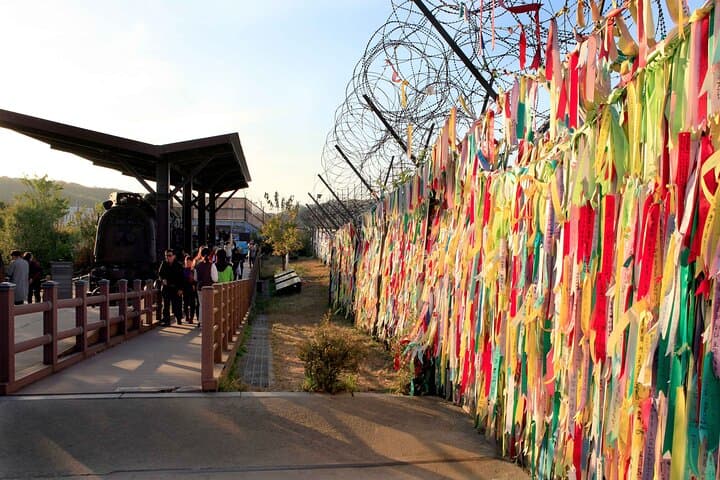
You arrive before sunrise on a road that turns slowly toward the border—pine ridgelines sharpening as checkpoints loom. The air feels taut here; the demilitarized zone holds a subtle tension, a living margin where history meets ordinary farmland. From the viewing platform at Dora Observatory, the North Korean mountains sit across the valley like a place you can almost step into, while Dorasan Station’s quiet platforms point toward an unfinished journey north.
Verified experiences and guided adventures in the surrounding area.
Operated by Life world tour · Paju, Gyeonggi-do
You arrive before sunrise on a road that turns slowly toward the border—pine ridgelines sharpening as checkpoints loom. The air feels taut here; the demilitarized zone holds a subtle tension, a living margin where history meets ordinary farmland. From the viewing platform at Dora Observatory, the North Korean mountains sit across the valley like a place you can almost step into, while Dorasan Station’s quiet platforms point toward an unfinished journey north.
The DMZ exists because of the 1953 armistice that froze a front line into a permanent buffer roughly 250 kilometers long and about 4 kilometers wide. Concrete bunkers, rail lines, and the discovery of the Third Infiltration Tunnel in 1978 tell a story of conflict and persistent vigilance. Geologically the area is low rolling hills carved by rivers; soil is thin in places, and patches of reclaimed farmland show how communities have adapted to life close to the border.
Culturally, the zone is a mirror—South Korean memorials, propaganda displays, and Dorasan’s symbolic railway reveal hopes for reunification alongside the reality of separation. Guides point out sights and enforce film and photography rules; permission and passports are checked at multiple stages.
Practical guidance: expect an 8–9 hour outing with several short walks, stairs into an excavated tunnel, and standing at observation points. Wear comfortable shoes, bring layers for variable winds, carry identification (passport required for entry to DMZ visitor areas), and allow extra time for security checks. Photography restrictions apply—follow your guide’s instructions to avoid delays.
easy.
8–9 hours.
Suitable for most travelers in regular health—requires short walks and stair descent into the tunnel.
Yes. A valid passport is required for security clearance and will be checked before entering DMZ sites.
Yes; the section of the tunnel open to visitors has lighting and stairs but can be narrow and cool—follow the guide and watch your step.
No. Dorasan Station is symbolic and not an active passenger link to North Korea; travel across the border is not permitted on standard tours.
Most tours are suitable for children and those with moderate mobility, but there are stairs and standing periods; wheelchair access varies by site—check with the operator in advance.
The DMZ was created by the 1953 armistice and has since become both a fortified border and an inadvertent refuge for wildlife, preserving landscapes left undeveloped for decades.
Restricted human access has allowed pockets of semi-wild habitat to persist; visitors should stay on paths and avoid leaving any waste to protect these recovering ecosystems.
Life world tour operates guided outdoor trips and adventures with an emphasis on safety, stewardship, and memorable experiences.
You arrive before sunrise on a road that turns slowly toward the border—pine ridgelines sharpening as checkpoints loom. The air feels taut here; the demilitarized zone holds a subtle tension, a living margin where history meets ordinary farmland. From the viewing platform at Dora Observatory, the North Korean mountains sit across the valley like a place you can almost step into, while Dorasan Station’s quiet platforms point toward an unfinished journey north.
You arrive before sunrise on a road that turns slowly toward the border—pine ridgelines sharpening as checkpoints loom. The air feels taut here; the demilitarized zone holds a subtle tension, a living margin where history meets ordinary farmland. From the viewing platform at Dora Observatory, the North Korean mountains sit across the valley like a place you can almost step into, while Dorasan Station’s quiet platforms point toward an unfinished journey north.
The DMZ exists because of the 1953 armistice that froze a front line into a permanent buffer roughly 250 kilometers long and about 4 kilometers wide. Concrete bunkers, rail lines, and the discovery of the Third Infiltration Tunnel in 1978 tell a story of conflict and persistent vigilance. Geologically the area is low rolling hills carved by rivers; soil is thin in places, and patches of reclaimed farmland show how communities have adapted to life close to the border.
Culturally, the zone is a mirror—South Korean memorials, propaganda displays, and Dorasan’s symbolic railway reveal hopes for reunification alongside the reality of separation. Guides point out sights and enforce film and photography rules; permission and passports are checked at multiple stages.
Practical guidance: expect an 8–9 hour outing with several short walks, stairs into an excavated tunnel, and standing at observation points. Wear comfortable shoes, bring layers for variable winds, carry identification (passport required for entry to DMZ visitor areas), and allow extra time for security checks. Photography restrictions apply—follow your guide’s instructions to avoid delays.