THE ADVENTURE COLLECTIVE® · Independent discovery and booking for outdoor travel

Experience a recreated submerged grotto in Marseille with an audio guide that walks you through Paleolithic paintings and the diving discovery. This two-hour exhibition pairs natural history and urban exploration via a digital city tour.
Experience a recreated submerged grotto in Marseille with an audio guide that walks you through Paleolithic paintings and the diving discovery. This two-hour exhibition pairs natural history and urban exploration via a digital city tour.
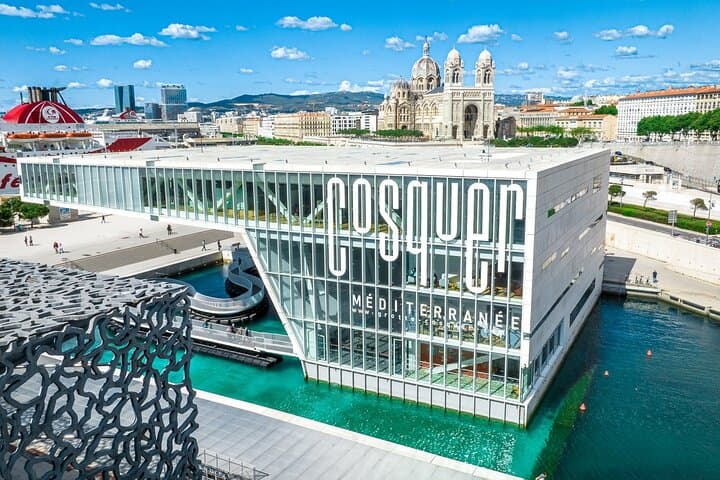
A sudden wind off the Mediterranean lifts salt through the J4 esplanade, and the visitor first meets the site from above: a floating walkway, display cases of diving rigs, and the hush that precedes stepping into a recreated subterranean world.
Verified experiences and guided adventures in the surrounding area.
Operated by Vox City International Ltd · Marseille, Provence-Alpes-Côte d'Azur
A sudden wind off the Mediterranean lifts salt through the J4 esplanade, and the visitor first meets the site from above: a floating walkway, display cases of diving rigs, and the hush that precedes stepping into a recreated subterranean world.
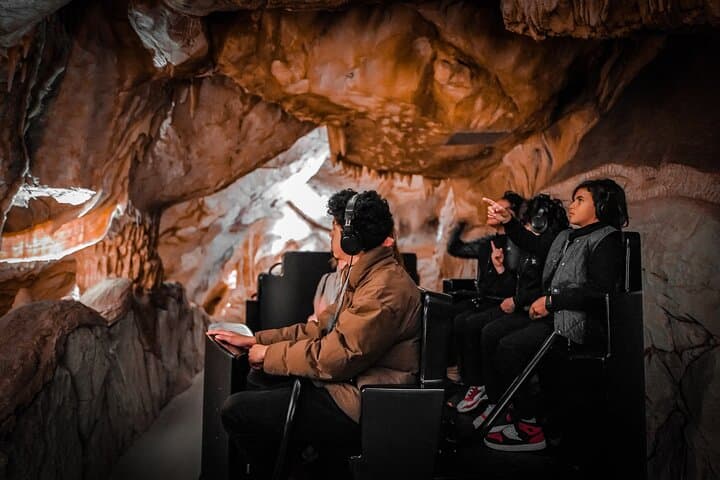
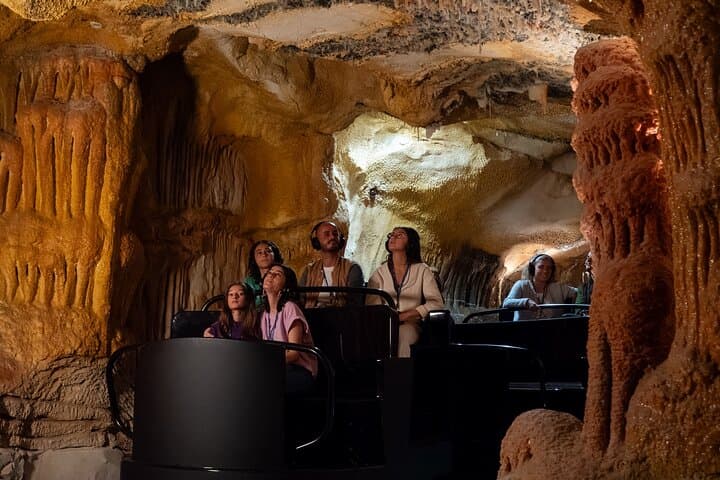
The Cosquer Cave exhibition reconstructs a drowned grotto once carved into the limestone near Cap Morgiou. Visitors move through engineered passages that echo real caverns and follow reproductions of Paleolithic paintings—hand stencils, swimming seals, and bison—rendered from tracings and high-resolution scans. The narrative blends regional geology—limestone karst, submerged entranceways—and archaeology: the cave, found by diver Henri Cosquer, contains art dating back more than 20,000 years and occupies a unique slot in Mediterranean prehistory.
Culturally, the exhibit ties Marseille’s port history to deep time: human movement along these coasts shifted as sea levels rose and fell. The recreated environment is dimly lit and hushed; audiovisual narration (multilingual) guides visitors while an included Vox City app maps urban landmarks afterward.
Practical matters: the experience lasts about two hours, is suitable for most fitness levels, and is fully accessible for mobility aids where marked. Show your mobile e‑ticket at Promenade Robert Laffont J4, arrive early to avoid weekend crowds, and allow time afterward for a walk along Fort Saint‑Jean or a coffee at the Old Port.
To make the most of the visit, wear closed shoes for the walkway, keep voices low inside the cave rooms to preserve the immersive sound design, and charge your phone if you plan to use the app for the city tour.
easy.
2 hours.
Accessible to most visitors; involves short indoor walking and minimal stairs that are mostly ramped.
The standard visit is about two hours; allow extra time if you plan to explore the J4 esplanade and nearby MuCEM.
Yes—audio commentary is available in multiple languages, and the Vox City app provides additional multilingual content for the city tour.
The site has accessible routes and marked areas suitable for mobility aids; check specific accessibility needs when booking.
Photography rules vary by room; flash and touching reproductions are typically prohibited—follow signage and staff directions.
The original Cosquer Cave, discovered by diver Henri Cosquer, contains Paleolithic paintings and became submerged as sea levels rose after the last Ice Age.
The museum reproduces fragile art to avoid further impact on the original site; visitors are urged to follow rules, stay on marked routes, and limit noise and light disturbance.
Vox City International Ltd operates guided outdoor trips and adventures with an emphasis on safety, stewardship, and memorable experiences.

A sudden wind off the Mediterranean lifts salt through the J4 esplanade, and the visitor first meets the site from above: a floating walkway, display cases of diving rigs, and the hush that precedes stepping into a recreated subterranean world.
A sudden wind off the Mediterranean lifts salt through the J4 esplanade, and the visitor first meets the site from above: a floating walkway, display cases of diving rigs, and the hush that precedes stepping into a recreated subterranean world.
The Cosquer Cave exhibition reconstructs a drowned grotto once carved into the limestone near Cap Morgiou. Visitors move through engineered passages that echo real caverns and follow reproductions of Paleolithic paintings—hand stencils, swimming seals, and bison—rendered from tracings and high-resolution scans. The narrative blends regional geology—limestone karst, submerged entranceways—and archaeology: the cave, found by diver Henri Cosquer, contains art dating back more than 20,000 years and occupies a unique slot in Mediterranean prehistory.
Culturally, the exhibit ties Marseille’s port history to deep time: human movement along these coasts shifted as sea levels rose and fell. The recreated environment is dimly lit and hushed; audiovisual narration (multilingual) guides visitors while an included Vox City app maps urban landmarks afterward.
Practical matters: the experience lasts about two hours, is suitable for most fitness levels, and is fully accessible for mobility aids where marked. Show your mobile e‑ticket at Promenade Robert Laffont J4, arrive early to avoid weekend crowds, and allow time afterward for a walk along Fort Saint‑Jean or a coffee at the Old Port.
To make the most of the visit, wear closed shoes for the walkway, keep voices low inside the cave rooms to preserve the immersive sound design, and charge your phone if you plan to use the app for the city tour.