THE ADVENTURE COLLECTIVE® · Independent discovery and booking for outdoor travel

Experience Borobudur beyond the postcards: climb its stone terraces at first light, read centuries of stone-carved stories, and learn the practical tips to make the most of your visit. This guide covers history, timing, and what to bring.
Experience Borobudur beyond the postcards: climb its stone terraces at first light, read centuries of stone-carved stories, and learn the practical tips to make the most of your visit. This guide covers history, timing, and what to bring.
The first light of morning slides between low hills and washes the stone terraces of Borobudur in pale gold. You step onto ancient steps—rough underfoot, cool with mist—and the carved narrative panels begin to read like a city of stone opening around you.
Verified experiences and guided adventures in the surrounding area.
Operated by GlobalTix Pte Ltd · Borobudur, Central Java
The first light of morning slides between low hills and washes the stone terraces of Borobudur in pale gold. You step onto ancient steps—rough underfoot, cool with mist—and the carved narrative panels begin to read like a city of stone opening around you.
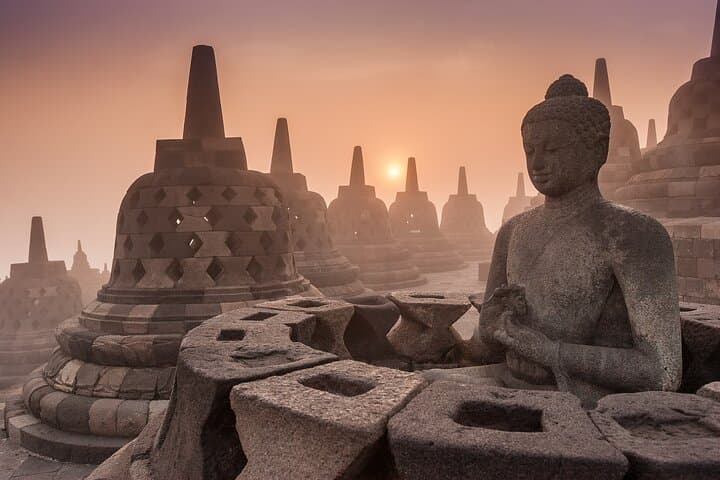
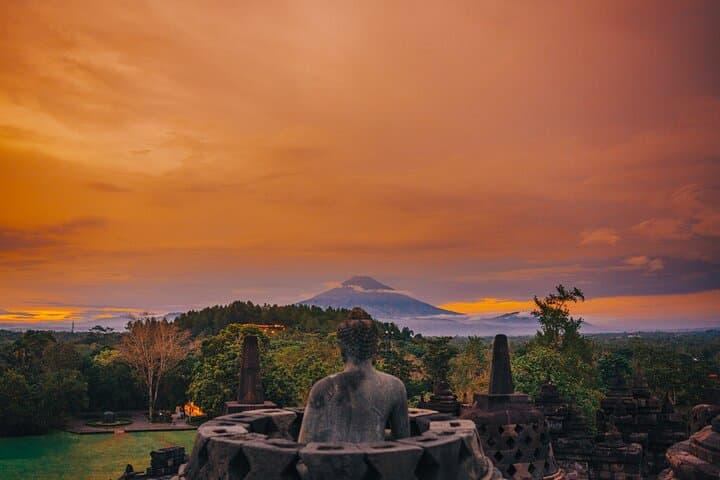
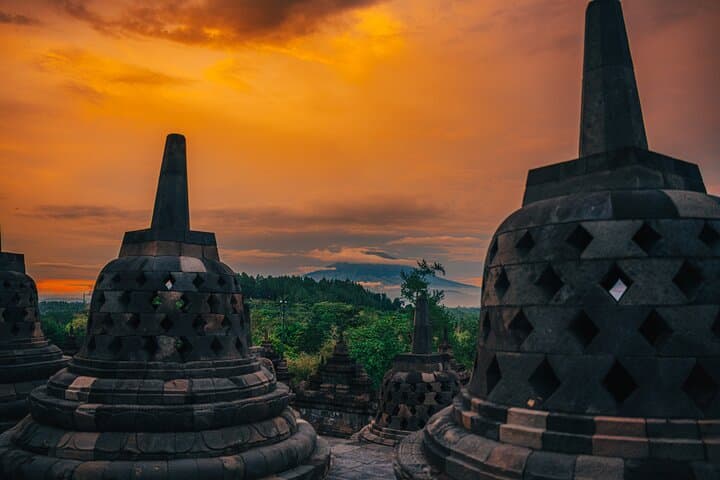
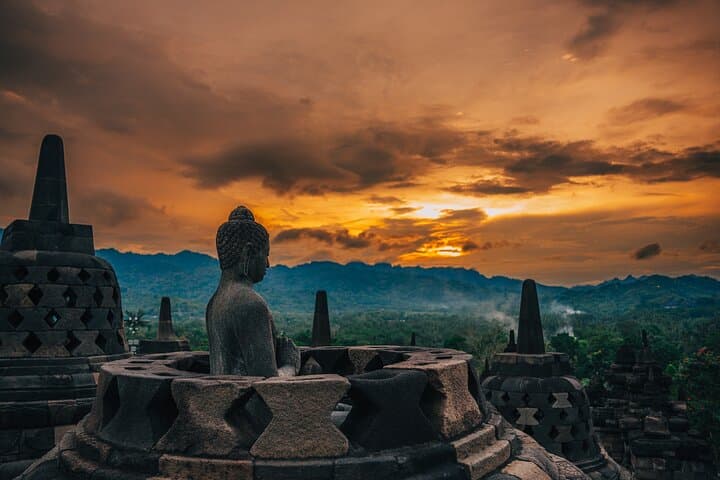
Built in the 8th–9th century by Sailendra rulers, Borobudur is the largest Buddhist monument in the world and a UNESCO World Heritage Site. Its concentric terraces and bell-shaped stupas sit atop volcanic plains of Central Java; the site's volcanic geology supplies the dense and weathered volcanic stone that masons shaped into reliefs depicting Buddhist teachings and scenes of daily life centuries ago. The temple overlooks the Kedu Valley, with distant volcanoes like Mount Merapi marking the skyline and morning mists that lend the place quiet intensity.
Culturally, Borobudur remains both a tourist destination and a living pilgrimage site—expect respectful rituals, occasional offerings, and guidelines about modest dress. Photography is allowed with standard lenses; drones and professional equipment require permission.
Practical guidance: arrive early (gates open 06:30) to avoid crowds and midday heat; follow the clockwise circulation route from the base to the top and take your time reading the narrative panels. Wear sturdy, grippy shoes for stone steps and uneven surfaces, bring water (consumption allowed), and store bulky bags in your vehicle. Allow 3–4 hours to move slowly, take photos, and appreciate the terraces. Respect signage and closures—parts of the monument remain fragile and managed for conservation.
easy.
3–6 hours.
Suitable for most fitness levels; involves climbing many stone steps and walking on uneven surfaces—basic mobility and balance needed.
Early morning at sunrise or just after opening (from 06:30) offers cooler temperatures, fewer visitors, and atmospheric light; late afternoon is also quieter than midday.
Yes—purchase entrance tickets in advance to guarantee access; the operator will email the official ticket 24 hours before your visit.
No—drones, telephoto lenses, tripods, and professional equipment require official permission from site authorities; check in advance and secure permits if needed.
The main terraces involve steep stone steps and uneven surfaces; while lower grounds and some viewpoints are reachable, the upper levels are not wheelchair accessible without assistance.
Constructed in the 8th–9th century by the Sailendra dynasty, Borobudur was buried by volcanic ash and jungle growth before being rediscovered and restored in the 19th–20th centuries; its reliefs function as a narrative pilgrimage route.
Conservation balances tourism and preservation—visitor numbers are managed, sensitive areas are closed for restoration, and visitors are asked to avoid touching reliefs to prevent erosion.
GlobalTix Pte Ltd operates guided outdoor trips and adventures with an emphasis on safety, stewardship, and memorable experiences.
The first light of morning slides between low hills and washes the stone terraces of Borobudur in pale gold. You step onto ancient steps—rough underfoot, cool with mist—and the carved narrative panels begin to read like a city of stone opening around you.
The first light of morning slides between low hills and washes the stone terraces of Borobudur in pale gold. You step onto ancient steps—rough underfoot, cool with mist—and the carved narrative panels begin to read like a city of stone opening around you.
Built in the 8th–9th century by Sailendra rulers, Borobudur is the largest Buddhist monument in the world and a UNESCO World Heritage Site. Its concentric terraces and bell-shaped stupas sit atop volcanic plains of Central Java; the site's volcanic geology supplies the dense and weathered volcanic stone that masons shaped into reliefs depicting Buddhist teachings and scenes of daily life centuries ago. The temple overlooks the Kedu Valley, with distant volcanoes like Mount Merapi marking the skyline and morning mists that lend the place quiet intensity.
Culturally, Borobudur remains both a tourist destination and a living pilgrimage site—expect respectful rituals, occasional offerings, and guidelines about modest dress. Photography is allowed with standard lenses; drones and professional equipment require permission.
Practical guidance: arrive early (gates open 06:30) to avoid crowds and midday heat; follow the clockwise circulation route from the base to the top and take your time reading the narrative panels. Wear sturdy, grippy shoes for stone steps and uneven surfaces, bring water (consumption allowed), and store bulky bags in your vehicle. Allow 3–4 hours to move slowly, take photos, and appreciate the terraces. Respect signage and closures—parts of the monument remain fragile and managed for conservation.