THE ADVENTURE COLLECTIVE® · Independent discovery and booking for outdoor travel

Walk through carved marble halls and seven towering shikhars at the BAPS Hindu Mandir, Abu Dhabi’s first traditional stone temple in the Middle East. This guided visit combines architecture, ritual, and accessible cultural interpretation—ideal for travelers seeking a quiet cultural stop in the city.
Walk through carved marble halls and seven towering shikhars at the BAPS Hindu Mandir, Abu Dhabi’s first traditional stone temple in the Middle East. This guided visit combines architecture, ritual, and accessible cultural interpretation—ideal for travelers seeking a quiet cultural stop in the city.
Step through a cool colonnade of carved stone and the city’s heat seems to pause: white marble and rose-hued sandstone absorb the sun and reflect a quiet, deliberate calm. The BAPS Hindu Mandir in Abu Dhabi presents itself not as a postcard but as a place of practice — seven shikhars rising above low gardens, corridors of relief carvings, and pockets of silence where visitors slow their steps.
Verified experiences and guided adventures in the surrounding area.
Operated by Desert Voyagers Tourism · Abu Dhabi, Abu Dhabi
Step through a cool colonnade of carved stone and the city’s heat seems to pause: white marble and rose-hued sandstone absorb the sun and reflect a quiet, deliberate calm. The BAPS Hindu Mandir in Abu Dhabi presents itself not as a postcard but as a place of practice — seven shikhars rising above low gardens, corridors of relief carvings, and pockets of silence where visitors slow their steps.
The mandir is the first traditional Hindu stone temple in the Middle East and is often described as the largest in West Asia. Its forms follow centuries of Indian temple craft, carved motifs referencing myth, flora and the seven Emirates. Geologically the building contrasts with Abu Dhabi’s coastal flats — imported stone assembled into ornate reliefs that read differently up close than from a distance.
Culturally, the mandir functions as both worship space and community center: expect rituals, discreet gatherings, and volunteers ready to explain motifs and etiquette. The site is open to all faiths; modest dress and respectful silence are standard. The temple’s accessibility features make it manageable for many travelers; most guided tours include admission and brief interpretive talks.
Practical notes: visit in the cooler hours to avoid traffic and heat, remove shoes at entry, and allow 90–180 minutes to move slowly through prayer halls and exterior courtyards. Combine this stop with nearby cultural sites or the Corniche for a fuller day. Carry a light scarf for modesty, bottled water, and a charged phone for photos where permitted. With preparation, the mandir is a clear, contemplative counterpoint to Abu Dhabi’s modern skyline.
easy.
2–3 hours.
Suitable for most travelers who can walk short distances and stand during interpretive talks
Public entry to the mandir is typically free; guided tour packages may include admission and private interpretive time.
Photography of the exterior and many interior spaces is usually allowed, but avoid photographing worshippers during rituals and follow posted rules.
Yes — the site and transportation options on organized tours are listed as wheelchair accessible, with level surfaces throughout public areas.
Yes — the mandir is family-friendly, but keep children supervised and observant of quiet zones and shoe-removal areas.
Built and maintained by the BAPS organization, the mandir is the first traditional Hindu stone temple in the Middle East and was conceived to serve Abu Dhabi’s Hindu community and visitors alike.
Visitors are asked to respect carved surfaces and refrain from touching delicate stonework; the site emphasizes low-impact visiting and volunteer-led upkeep.
Desert Voyagers Tourism operates guided outdoor trips and adventures with an emphasis on safety, stewardship, and memorable experiences.



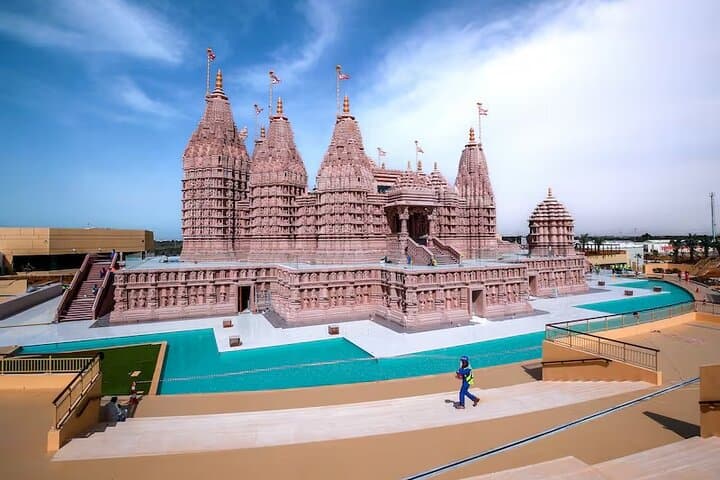
Step through a cool colonnade of carved stone and the city’s heat seems to pause: white marble and rose-hued sandstone absorb the sun and reflect a quiet, deliberate calm. The BAPS Hindu Mandir in Abu Dhabi presents itself not as a postcard but as a place of practice — seven shikhars rising above low gardens, corridors of relief carvings, and pockets of silence where visitors slow their steps.
Step through a cool colonnade of carved stone and the city’s heat seems to pause: white marble and rose-hued sandstone absorb the sun and reflect a quiet, deliberate calm. The BAPS Hindu Mandir in Abu Dhabi presents itself not as a postcard but as a place of practice — seven shikhars rising above low gardens, corridors of relief carvings, and pockets of silence where visitors slow their steps.
The mandir is the first traditional Hindu stone temple in the Middle East and is often described as the largest in West Asia. Its forms follow centuries of Indian temple craft, carved motifs referencing myth, flora and the seven Emirates. Geologically the building contrasts with Abu Dhabi’s coastal flats — imported stone assembled into ornate reliefs that read differently up close than from a distance.
Culturally, the mandir functions as both worship space and community center: expect rituals, discreet gatherings, and volunteers ready to explain motifs and etiquette. The site is open to all faiths; modest dress and respectful silence are standard. The temple’s accessibility features make it manageable for many travelers; most guided tours include admission and brief interpretive talks.
Practical notes: visit in the cooler hours to avoid traffic and heat, remove shoes at entry, and allow 90–180 minutes to move slowly through prayer halls and exterior courtyards. Combine this stop with nearby cultural sites or the Corniche for a fuller day. Carry a light scarf for modesty, bottled water, and a charged phone for photos where permitted. With preparation, the mandir is a clear, contemplative counterpoint to Abu Dhabi’s modern skyline.