THE ADVENTURE COLLECTIVE® · Independent discovery and booking for outdoor travel

Stand beneath Bangkok’s three‑headed elephant and move through a compact museum of Thai and Asian antiquities. This visit pairs craftsmanship and oddball modern iconography with peaceful grounds — ideal for a 1–2 hour cultural stop.
Stand beneath Bangkok’s three‑headed elephant and move through a compact museum of Thai and Asian antiquities. This visit pairs craftsmanship and oddball modern iconography with peaceful grounds — ideal for a 1–2 hour cultural stop.
You arrive under the shadow of an enormous, three‑headed elephant — bronze skin catching the late‑afternoon light like a living landmark — and the city’s traffic fades behind the museum's gates. The sculpture forms a vaulted entry that funnels visitors into a vertical sequence of galleries: subterranean foundations, a main hall of carved wood and lacquer, and a rooftop gaze that frames the surrounding parkland.
Verified experiences and guided adventures in the surrounding area.
Operated by Sunleisure World · Samut Prakan, Samut Prakan
You arrive under the shadow of an enormous, three‑headed elephant — bronze skin catching the late‑afternoon light like a living landmark — and the city’s traffic fades behind the museum's gates. The sculpture forms a vaulted entry that funnels visitors into a vertical sequence of galleries: subterranean foundations, a main hall of carved wood and lacquer, and a rooftop gaze that frames the surrounding parkland.
Built and curated by Khun Lek Viriyapant, the Erawan Museum sits on roughly 12 acres and was conceived as a place to house Thai and Asian antiquities collected over decades. The museum’s iconography borrows from Hindu and Buddhist cosmology; ornate reliefs, gilded ceilings and ritual objects link the site to regional craft traditions and the patronage culture of mid‑20th‑century Thailand. Geologically, the grounds are level floodplain typical of greater Bangkok — the museum’s landscaping channels water and shade to temper the tropical heat as you walk the outdoor displays.
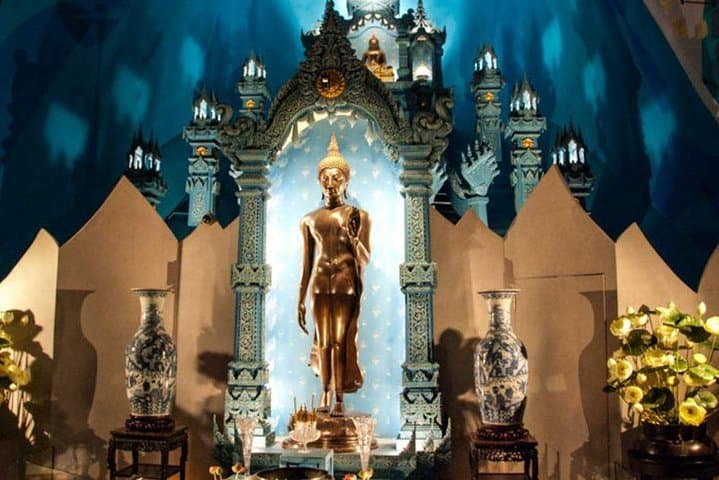
Expect meditative interiors of carved teak and mirrored glass, and playful, psychedelic murals that recall the owner’s broader projects like Ancient City. Quiet courtyards invite a slow read of craftsmanship; the grounds give a quick nature interlude with birds and park trees.
Practical guidance: allow 1–2 hours for a focused visit (more if you linger in galleries). Wear breathable shoes and bring water; the museum is mostly accessible but involves steps and narrow galleries. Public transport drops you nearby, and early morning or late afternoon visits avoid midday heat and crowds.
easy.
1–2 hours.
Suitable for most fitness levels; involves some stairs and standing while viewing exhibits
Plan 1–2 hours for the main galleries and a brief walk around the grounds; budget more if you want to photograph and read labels carefully.
Grounds and some areas are stroller accessible, but historic galleries include steps and narrow passages—check with staff for the most accessible route.
On‑site options vary; visitors commonly join small guided groups or use printed materials—check at the ticket desk for current offerings.
Yes—Erawan Museum is near Bang Na and is often paired with shopping centers, local markets, or a short trip into central Bangkok.
The museum was created by collector Khun Lek Viriyapant to preserve Thai and Asian artifacts and to extend his series of cultural projects around the Bangkok area.
The site maintains landscaped green spaces to manage urban runoff and encourages respectful visitor behavior to protect delicate artifacts and grounds.
Sunleisure World operates guided outdoor trips and adventures with an emphasis on safety, stewardship, and memorable experiences.


You arrive under the shadow of an enormous, three‑headed elephant — bronze skin catching the late‑afternoon light like a living landmark — and the city’s traffic fades behind the museum's gates. The sculpture forms a vaulted entry that funnels visitors into a vertical sequence of galleries: subterranean foundations, a main hall of carved wood and lacquer, and a rooftop gaze that frames the surrounding parkland.
You arrive under the shadow of an enormous, three‑headed elephant — bronze skin catching the late‑afternoon light like a living landmark — and the city’s traffic fades behind the museum's gates. The sculpture forms a vaulted entry that funnels visitors into a vertical sequence of galleries: subterranean foundations, a main hall of carved wood and lacquer, and a rooftop gaze that frames the surrounding parkland.
Built and curated by Khun Lek Viriyapant, the Erawan Museum sits on roughly 12 acres and was conceived as a place to house Thai and Asian antiquities collected over decades. The museum’s iconography borrows from Hindu and Buddhist cosmology; ornate reliefs, gilded ceilings and ritual objects link the site to regional craft traditions and the patronage culture of mid‑20th‑century Thailand. Geologically, the grounds are level floodplain typical of greater Bangkok — the museum’s landscaping channels water and shade to temper the tropical heat as you walk the outdoor displays.
Expect meditative interiors of carved teak and mirrored glass, and playful, psychedelic murals that recall the owner’s broader projects like Ancient City. Quiet courtyards invite a slow read of craftsmanship; the grounds give a quick nature interlude with birds and park trees.
Practical guidance: allow 1–2 hours for a focused visit (more if you linger in galleries). Wear breathable shoes and bring water; the museum is mostly accessible but involves steps and narrow galleries. Public transport drops you nearby, and early morning or late afternoon visits avoid midday heat and crowds.