THE ADVENTURE COLLECTIVE® · Independent discovery and booking for outdoor travel

Cross the long pedestrian bridge to Civita di Bagnoregio, then explore Orvieto’s Duomo and underground passages on this full-day tour. Expect geology, medieval alleys, and authentic regional flavors.
Cross the long pedestrian bridge to Civita di Bagnoregio, then explore Orvieto’s Duomo and underground passages on this full-day tour. Expect geology, medieval alleys, and authentic regional flavors.
A low, weathered bridge stretches out over a canyon of pale clay; behind it the stone throat of Civita di Bagnoregio rises like a miniature town caught mid-breath. The tour begins with that walk — a focused, almost ritual crossing that places you inside a village slowly giving itself to the Valle dei Calanchi.
Verified experiences and guided adventures in the surrounding area.
Operated by MyloveItaly Travel&Experiences · Orvieto, Umbria
A low, weathered bridge stretches out over a canyon of pale clay; behind it the stone throat of Civita di Bagnoregio rises like a miniature town caught mid-breath. The tour begins with that walk — a focused, almost ritual crossing that places you inside a village slowly giving itself to the Valle dei Calanchi.
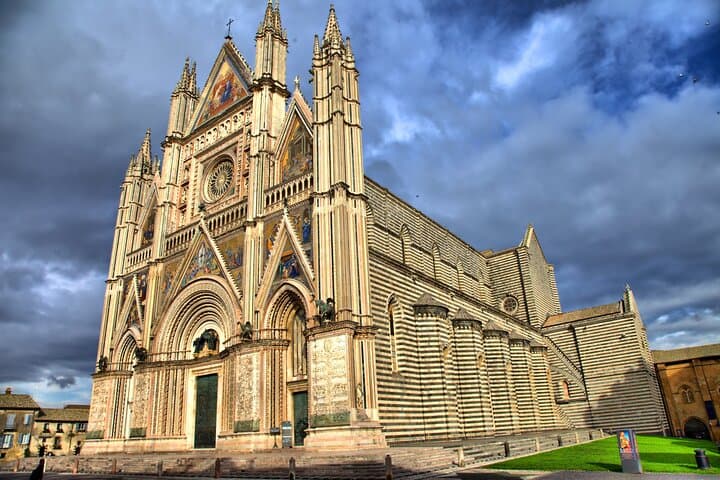
The route that follows moves through layers of history: Etruscan foundations, medieval palazzi, Renaissance facades and a Duomo in Orvieto whose mosaicked façade announces the city from a distance. Geology shapes both settings — the tuff and volcanic clays erode into ravines that push houses to the edge and create the dramatic views visitors come to see.
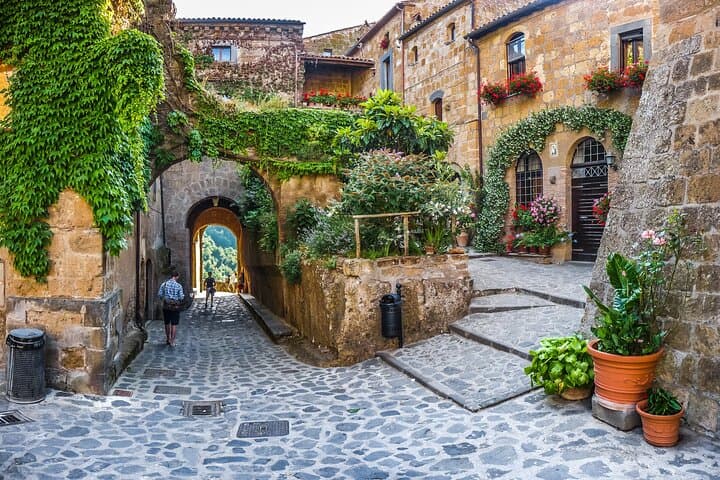
Culturally, this is rural central Italy: trattorie that serve Umbrian and Tuscia flavors, public squares where locals still gather, and underground cellars that reveal generations of human adaptation to the rock. The itinerary pairs two contrasting experiences — the fragile, intimate lanes of Civita and the broader civic sweep of Orvieto with its bell tower and Saint Patrick’s Well.
Practical guidance: expect several short steep sections and cobbled streets; the bridge to Civita is pedestrian-only. Plan for about eight hours including transfers, bring comfortable shoes, sun protection and a refillable water bottle. Peak times are late morning and early afternoon; arriving at opening gives quieter alleys and better photo light. The tour balances close-up history with clear, measurable logistics — an accessible full-day outing for travelers who want geology, art and village life in a single loop.
easy.
8 hours.
Light to moderate fitness — able to stand and walk on uneven cobbles for several hours.
The bridge is roughly 300 meters long and is the only pedestrian access to Civita di Bagnoregio, requiring a short walk at the start and end of the visit.
Yes — the tour includes entrance fees for Civita di Bagnoregio and Orvieto Duomo as listed in the inclusions.
Children are welcome but must be accompanied by an adult; the route involves cobbles and steps and the bridge has ramps but limited accessibility for wheelchairs.
The meeting point is the Terminal Cruise Shuttle Bus stop in the port area; staff from the operator will be waiting with signage to identify the group.
Civita grew on volcanic tuff with roots in Etruscan settlement; Orvieto later flourished as a medieval and Renaissance city anchored by its Duomo.
Both towns face erosion and visitor pressure; stick to marked paths, avoid touching fragile masonry, and support local businesses to help fund preservation.
MyloveItaly Travel&Experiences operates guided outdoor trips and adventures with an emphasis on safety, stewardship, and memorable experiences.


A low, weathered bridge stretches out over a canyon of pale clay; behind it the stone throat of Civita di Bagnoregio rises like a miniature town caught mid-breath. The tour begins with that walk — a focused, almost ritual crossing that places you inside a village slowly giving itself to the Valle dei Calanchi.
A low, weathered bridge stretches out over a canyon of pale clay; behind it the stone throat of Civita di Bagnoregio rises like a miniature town caught mid-breath. The tour begins with that walk — a focused, almost ritual crossing that places you inside a village slowly giving itself to the Valle dei Calanchi.
The route that follows moves through layers of history: Etruscan foundations, medieval palazzi, Renaissance facades and a Duomo in Orvieto whose mosaicked façade announces the city from a distance. Geology shapes both settings — the tuff and volcanic clays erode into ravines that push houses to the edge and create the dramatic views visitors come to see.
Culturally, this is rural central Italy: trattorie that serve Umbrian and Tuscia flavors, public squares where locals still gather, and underground cellars that reveal generations of human adaptation to the rock. The itinerary pairs two contrasting experiences — the fragile, intimate lanes of Civita and the broader civic sweep of Orvieto with its bell tower and Saint Patrick’s Well.
Practical guidance: expect several short steep sections and cobbled streets; the bridge to Civita is pedestrian-only. Plan for about eight hours including transfers, bring comfortable shoes, sun protection and a refillable water bottle. Peak times are late morning and early afternoon; arriving at opening gives quieter alleys and better photo light. The tour balances close-up history with clear, measurable logistics — an accessible full-day outing for travelers who want geology, art and village life in a single loop.