THE ADVENTURE COLLECTIVE® · Independent discovery and booking for outdoor travel

Experience Akshardham’s carved sandstone mandir, multimedia exhibitions and evening water show. This practical guide covers history, what to expect on-site and tips for timing your visit to avoid heat and crowds.
Experience Akshardham’s carved sandstone mandir, multimedia exhibitions and evening water show. This practical guide covers history, what to expect on-site and tips for timing your visit to avoid heat and crowds.
You step from the humid Delhi air into a courtyard of carved sandstone that reads like a living manual of local craft—pillars whisper history and stone figures watch the flow of visitors. Akshardham’s central mandir rises on a plinth of pink sandstone and white marble, its carved panels detailing gods, saints and scenes from everyday life.
Verified experiences and guided adventures in the surrounding area.
Operated by Exquisite Xperiences · New Delhi, Delhi
You step from the humid Delhi air into a courtyard of carved sandstone that reads like a living manual of local craft—pillars whisper history and stone figures watch the flow of visitors. Akshardham’s central mandir rises on a plinth of pink sandstone and white marble, its carved panels detailing gods, saints and scenes from everyday life.
The modern complex was completed by the BAPS Swaminarayan organization and opened to the public in 2005, designed to showcase spiritual teachings, Indian cultural history and traditional stone-carving techniques. Geologically, the materials are chosen for durability and fine detail—sandstone façades that take light differently through the day, marble inlays that keep the inner sanctum cool.
Culturally, expect ritual respect: modest dress, removed footwear at the mandir entrance, and quiet observation in prayer areas. The site pairs contemplative spaces with multimedia exhibits and the celebrated water-stepwell and musical fountain—popular after dusk for families and photographers from outside the prayer precinct (note: photography is restricted inside the mandir).
Practical guidance: allow 2–4 hours for a full visit that includes the exhibition halls and water show; book early or late slots to avoid mid‑day heat. The complex is accessible by Akshardham Metro (Blue Line) and many guided tours include air‑conditioned pickup and bottled water. Carry light, breathable clothing that covers shoulders and knees, a small bottle of water, and plan to lock or leave cameras and phones in your vehicle or a locker as required. Respect on‑site rules, move quietly through galleries, and time the fountain show for closing notes to your visit.
easy.
2–4 hours.
Suitable for all fitness levels; requires walking on paved surfaces and some standing during exhibits and shows.
No—photography and mobile phones are prohibited inside the main mandir and exhibition halls; use lockers or leave devices with your vehicle or tour operator.
Plan 2–4 hours to see the mandir, exhibition halls and the water/musical fountain show if you include it.
Yes—the complex and many public areas are wheelchair accessible, and some tours include accessible transport and assistance on request.
Early morning openings or late afternoon into the evening are best; avoid midday in summer and consider weekdays for fewer visitors.
Akshardham in Delhi is a 21st‑century complex completed by the BAPS Swaminarayan movement (opened in 2005) combining a central stone mandir, cultural exhibitions and a large water-stepwell.
The site enforces strict rules on food, waste and photography to protect carvings and maintain sanctity; visitors are encouraged to use public transport, follow signage and avoid littering.
Exquisite Xperiences operates guided outdoor trips and adventures with an emphasis on safety, stewardship, and memorable experiences.
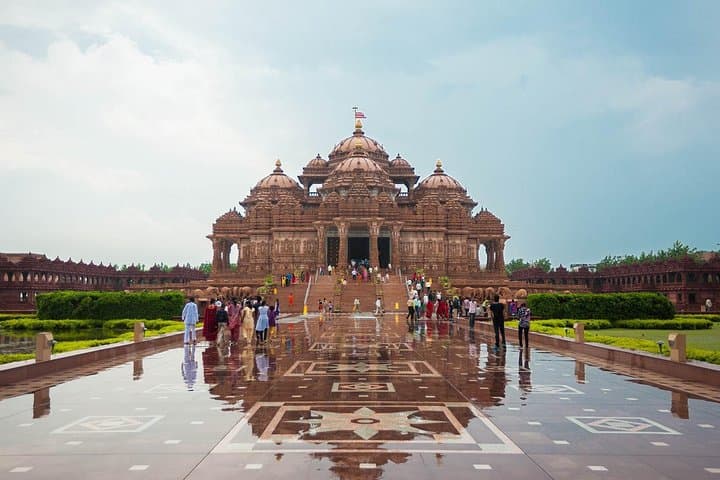
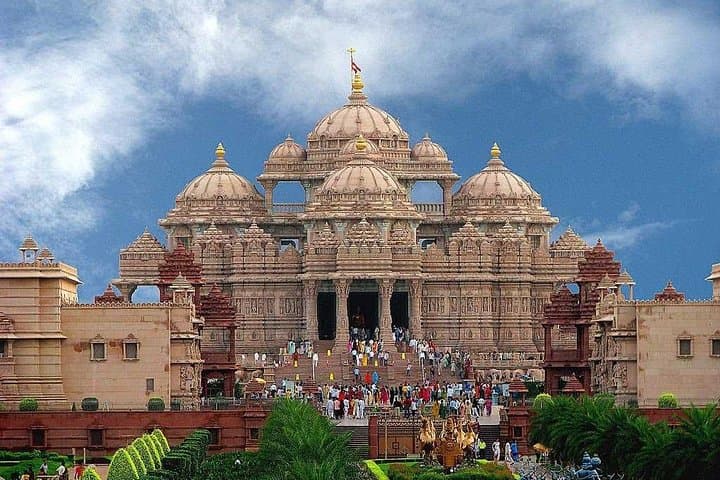

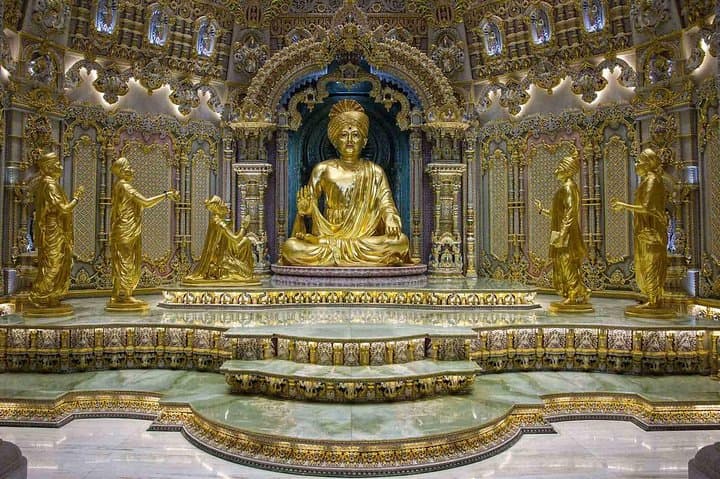
You step from the humid Delhi air into a courtyard of carved sandstone that reads like a living manual of local craft—pillars whisper history and stone figures watch the flow of visitors. Akshardham’s central mandir rises on a plinth of pink sandstone and white marble, its carved panels detailing gods, saints and scenes from everyday life.
You step from the humid Delhi air into a courtyard of carved sandstone that reads like a living manual of local craft—pillars whisper history and stone figures watch the flow of visitors. Akshardham’s central mandir rises on a plinth of pink sandstone and white marble, its carved panels detailing gods, saints and scenes from everyday life.
The modern complex was completed by the BAPS Swaminarayan organization and opened to the public in 2005, designed to showcase spiritual teachings, Indian cultural history and traditional stone-carving techniques. Geologically, the materials are chosen for durability and fine detail—sandstone façades that take light differently through the day, marble inlays that keep the inner sanctum cool.
Culturally, expect ritual respect: modest dress, removed footwear at the mandir entrance, and quiet observation in prayer areas. The site pairs contemplative spaces with multimedia exhibits and the celebrated water-stepwell and musical fountain—popular after dusk for families and photographers from outside the prayer precinct (note: photography is restricted inside the mandir).
Practical guidance: allow 2–4 hours for a full visit that includes the exhibition halls and water show; book early or late slots to avoid mid‑day heat. The complex is accessible by Akshardham Metro (Blue Line) and many guided tours include air‑conditioned pickup and bottled water. Carry light, breathable clothing that covers shoulders and knees, a small bottle of water, and plan to lock or leave cameras and phones in your vehicle or a locker as required. Respect on‑site rules, move quietly through galleries, and time the fountain show for closing notes to your visit.