THE ADVENTURE COLLECTIVE® · Independent discovery and booking for outdoor travel

Walk the Viros Gorge from Kardamili along an ancient Royal Road through limestone cliffs and shaded riverbed. This 5-hour circular hike blends geology, Byzantine monastery ruins and Mediterranean forest—ideal for summer shade and cultural curiosity.
Walk the Viros Gorge from Kardamili along an ancient Royal Road through limestone cliffs and shaded riverbed. This 5-hour circular hike blends geology, Byzantine monastery ruins and Mediterranean forest—ideal for summer shade and cultural curiosity.
You step from the coastal heat of Kardamili into cool shade, where the dry river bed of Viros funnels light into a slit of stone and olive-scrub. The air tightens with the scent of pine and thyme; rock faces lean inward like quiet guardians as the trail climbs into the heart of Taygetos.
Verified experiences and guided adventures in the surrounding area.
Operated by 2407 Mountain Activities · Kardamili, Peloponnese
You step from the coastal heat of Kardamili into cool shade, where the dry river bed of Viros funnels light into a slit of stone and olive-scrub. The air tightens with the scent of pine and thyme; rock faces lean inward like quiet guardians as the trail climbs into the heart of Taygetos.
This route follows part of an ancient Royal Road that once linked Sparta to the port of Kardamili. Geologically, Viros is carved from limestone and schist; you’ll pass layered cliffs, collapsed caves and talus slopes that reveal the massif’s slow tectonic work. Two small monasteries—Lykaki and the 14th-century Monastery of the Savior—sit half-hidden in the forest, their frescoes now under careful restoration and offering a glimpse of Mani’s Byzantine past.
Culturally the gorge is rugged and austere: local stone towers and farm terraces tell of a hardy mountain life. Botanically, the corridor supports Mediterranean scrub, relict oaks and patches of maquis that change color across the seasons.
Practical guidance: the hike is circular, mostly shaded and roughly a moderate 5-hour outing with some uneven footing and short elevation gain as you ascend the gorge from its mouth. Wear grippy footwear for rocky riverbed walking, carry 1–1.5 liters of water in summer, and bring sun protection for exposed sections. An experienced guide will point out fresco fragments and route features; photography respects restoration sites and private land. Start in the morning to avoid afternoon heat and give yourself time to explore the monastery ruins slowly—these quiet structures reward a patient eye.
moderate.
4–6 hours.
Suitable for most moderately active people; able to walk on uneven terrain and climb short rocky sections.
The guided itinerary runs about 5 hours for the full circular route from Kardamili, including stops at the monastery sites.
Yes—guides describe it as suitable for all fitness levels, but you should be comfortable walking uneven terrain for several hours.
The monasteries can be viewed externally; interior access may be limited during restoration—follow guide instructions and posted notices.
Closed, grippy hiking shoes or light boots are recommended to handle rocky riverbeds and uneven trail sections.
Viros carried an ancient Royal Road linking Sparta to the sea; the path and nearby monasteries reflect Byzantine and Maniot history.
Restoration work on monastery frescoes and erosion control are active concerns—stay on established trails, avoid disturbing archaeological features and pack out waste.
2407 Mountain Activities operates guided outdoor trips and adventures with an emphasis on safety, stewardship, and memorable experiences.
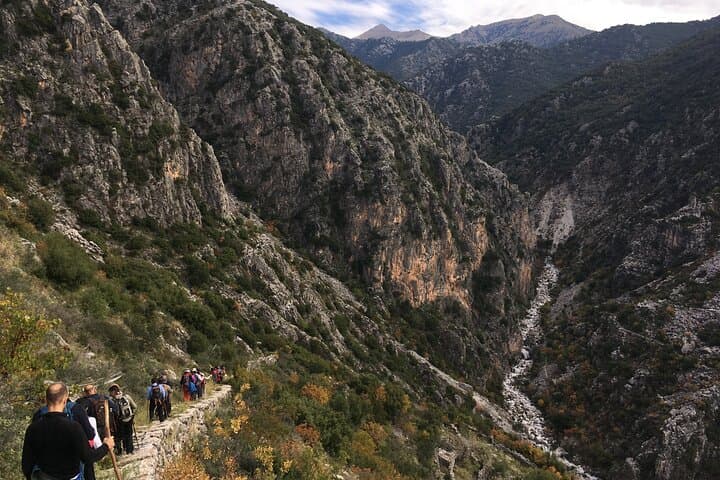


You step from the coastal heat of Kardamili into cool shade, where the dry river bed of Viros funnels light into a slit of stone and olive-scrub. The air tightens with the scent of pine and thyme; rock faces lean inward like quiet guardians as the trail climbs into the heart of Taygetos.
You step from the coastal heat of Kardamili into cool shade, where the dry river bed of Viros funnels light into a slit of stone and olive-scrub. The air tightens with the scent of pine and thyme; rock faces lean inward like quiet guardians as the trail climbs into the heart of Taygetos.
This route follows part of an ancient Royal Road that once linked Sparta to the port of Kardamili. Geologically, Viros is carved from limestone and schist; you’ll pass layered cliffs, collapsed caves and talus slopes that reveal the massif’s slow tectonic work. Two small monasteries—Lykaki and the 14th-century Monastery of the Savior—sit half-hidden in the forest, their frescoes now under careful restoration and offering a glimpse of Mani’s Byzantine past.
Culturally the gorge is rugged and austere: local stone towers and farm terraces tell of a hardy mountain life. Botanically, the corridor supports Mediterranean scrub, relict oaks and patches of maquis that change color across the seasons.
Practical guidance: the hike is circular, mostly shaded and roughly a moderate 5-hour outing with some uneven footing and short elevation gain as you ascend the gorge from its mouth. Wear grippy footwear for rocky riverbed walking, carry 1–1.5 liters of water in summer, and bring sun protection for exposed sections. An experienced guide will point out fresco fragments and route features; photography respects restoration sites and private land. Start in the morning to avoid afternoon heat and give yourself time to explore the monastery ruins slowly—these quiet structures reward a patient eye.