THE ADVENTURE COLLECTIVE® · Independent discovery and booking for outdoor travel

Skip the crowds and spend three hours with a guide through Mexico’s most important pre-Hispanic collections. This small-group VIP tour includes stories, behind-the-scenes insights, and access to pieces not usually on display.
Skip the crowds and spend three hours with a guide through Mexico’s most important pre-Hispanic collections. This small-group VIP tour includes stories, behind-the-scenes insights, and access to pieces not usually on display.
You step off Paseo de la Reforma and into a shaded concrete plaza; a single monumental column lifts an umbrella of stone and light above the museum's central courtyard, and the echo of footsteps becomes part of the exhibit. Weighty sculptures and carved stones occupy the room like sentries, their surfaces worn by centuries and the fingers of programmatic illumination.
Verified experiences and guided adventures in the surrounding area.
Operated by Educando con Cultura · Mexico City, Ciudad de México
You step off Paseo de la Reforma and into a shaded concrete plaza; a single monumental column lifts an umbrella of stone and light above the museum's central courtyard, and the echo of footsteps becomes part of the exhibit. Weighty sculptures and carved stones occupy the room like sentries, their surfaces worn by centuries and the fingers of programmatic illumination.
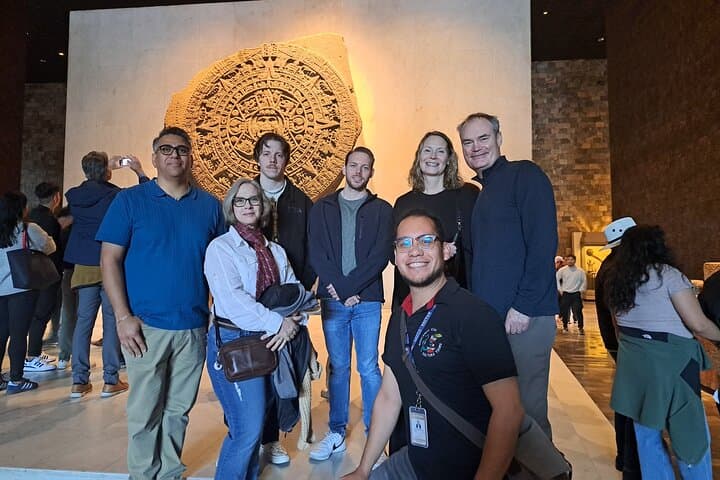
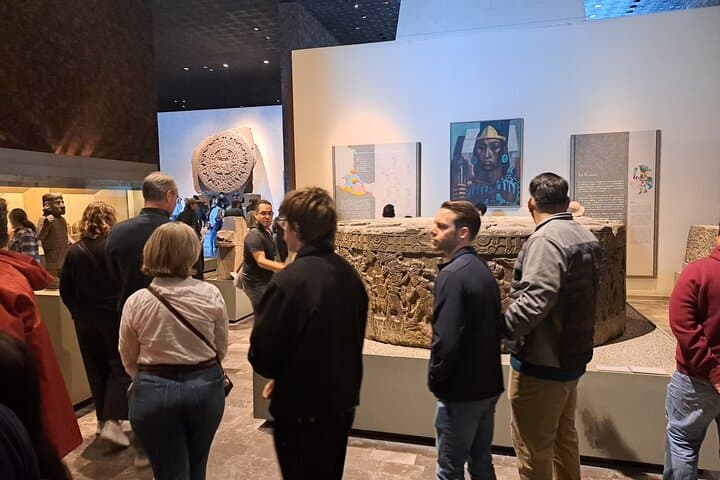
The National Museum of Anthropology opened in 1964, designed to present Mexico’s pre-Hispanic cultures under one roof. Galleries are organized by region — Olmec heads, Maya stelae, Mexica (Aztec) sculptures — each object anchored in volcanic highlands, coastal trade routes and centuries of human modification of the landscape. The Sun Stone and Pakal’s sarcophagus are centerpiece artifacts; small-group tours sometimes include access to works off the typical path and a look into restoration efforts.
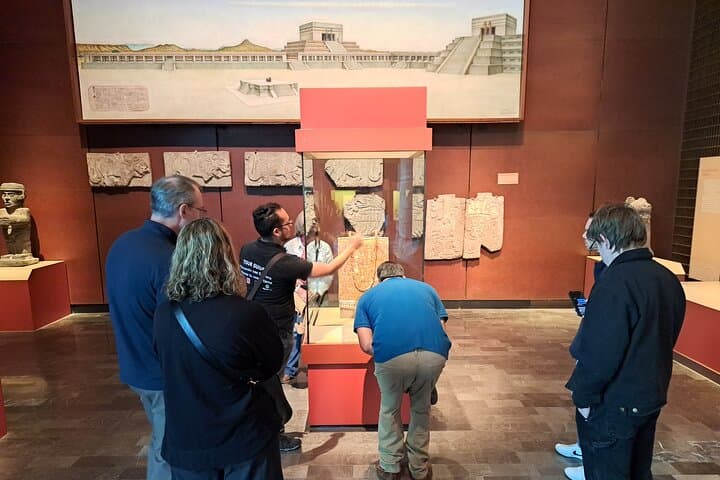
Expect three focused hours of walking on level, museum-grade floors with interpretive panels in Spanish and English. Audio and multimedia enhance ritual contexts; guides supply stories and practical context about provenance and conservation. The experience balances introspection with clear logistics: arrive early to avoid school groups, respect photography rules for fragile displays, and plan for quiet time in the outdoor courtyards.
Practical: bring a light layer for gallery AC, comfortable shoes for several hours of standing, and a charged camera or phone. If you want conservation context, ask your guide about the restoration lab and off-display collections — those are the parts that reward curiosity.
easy.
3 hours.
Suitable for all fitness levels; involves several hours of standing and walking on flat surfaces.
Yes — the museum and this tour are wheelchair accessible; staff can advise on elevator access and accessible routes.
Yes — admission and guide are included in the tour booking; you will not need to buy separate tickets onsite.
Small bags and backpacks are generally allowed but subject to inspection; very large items may need to be checked at security.
On small-group VIP tours some artifacts and restoration areas may be shown by special arrangement, but access varies by day and conservation needs.
Opened in 1964 and designed by Pedro Ramírez Vázquez and colleagues, the museum centralized artifacts from across Mexico to tell regional and chronological stories of pre-Hispanic cultures.
High visitor numbers and light exposure stress fragile materials; the museum limits access to sensitive pieces and maintains active restoration programs to preserve artifacts for future generations.
Educando con Cultura operates guided outdoor trips and adventures with an emphasis on safety, stewardship, and memorable experiences.
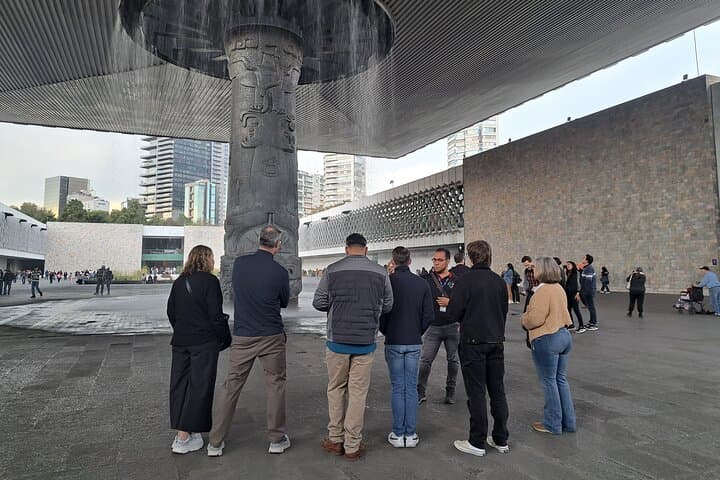
You step off Paseo de la Reforma and into a shaded concrete plaza; a single monumental column lifts an umbrella of stone and light above the museum's central courtyard, and the echo of footsteps becomes part of the exhibit. Weighty sculptures and carved stones occupy the room like sentries, their surfaces worn by centuries and the fingers of programmatic illumination.
You step off Paseo de la Reforma and into a shaded concrete plaza; a single monumental column lifts an umbrella of stone and light above the museum's central courtyard, and the echo of footsteps becomes part of the exhibit. Weighty sculptures and carved stones occupy the room like sentries, their surfaces worn by centuries and the fingers of programmatic illumination.
The National Museum of Anthropology opened in 1964, designed to present Mexico’s pre-Hispanic cultures under one roof. Galleries are organized by region — Olmec heads, Maya stelae, Mexica (Aztec) sculptures — each object anchored in volcanic highlands, coastal trade routes and centuries of human modification of the landscape. The Sun Stone and Pakal’s sarcophagus are centerpiece artifacts; small-group tours sometimes include access to works off the typical path and a look into restoration efforts.
Expect three focused hours of walking on level, museum-grade floors with interpretive panels in Spanish and English. Audio and multimedia enhance ritual contexts; guides supply stories and practical context about provenance and conservation. The experience balances introspection with clear logistics: arrive early to avoid school groups, respect photography rules for fragile displays, and plan for quiet time in the outdoor courtyards.
Practical: bring a light layer for gallery AC, comfortable shoes for several hours of standing, and a charged camera or phone. If you want conservation context, ask your guide about the restoration lab and off-display collections — those are the parts that reward curiosity.