THE ADVENTURE COLLECTIVE® · Independent discovery and booking for outdoor travel

Skip the queue and go straight to the Rotunda to see the Declaration, Constitution and Bill of Rights with a guided interpretation. This VIP entry tour condenses the Archives’ story into an hour of curated viewing and contextual history.
Skip the queue and go straight to the Rotunda to see the Declaration, Constitution and Bill of Rights with a guided interpretation. This VIP entry tour condenses the Archives’ story into an hour of curated viewing and contextual history.
You step off the sidewalk into a pulse of history: marble floors, hushed voices and a circular glow over a display case where the Declaration of Independence waits like a living page.
Verified experiences and guided adventures in the surrounding area.
Operated by Unscripted Tours · Washington, DC
You step off the sidewalk into a pulse of history: marble floors, hushed voices and a circular glow over a display case where the Declaration of Independence waits like a living page.
The guided VIP entry bypasses the standard queue and places you immediately in the rotunda, where the Founding documents are presented with controlled light and quiet authority. Your guide frames the papers within Philadelphia’s heated debates, the Federal Convention, and later constitutional amendments—tracing legal language back to English legal precedents and forward to modern interpretation.
Geology is subtle here; the city’s plan, sited above the Potomac, determined how and where public institutions clustered, concentrating government buildings and memorials in a compact walkable district. The Archives itself became a civic priority in the 1930s as the federal government professionalized record keeping.
Practical guidance: meet inside the Unscripted Welcome Center at 400 7th Street NW where the guide checks tickets; bring a government-issued photo ID for entry checks. Security screening is standard and photography rules vary at specific displays—ask your guide. The tour is wheelchair accessible and suitable for all fitness levels but expect standing time and close-quarter viewing under low light. Carry a small bottle of water and a layered jacket—temperature in exhibit halls is cool for preservation. After the tour you can continue exploring on your own: the Archives’ public exhibits, the research center (by separate registration), and nearby National Archives Plaza.
easy.
1 hour.
Suitable for all fitness levels; requires standing and short periods of walking on flat surfaces
The guided VIP tour runs approximately 60 minutes with a focused visit to the Rotunda and select exhibits.
Photography rules vary by display; flash and close-up photography of original documents is often restricted—confirm with your guide on-site.
Yes. The National Archives and the tour route are wheelchair accessible; notify the operator of any special requirements when booking.
Small bags are allowed but will be subject to security screening; oversized luggage is not permitted inside the museum.
Established in 1934, the National Archives preserves federal records and became the public home for the Declaration, Constitution and Bill of Rights soon after its creation.
Original documents are kept in climate-controlled conditions with strict light limits to slow deterioration; the Archives encourages digital access to reduce handling of fragile materials.
Unscripted Tours operates guided outdoor trips and adventures with an emphasis on safety, stewardship, and memorable experiences.
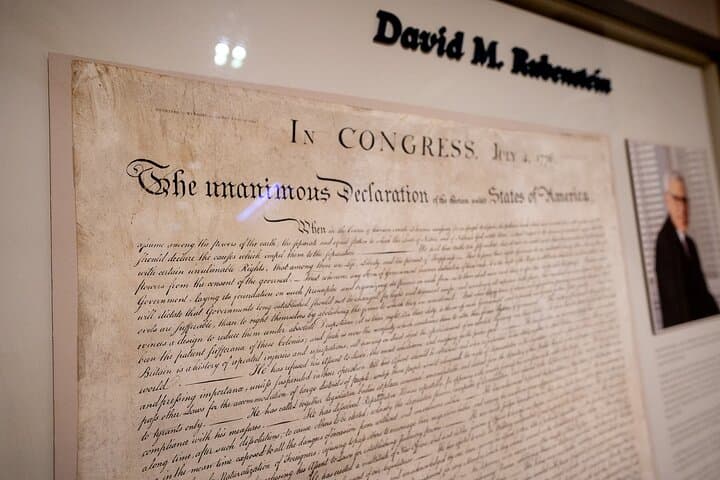
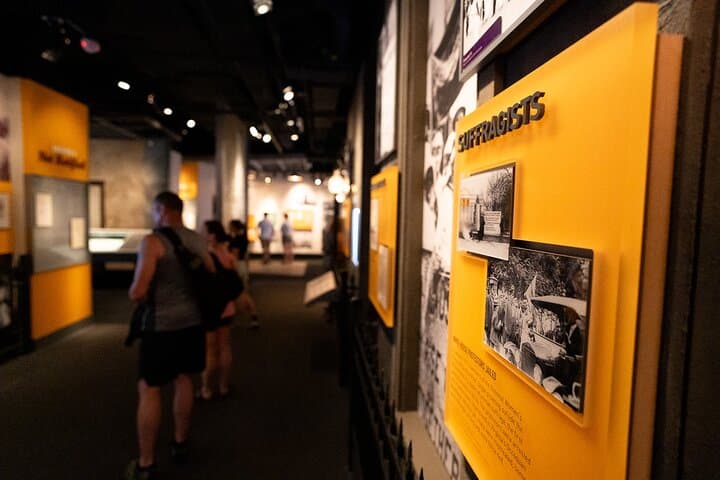
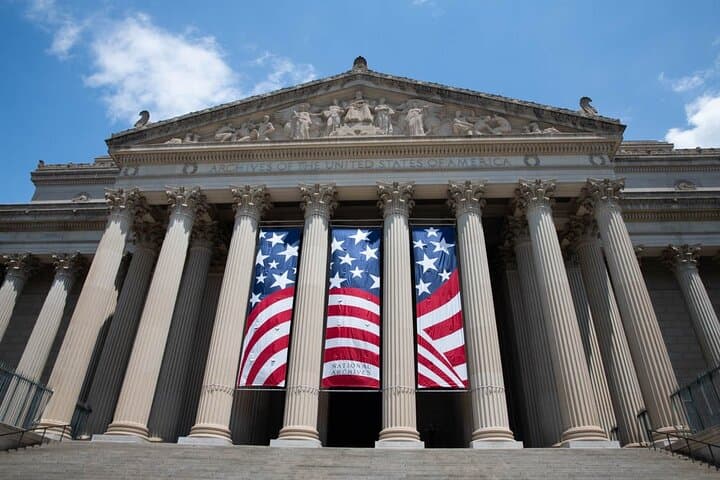
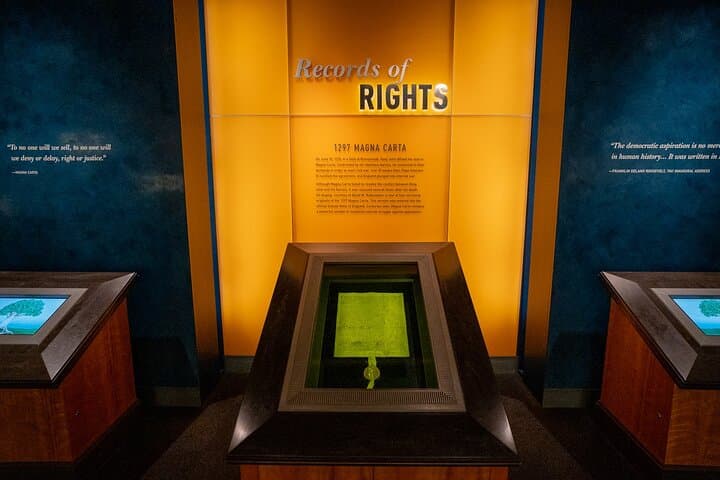
You step off the sidewalk into a pulse of history: marble floors, hushed voices and a circular glow over a display case where the Declaration of Independence waits like a living page.
You step off the sidewalk into a pulse of history: marble floors, hushed voices and a circular glow over a display case where the Declaration of Independence waits like a living page.
The guided VIP entry bypasses the standard queue and places you immediately in the rotunda, where the Founding documents are presented with controlled light and quiet authority. Your guide frames the papers within Philadelphia’s heated debates, the Federal Convention, and later constitutional amendments—tracing legal language back to English legal precedents and forward to modern interpretation.
Geology is subtle here; the city’s plan, sited above the Potomac, determined how and where public institutions clustered, concentrating government buildings and memorials in a compact walkable district. The Archives itself became a civic priority in the 1930s as the federal government professionalized record keeping.
Practical guidance: meet inside the Unscripted Welcome Center at 400 7th Street NW where the guide checks tickets; bring a government-issued photo ID for entry checks. Security screening is standard and photography rules vary at specific displays—ask your guide. The tour is wheelchair accessible and suitable for all fitness levels but expect standing time and close-quarter viewing under low light. Carry a small bottle of water and a layered jacket—temperature in exhibit halls is cool for preservation. After the tour you can continue exploring on your own: the Archives’ public exhibits, the research center (by separate registration), and nearby National Archives Plaza.