THE ADVENTURE COLLECTIVE® · Independent discovery and booking for outdoor travel

Skip the crowds and spend a focused day at Giza: three major pyramids, the Sphinx, a papyrus demonstration and a perfume workshop. This VIP tour pairs efficient access with cultural stops to bring home both photos and tangible pieces of Egypt.
Skip the crowds and spend a focused day at Giza: three major pyramids, the Sphinx, a papyrus demonstration and a perfume workshop. This VIP tour pairs efficient access with cultural stops to bring home both photos and tangible pieces of Egypt.
You step off an air-conditioned car onto a wind-swept plateau where stone blocks the size of small houses rise from the sand. The three main pyramids cut clean silhouettes against Cairo’s pale sky; the Sphinx watches the approach with an unblinking, limestone stare. Guides move with measured authority, opening gates and cutting through lines so you meet these monuments without the usual crowd crush.
Verified experiences and guided adventures in the surrounding area.
Operated by Egypt Taxi Transfers · Giza, Giza Governorate
You step off an air-conditioned car onto a wind-swept plateau where stone blocks the size of small houses rise from the sand. The three main pyramids cut clean silhouettes against Cairo’s pale sky; the Sphinx watches the approach with an unblinking, limestone stare. Guides move with measured authority, opening gates and cutting through lines so you meet these monuments without the usual crowd crush.
The Giza Plateau records three millennia of human ambition: the Great Pyramid of Khufu is the oldest surviving of the ancient world’s wonders, and the surrounding tombs and quarries map a working landscape of labor and ritual. Geology here is visible—layered limestone and mortar, wind-polished faces, and desert scree that tells of a once different climate.
Beyond archaeology, the day folds into hands-on culture. A Papyrus Institute visit explains how reed fibers become painted sheets; the Essential Oil Perfumery demonstrates how attars and citrus essences are blended and bottled. Shops offer locally made crafts, but bargaining is expected and cash useful.
Practicalities are straightforward: expect about 5–6 hours on a mix of paved and sandy surfaces with short walks between sites. Wear sturdy, breathable shoes, sun protection, and bring small change for souvenirs and tips. Photography is allowed in most areas but avoid climbing the monuments—restrictions are enforced. The tour balances fast, skip-the-line access with time to absorb the scale, making it a good single-day introduction to Egypt’s best-known archaeological stage.
easy.
5–6 hours.
Suitable for most fitness levels; requires the ability to walk short distances on uneven ground and stand for photo stops.
This VIP tour includes admission to the Giza Plateau attractions listed in the itinerary; confirm any optional extras with the operator.
The tour listing indicates wheelchair accessibility, though some outdoor paths are uneven—notify the operator ahead to arrange suitable transport and assistance.
Photography is generally allowed in external areas; internal passage rules vary and staff may restrict cameras—ask your guide on arrival.
The itinerary allocates roughly 30–60 minutes at major stops with longer time for the main pyramid and Sphinx; the total tour runs about 5–6 hours.
The Great Pyramid dates to c. 2560 BCE and is central to ancient Egypt’s funerary and statecraft systems; the plateau also contains workers’ tombs that reveal the logistics of pyramid building.
Stick to marked paths and resist the temptation to touch fragile stone; purchasing from vetted local artisans supports craft traditions and the local economy.
Egypt Taxi Transfers operates guided outdoor trips and adventures with an emphasis on safety, stewardship, and memorable experiences.
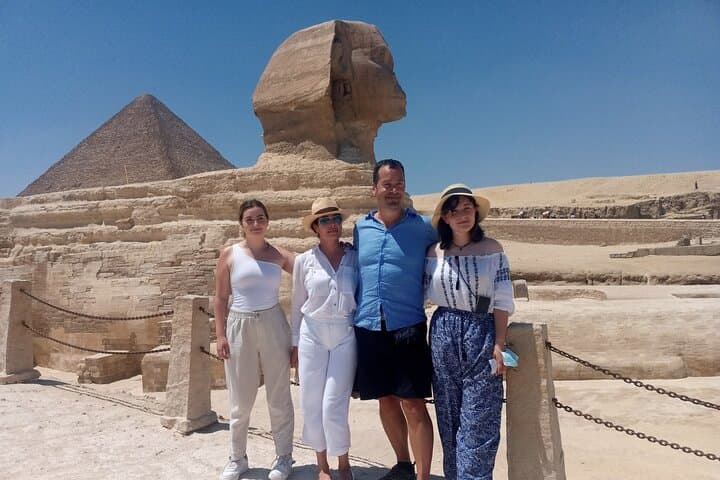
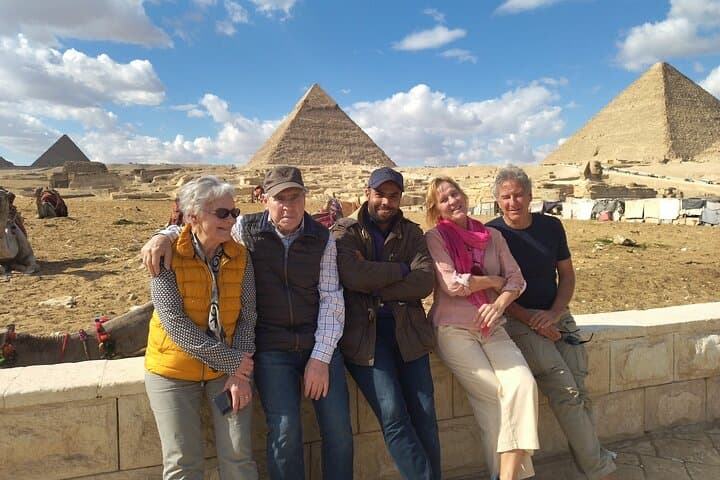
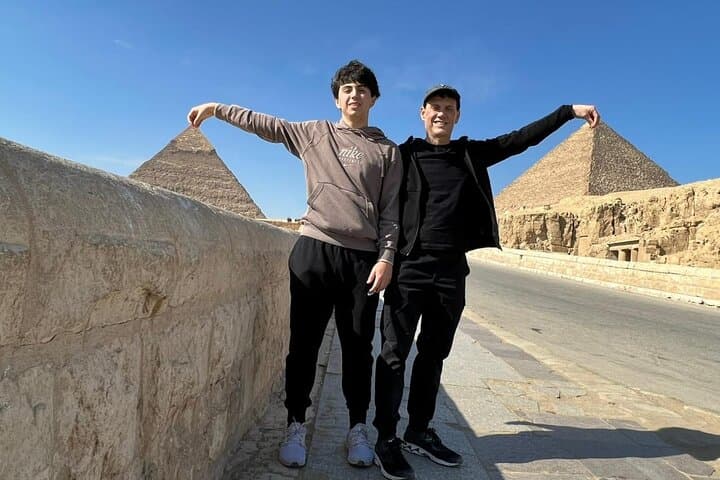
You step off an air-conditioned car onto a wind-swept plateau where stone blocks the size of small houses rise from the sand. The three main pyramids cut clean silhouettes against Cairo’s pale sky; the Sphinx watches the approach with an unblinking, limestone stare. Guides move with measured authority, opening gates and cutting through lines so you meet these monuments without the usual crowd crush.
You step off an air-conditioned car onto a wind-swept plateau where stone blocks the size of small houses rise from the sand. The three main pyramids cut clean silhouettes against Cairo’s pale sky; the Sphinx watches the approach with an unblinking, limestone stare. Guides move with measured authority, opening gates and cutting through lines so you meet these monuments without the usual crowd crush.
The Giza Plateau records three millennia of human ambition: the Great Pyramid of Khufu is the oldest surviving of the ancient world’s wonders, and the surrounding tombs and quarries map a working landscape of labor and ritual. Geology here is visible—layered limestone and mortar, wind-polished faces, and desert scree that tells of a once different climate.
Beyond archaeology, the day folds into hands-on culture. A Papyrus Institute visit explains how reed fibers become painted sheets; the Essential Oil Perfumery demonstrates how attars and citrus essences are blended and bottled. Shops offer locally made crafts, but bargaining is expected and cash useful.
Practicalities are straightforward: expect about 5–6 hours on a mix of paved and sandy surfaces with short walks between sites. Wear sturdy, breathable shoes, sun protection, and bring small change for souvenirs and tips. Photography is allowed in most areas but avoid climbing the monuments—restrictions are enforced. The tour balances fast, skip-the-line access with time to absorb the scale, making it a good single-day introduction to Egypt’s best-known archaeological stage.