THE ADVENTURE COLLECTIVE® · Independent discovery and booking for outdoor travel

Small-group energy with private logistics: explore the Great Pyramid, Khafre and Menkaure, get up close to the Sphinx, and take a short camel ride on the Giza Plateau. This VIP tour pairs an Egyptologist guide with hotel pickup for a focused, comfortable day of discovery.
Small-group energy with private logistics: explore the Great Pyramid, Khafre and Menkaure, get up close to the Sphinx, and take a short camel ride on the Giza Plateau. This VIP tour pairs an Egyptologist guide with hotel pickup for a focused, comfortable day of discovery.
The sun presses warm across the Giza Plateau as you step from an air-conditioned vehicle into a landscape that has watched millennia pass. Sand flicks at your ankles while the Great Pyramid rises ahead, a measured geometry of limestone blocks that still holds the horizon.
Verified experiences and guided adventures in the surrounding area.
Operated by Pharaonic Vision Tours · Giza, Giza Governorate
The sun presses warm across the Giza Plateau as you step from an air-conditioned vehicle into a landscape that has watched millennia pass. Sand flicks at your ankles while the Great Pyramid rises ahead, a measured geometry of limestone blocks that still holds the horizon.
This private, Egyptologist-led tour moves at a calm pace: focused visits to Khufu, Khafre and Menkaure’s pyramids, time at the Great Sphinx, and a 30-minute camel ride that lets the plateau reveal itself from saddle height. Geologically the plateau is an erosion-resistant limestone outcrop; archaeologically it’s a concentrated archive of Old Kingdom funerary architecture and ritual, built around 4,500 years ago.
Culturally expect layered histories — pharaonic burial practices, later reuse by medieval communities, and modern Cairo’s edge visible on the skyline. Guides typically explain the pyramid chambers, casing stone remnants, and the Sphinx’s contested restorations while placing artifacts in social and technological context.
Practical guidance: plan 4–7 hours, bring sun protection, closed-toe shoes for uneven limestone and sand, and a hat for camel photos. Morning slots beat the heat and crowds; private pickup drops you back to your hotel. Accessibility is generally good for short walks, but surfaces are irregular. Water and snacks are usually provided on VIP tours; still, carry extra fluids if you’re sensitive to heat. Expect close-up photo opportunities, personalized interpretation, and a mix of standing, walking on packed sand, and brief climbs over low ruins. The experience balances immersive storytelling with easy logistics — an efficient way to see Egypt’s most famous monuments without the bustle of larger groups.
easy.
4–7 hours.
Suitable for most fitness levels; involves moderate walking on uneven, sandy surfaces and brief climbs over low ruins.
The itinerary typically includes a 30-minute camel ride on the plateau—short, photographic, and guided for safety.
VIP tours often include admissions for the pyramid complex and Sphinx as part of the package; confirm inclusions at booking.
Yes; the tour is family-friendly with stroller and wheelchair-accessible options noted, though some areas have uneven surfaces.
Early morning offers cooler temperatures, softer light for photos, and fewer visitors; late afternoon is an alternative but can be windier.
The Giza complex dates to Egypt’s Old Kingdom (c. 2600–2500 BCE) and includes the lone surviving Wonder of the Ancient World, built for Pharaoh Khufu.
Visitor management focuses on protecting fragile stone and limiting direct contact with original casing stones; choose operators who follow local site rules and avoid touching sensitive surfaces.
Pharaonic Vision Tours operates guided outdoor trips and adventures with an emphasis on safety, stewardship, and memorable experiences.
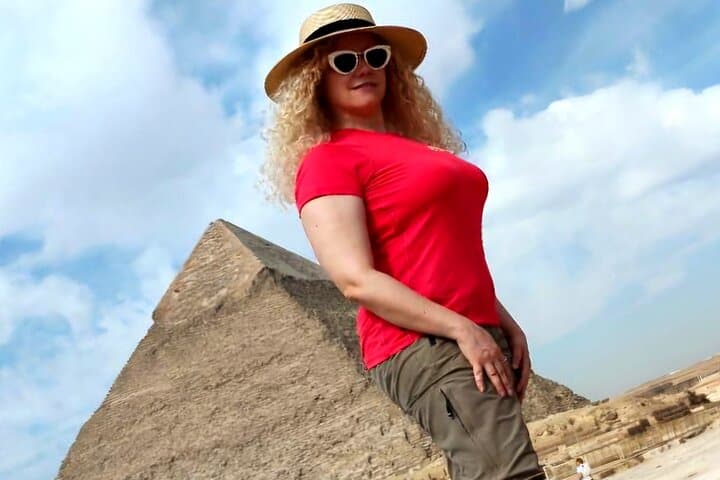
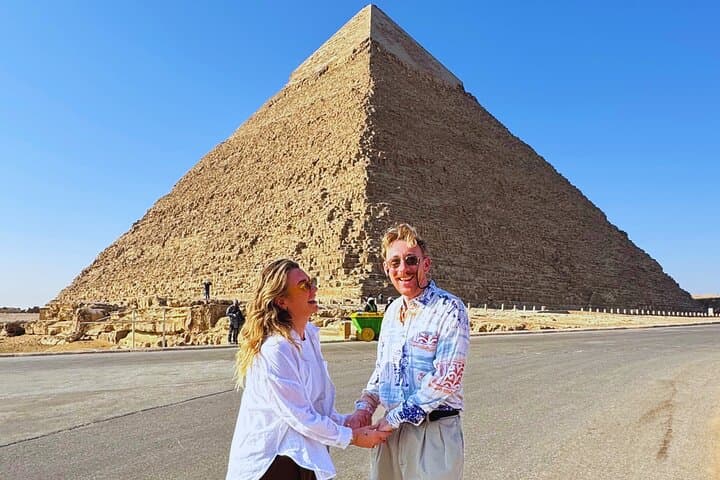
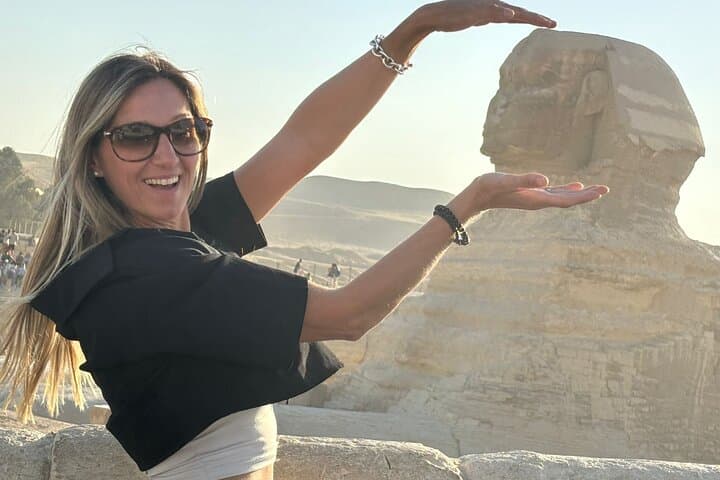
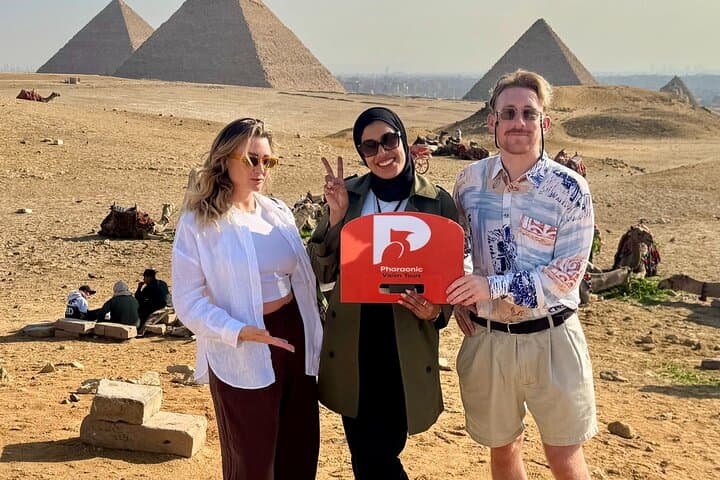
The sun presses warm across the Giza Plateau as you step from an air-conditioned vehicle into a landscape that has watched millennia pass. Sand flicks at your ankles while the Great Pyramid rises ahead, a measured geometry of limestone blocks that still holds the horizon.
The sun presses warm across the Giza Plateau as you step from an air-conditioned vehicle into a landscape that has watched millennia pass. Sand flicks at your ankles while the Great Pyramid rises ahead, a measured geometry of limestone blocks that still holds the horizon.
This private, Egyptologist-led tour moves at a calm pace: focused visits to Khufu, Khafre and Menkaure’s pyramids, time at the Great Sphinx, and a 30-minute camel ride that lets the plateau reveal itself from saddle height. Geologically the plateau is an erosion-resistant limestone outcrop; archaeologically it’s a concentrated archive of Old Kingdom funerary architecture and ritual, built around 4,500 years ago.
Culturally expect layered histories — pharaonic burial practices, later reuse by medieval communities, and modern Cairo’s edge visible on the skyline. Guides typically explain the pyramid chambers, casing stone remnants, and the Sphinx’s contested restorations while placing artifacts in social and technological context.
Practical guidance: plan 4–7 hours, bring sun protection, closed-toe shoes for uneven limestone and sand, and a hat for camel photos. Morning slots beat the heat and crowds; private pickup drops you back to your hotel. Accessibility is generally good for short walks, but surfaces are irregular. Water and snacks are usually provided on VIP tours; still, carry extra fluids if you’re sensitive to heat. Expect close-up photo opportunities, personalized interpretation, and a mix of standing, walking on packed sand, and brief climbs over low ruins. The experience balances immersive storytelling with easy logistics — an efficient way to see Egypt’s most famous monuments without the bustle of larger groups.