THE ADVENTURE COLLECTIVE® · Independent discovery and booking for outdoor travel

Spend a private day exploring Egypt’s iconic Giza Plateau and the Grand Egyptian Museum with an Egyptologist guide. Beat the heat, learn construction secrets, and see world-class artifacts with a practical plan for timing and gear.
Spend a private day exploring Egypt’s iconic Giza Plateau and the Grand Egyptian Museum with an Egyptologist guide. Beat the heat, learn construction secrets, and see world-class artifacts with a practical plan for timing and gear.
The sun presses metal-gold against the limestone as you step onto the Giza Plateau, the horizon broken by three colossal angles and the watchful Sphinx. Dust lifts in thin ribbons; your guide — an Egyptologist — points out seams and tool marks, and the stones seem to answer, keeping time.
Verified experiences and guided adventures in the surrounding area.
Operated by Pharaohs Glory Tours · Giza, Giza Governorate
The sun presses metal-gold against the limestone as you step onto the Giza Plateau, the horizon broken by three colossal angles and the watchful Sphinx. Dust lifts in thin ribbons; your guide — an Egyptologist — points out seams and tool marks, and the stones seem to answer, keeping time.
This sweep of landscape holds millennia: Khufu’s pyramid rising from Old Kingdom ambition, the Sphinx chiselled from natural bedrock, and, across a short drive, the modern Grand Egyptian Museum, designed to reframe pharaonic treasures in glass and light. Geologically, the plateau is Tura limestone over Mokattam, the bedrock that made monumental construction possible. Culturally, these sites trace ancient administrative, religious, and funerary systems; today they are living intersections of tourism, conservation, and national pride.
Expect close-up views of the pyramids’ faces, the Valley Temple’s dressed stone, and museum galleries where gold and woodwork sit behind careful climate control. Your private vehicle shuttles you between sites, with commentary tailored to questions about construction techniques, burial rituals, or modern excavation projects.
Practical guidance: start early to avoid midday heat and crowds, carry sun protection and a reusable water bottle, and wear sturdy walking shoes — the plateau is rocky and uneven. Photography is allowed in most outdoor areas but restricted indoors; follow your guide’s directions for entry times and security screening. Respect no-touch rules around artifacts, and factor in 6–8 hours for a relaxed visit that includes pickup and time for lunch.
easy.
6–8 hours.
Suitable for most fitness levels; expect walking on uneven, rocky surfaces for several hours and short, uneven steps at entrances.
Many private tours include admission; confirm at booking. The Grand Egyptian Museum may have separate ticketing and timed entries.
The tour is family-friendly but involves uneven terrain; travelers with limited mobility should check vehicle access and consider assistance for steps and rough ground.
Photography policies vary by exhibit; outdoor photography around the pyramids is generally allowed, but follow signage and your guide’s instructions indoors.
Plan for 6–8 hours including hotel pickup/drop-off, site visits, and a relaxed lunch; heavier museum visits can add time.
The main pyramids at Giza date to the Fourth Dynasty (c. 2600–2500 BCE); the Grand Egyptian Museum is a 21st-century project to centralize and modernize artifact conservation and display.
Strict no-touch policies and climate-controlled galleries protect fragile artifacts; visitors should follow paths and avoid littering to reduce wear on the plateau.
Pharaohs Glory Tours operates guided outdoor trips and adventures with an emphasis on safety, stewardship, and memorable experiences.
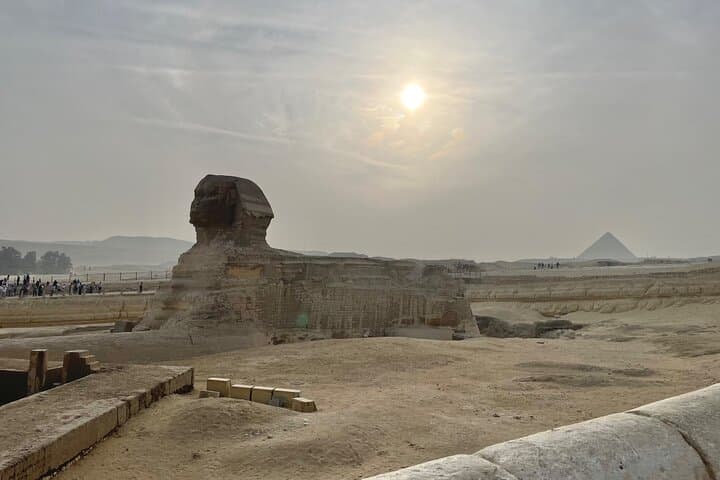
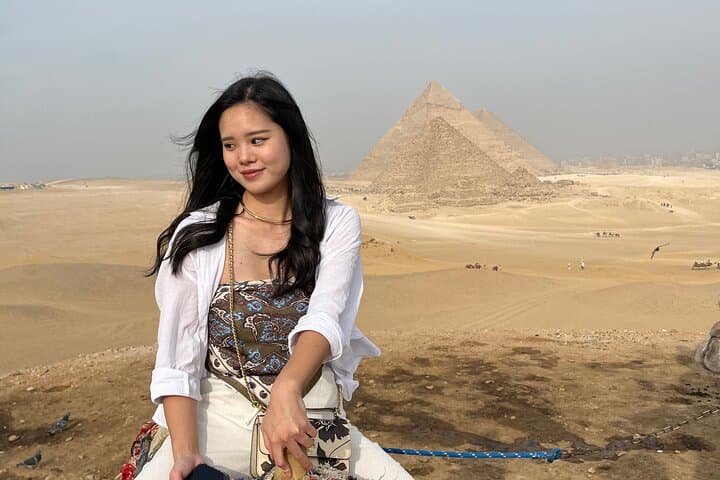
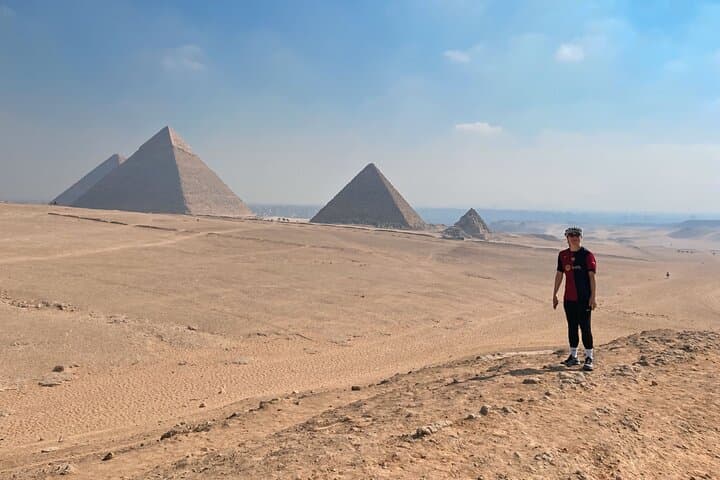
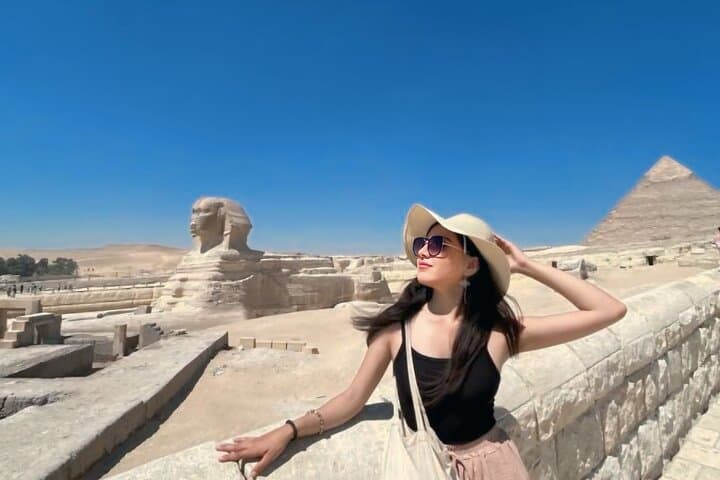
The sun presses metal-gold against the limestone as you step onto the Giza Plateau, the horizon broken by three colossal angles and the watchful Sphinx. Dust lifts in thin ribbons; your guide — an Egyptologist — points out seams and tool marks, and the stones seem to answer, keeping time.
The sun presses metal-gold against the limestone as you step onto the Giza Plateau, the horizon broken by three colossal angles and the watchful Sphinx. Dust lifts in thin ribbons; your guide — an Egyptologist — points out seams and tool marks, and the stones seem to answer, keeping time.
This sweep of landscape holds millennia: Khufu’s pyramid rising from Old Kingdom ambition, the Sphinx chiselled from natural bedrock, and, across a short drive, the modern Grand Egyptian Museum, designed to reframe pharaonic treasures in glass and light. Geologically, the plateau is Tura limestone over Mokattam, the bedrock that made monumental construction possible. Culturally, these sites trace ancient administrative, religious, and funerary systems; today they are living intersections of tourism, conservation, and national pride.
Expect close-up views of the pyramids’ faces, the Valley Temple’s dressed stone, and museum galleries where gold and woodwork sit behind careful climate control. Your private vehicle shuttles you between sites, with commentary tailored to questions about construction techniques, burial rituals, or modern excavation projects.
Practical guidance: start early to avoid midday heat and crowds, carry sun protection and a reusable water bottle, and wear sturdy walking shoes — the plateau is rocky and uneven. Photography is allowed in most outdoor areas but restricted indoors; follow your guide’s directions for entry times and security screening. Respect no-touch rules around artifacts, and factor in 6–8 hours for a relaxed visit that includes pickup and time for lunch.