THE ADVENTURE COLLECTIVE® · Independent discovery and booking for outdoor travel

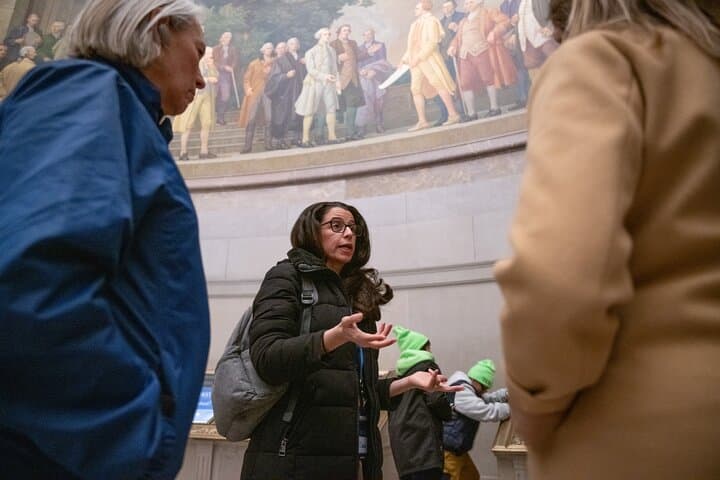
Skip the line and move directly into the Rotunda to view the Declaration of Independence and Constitution with a small-group guide. This VIP tour trims wait time and adds context, letting you focus on the artifacts and their stories.
Skip the line and move directly into the Rotunda to view the Declaration of Independence and Constitution with a small-group guide. This VIP tour trims wait time and adds context, letting you focus on the artifacts and their stories.
You step off the sidewalk into a hush that feels almost intentional: marble floors cold underfoot, light filtering through high windows, and a guide who parts the queue like a small current so you can pass straight into the Rotunda.
Verified experiences and guided adventures in the surrounding area.
Operated by Unscripted Tours · Washington, DC
You step off the sidewalk into a hush that feels almost intentional: marble floors cold underfoot, light filtering through high windows, and a guide who parts the queue like a small current so you can pass straight into the Rotunda.
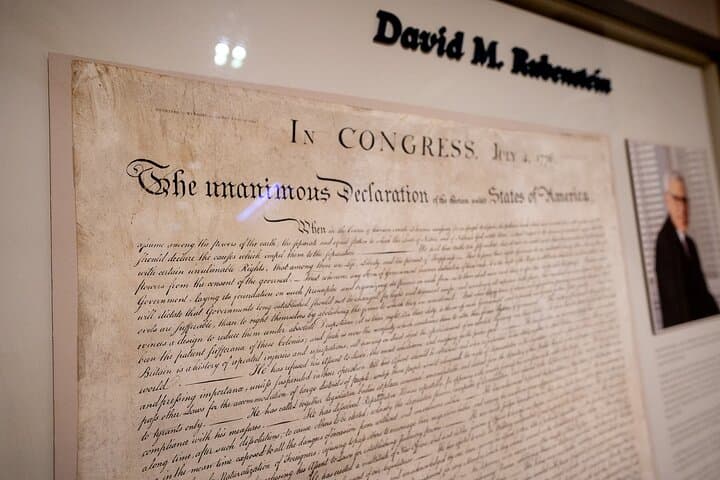
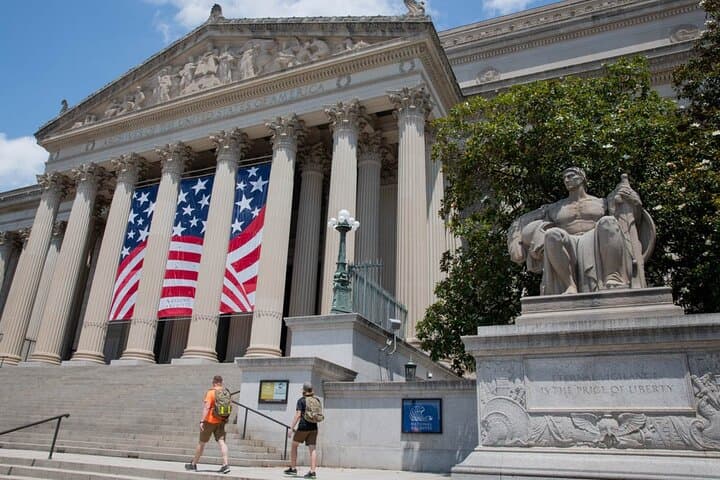
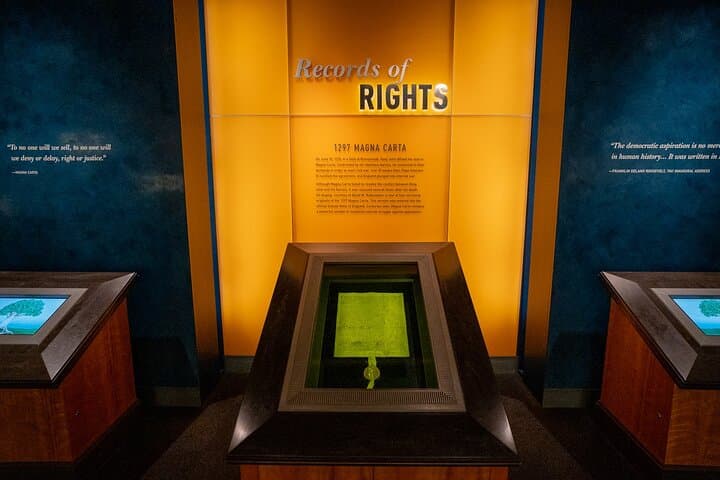
The National Archives houses documents that shaped a nation — the Declaration of Independence and the Constitution among them — and the building itself reflects Washington’s 20th-century push to monumentalize civic memory. The museum sits on the Coastal Plain bordering the Potomac and the city’s fall line, where past and present meet in stone and signage rather than wild terrain. Exhibits trace law, war, and civic life; occasional rotating displays spotlight artifacts less seen by casual visitors.
Culturally, the Archives is both temple and tool: it preserves fragile originals while expanding access through digitization. Expect quiet reverence, security screening, and slow-moving crowds around the Rotunda’s glass cases.
Practically, a VIP skip-the-line booking removes the uncertainty of long waits and lets a small group move efficiently from welcome to the core documents in about an hour. Bring a government-issued ID for entry, plan for security screening, and allow extra time if you add the Portrait Gallery or American History Museum option. Wear comfortable shoes for standing and walking; the tour involves minimal elevation but steady pacing. If preservation measures restrict backpacks or flash photography, staff will direct you. Visit in the morning to catch clearer sightlines and thinner crowds, and consider staying afterward to explore nearby Mall sights on foot.
easy.
1 hour.
Able to stand and walk for up to an hour with occasional short walks between exhibits; moderate mobility required for brief stairs or ramps.
The base VIP tour grants skip-the-line entry to the National Archives only; you can add the American History or Portrait Gallery as an optional extension at booking.
Photography policies vary by gallery; non-flash photography is usually allowed in public areas but excluded near fragile originals—follow signage and staff instructions.
Yes; the meeting point and museum spaces are wheelchair accessible, and staff can assist with logistics if notified in advance.
If a shutdown affects access, the operator provides alternate options or reschedules—confirm policies when you book and check the cancellation window.
The National Archives was established in 1934 to centralize and preserve U.S. federal records; the current museum building presents both original documents and artifacts tied to key national events.
The Archives balances public access with preservation through strict climate control, light limits, and expanding digitization to reduce handling of fragile originals.
Unscripted Tours operates guided outdoor trips and adventures with an emphasis on safety, stewardship, and memorable experiences.
You step off the sidewalk into a hush that feels almost intentional: marble floors cold underfoot, light filtering through high windows, and a guide who parts the queue like a small current so you can pass straight into the Rotunda.
You step off the sidewalk into a hush that feels almost intentional: marble floors cold underfoot, light filtering through high windows, and a guide who parts the queue like a small current so you can pass straight into the Rotunda.
The National Archives houses documents that shaped a nation — the Declaration of Independence and the Constitution among them — and the building itself reflects Washington’s 20th-century push to monumentalize civic memory. The museum sits on the Coastal Plain bordering the Potomac and the city’s fall line, where past and present meet in stone and signage rather than wild terrain. Exhibits trace law, war, and civic life; occasional rotating displays spotlight artifacts less seen by casual visitors.
Culturally, the Archives is both temple and tool: it preserves fragile originals while expanding access through digitization. Expect quiet reverence, security screening, and slow-moving crowds around the Rotunda’s glass cases.
Practically, a VIP skip-the-line booking removes the uncertainty of long waits and lets a small group move efficiently from welcome to the core documents in about an hour. Bring a government-issued ID for entry, plan for security screening, and allow extra time if you add the Portrait Gallery or American History Museum option. Wear comfortable shoes for standing and walking; the tour involves minimal elevation but steady pacing. If preservation measures restrict backpacks or flash photography, staff will direct you. Visit in the morning to catch clearer sightlines and thinner crowds, and consider staying afterward to explore nearby Mall sights on foot.