THE ADVENTURE COLLECTIVE® · Independent discovery and booking for outdoor travel

Stand beneath the Great Pyramid, ride a camel across historic sand, and enjoy a restaurant lunch with a pyramid view — all guided by a professional Egyptologist. This VIP half-day tour combines access, context and comfort for first-time and returning visitors.
Stand beneath the Great Pyramid, ride a camel across historic sand, and enjoy a restaurant lunch with a pyramid view — all guided by a professional Egyptologist. This VIP half-day tour combines access, context and comfort for first-time and returning visitors.
The first step onto the Giza Plateau feels like slipping into a living classroom — wind moving dust across limestone faces, the Great Pyramid cutting a clean silhouette against the Cairo skyline. Guests meet their Egyptologist guide at hotel pickup, then drive out of the city into a landscape where millennia still dictate scale and silence.
Verified experiences and guided adventures in the surrounding area.
Operated by Pyramids Egypt Tour · Giza, Cairo Governorate
The first step onto the Giza Plateau feels like slipping into a living classroom — wind moving dust across limestone faces, the Great Pyramid cutting a clean silhouette against the Cairo skyline. Guests meet their Egyptologist guide at hotel pickup, then drive out of the city into a landscape where millennia still dictate scale and silence.
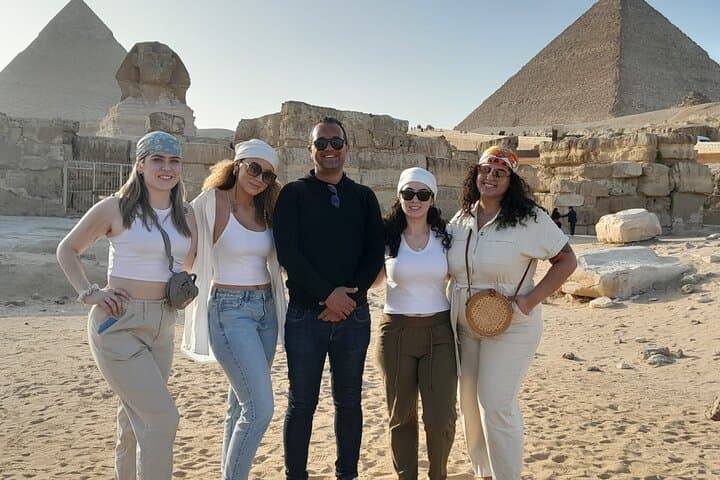
Built from quarried stone and aligned with the stars, the three pyramids of Khufu, Khafre and Menkaure are architectural anchors of ancient Egyptian religion and engineering. The plateau’s geology is compact limestone over desert terrace; the Sphinx, carved from bedrock, watches the complex and the valley temple where granite blocks once supported sacred rituals. Local culture today threads through guide narratives, roadside vendors and the small restaurants that serve traditional mezze with modern views of the monuments.
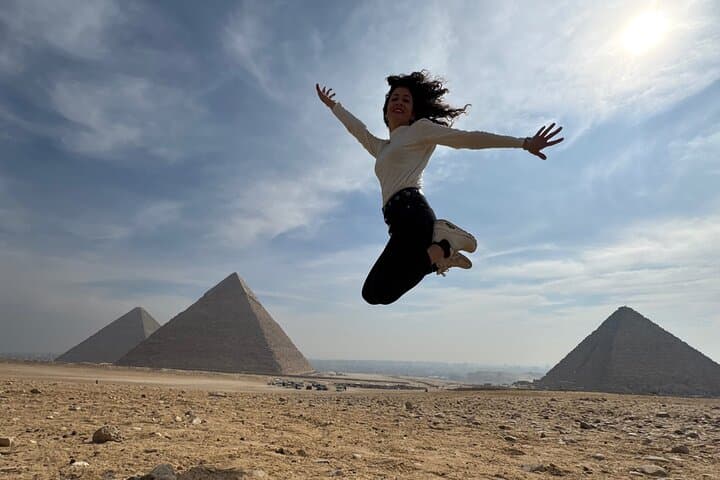
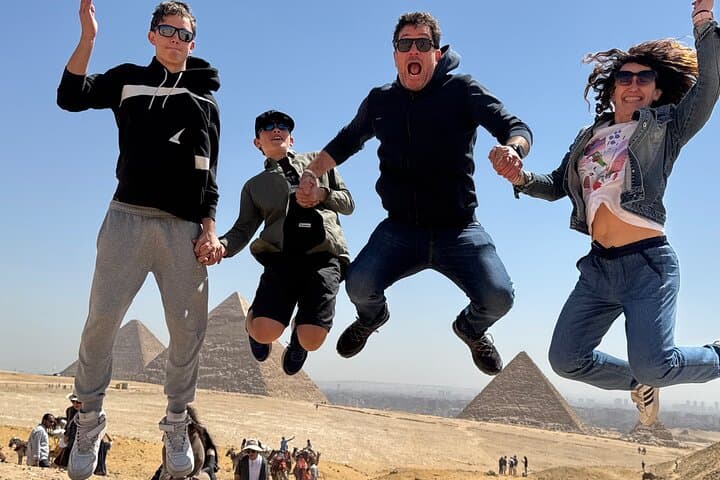
Practicalities shape a smooth half-day: expect 4–5 hours including hotel transfers, guided stops at the Great Pyramid, Khafre’s pyramid and the Valley Temple, a panoramic photo point, and a brief camel ride. Wear sturdy shoes for uneven flagstones, bring a wide-brim hat and sunscreen, and plan to keep valuables secure during crowded photo stops. Photography is welcome but follow signage and staff directions — some areas restrict entry to protect fragile archaeology.
Timing matters: mornings are cooler and less crowded; a calm, informed guide will turn facts into context and help you read the stones you’re standing on. This tour balances spectacle, scholarly insight and the small comforts of a seated lunch overlooking one of history’s largest outdoor museums.
easy.
4–5 hours.
Suitable for most fitness levels; involves short walks over uneven surfaces and some standing for photos
Yes — the tour description states admission fees are included for the Giza Plateau sites visited, but special permits (e.g., interior pyramid access) can be restricted or require additional fees at times.
Interior access is subject to site rules and daily quotas; if interior entry is important, request details when booking and be prepared for possible extra charges or closures.
The operator indicates wheelchair-accessible options for transportation and surfaces, but some ancient areas have uneven ground — check specific accessibility needs with the provider before booking.
Lunch is provided at a high-quality restaurant and can usually accommodate dietary requests with advance notice; specify needs when completing booking questions.
The Giza Plateau holds the three major Old Kingdom pyramids—Khufu (largest), Khafre and Menkaure—built as monumental tombs tied to pharaonic funerary religion and aligned with cardinal points.
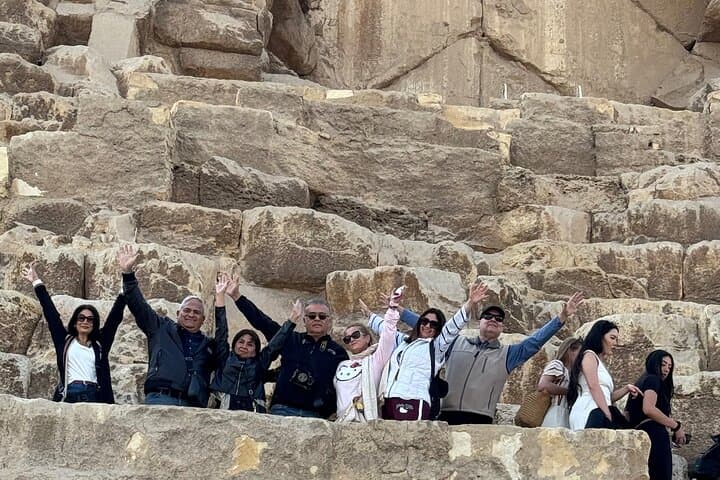
Conservation efforts focus on erosion control, limiting visitor impact and signage to prevent damage; follow guide instructions and avoid touching or climbing ancient stone.
Pyramids Egypt Tour operates guided outdoor trips and adventures with an emphasis on safety, stewardship, and memorable experiences.
The first step onto the Giza Plateau feels like slipping into a living classroom — wind moving dust across limestone faces, the Great Pyramid cutting a clean silhouette against the Cairo skyline. Guests meet their Egyptologist guide at hotel pickup, then drive out of the city into a landscape where millennia still dictate scale and silence.
The first step onto the Giza Plateau feels like slipping into a living classroom — wind moving dust across limestone faces, the Great Pyramid cutting a clean silhouette against the Cairo skyline. Guests meet their Egyptologist guide at hotel pickup, then drive out of the city into a landscape where millennia still dictate scale and silence.
Built from quarried stone and aligned with the stars, the three pyramids of Khufu, Khafre and Menkaure are architectural anchors of ancient Egyptian religion and engineering. The plateau’s geology is compact limestone over desert terrace; the Sphinx, carved from bedrock, watches the complex and the valley temple where granite blocks once supported sacred rituals. Local culture today threads through guide narratives, roadside vendors and the small restaurants that serve traditional mezze with modern views of the monuments.
Practicalities shape a smooth half-day: expect 4–5 hours including hotel transfers, guided stops at the Great Pyramid, Khafre’s pyramid and the Valley Temple, a panoramic photo point, and a brief camel ride. Wear sturdy shoes for uneven flagstones, bring a wide-brim hat and sunscreen, and plan to keep valuables secure during crowded photo stops. Photography is welcome but follow signage and staff directions — some areas restrict entry to protect fragile archaeology.
Timing matters: mornings are cooler and less crowded; a calm, informed guide will turn facts into context and help you read the stones you’re standing on. This tour balances spectacle, scholarly insight and the small comforts of a seated lunch overlooking one of history’s largest outdoor museums.