THE ADVENTURE COLLECTIVE® · Independent discovery and booking for outdoor travel

Explore the Giza Plateau with a licensed Egyptologist on a private 5-hour tour that covers all three pyramids, the Sphinx, the Valley Temple and a sunset felucca sail. Learn about ancient mummification, engineering feats and modern conservation while avoiding crowds and capturing the best views.
Explore the Giza Plateau with a licensed Egyptologist on a private 5-hour tour that covers all three pyramids, the Sphinx, the Valley Temple and a sunset felucca sail. Learn about ancient mummification, engineering feats and modern conservation while avoiding crowds and capturing the best views.
You arrive on the Giza Plateau with the late-morning sun flattening shadows and dust motes skimming the air. Three stone giants—Khufu, Khafre and Menkaure—rise ahead, their faces worn but unbowed; the Sphinx crouches between them like an ancient guard. Your Egyptologist guide moves easily from myth to masonry, pointing out chisel marks and mason’s courses while you scout the best angles for a photograph that captures both scale and solitude.
Verified experiences and guided adventures in the surrounding area.
Operated by Secrets of the Pharaohs · Giza, Giza Governorate
You arrive on the Giza Plateau with the late-morning sun flattening shadows and dust motes skimming the air. Three stone giants—Khufu, Khafre and Menkaure—rise ahead, their faces worn but unbowed; the Sphinx crouches between them like an ancient guard. Your Egyptologist guide moves easily from myth to masonry, pointing out chisel marks and mason’s courses while you scout the best angles for a photograph that captures both scale and solitude.
The plateau is a storybook of geology and ritual: lower limestone bedrock quarried to form casing stones, and the Valley Temple’s granite blocks where mummification rites tied death to kingship. Built more than 4,500 years ago, the monuments reflect Old Kingdom engineering and the administrative power of Memphis nearby. Cultural notes thread into the tour—how koshary became a working-class staple and why the Nile’s rhythms shaped religious life—culminating in a sunset felucca sail that softens the bustle of Cairo.
Practically: expect 1–2 km of walking across uneven, sandy surfaces and short stair sections inside the Valley Temple; temperatures can spike so plan hydration and sun protection. Upgrades permit entry to the Third Pyramid and limit queueing; photography is unrestricted in most outdoor areas but rules apply inside archaeological structures. The private format means a paced experience—ask your Egyptologist about construction techniques, funerary symbolism, and the conservation challenges that keep these sites under constant care.
moderate.
4–5 hours.
Moderate fitness—able to walk 1–2 km on uneven, sandy ground and handle short stair sections.
Standard tour price may not include pyramid interior tickets; upgrade options let you enter the Third Pyramid—ask at booking or add on arrival.
Expect roughly 1–2 km of walking across the Giza Plateau with uneven terrain and several short stair climbs, paced over a 5-hour private tour.
The Valley Temple has uneven floors and steps; while some areas are accessible, the site is not fully wheelchair-friendly—contact the operator to discuss accommodations.
Tipping is customary for guides and drivers in Egypt; small, respectful cash tips in local currency are appreciated and expected for good service.
The Giza complex dates to Egypt’s Fourth Dynasty (c. 2600–2500 BCE); the Valley Temple is linked to funerary rituals and the logistics of mummification.
Visitor numbers and environmental wear require managed access; follow guide instructions, avoid touching masonry, and use designated paths to minimize erosion.
Secrets of the Pharaohs operates guided outdoor trips and adventures with an emphasis on safety, stewardship, and memorable experiences.
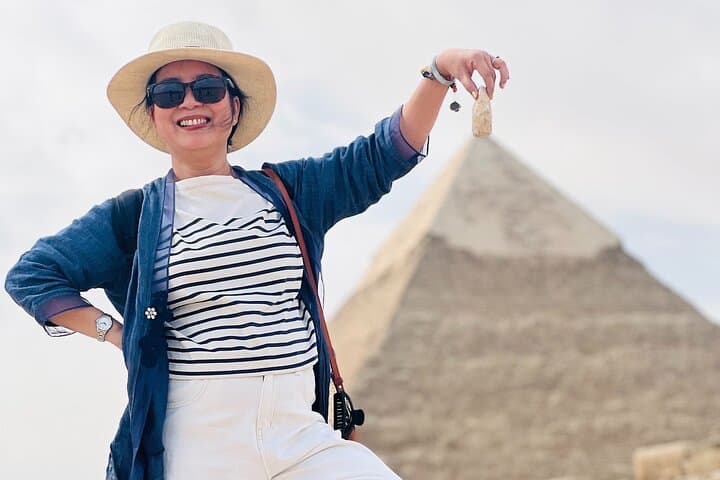
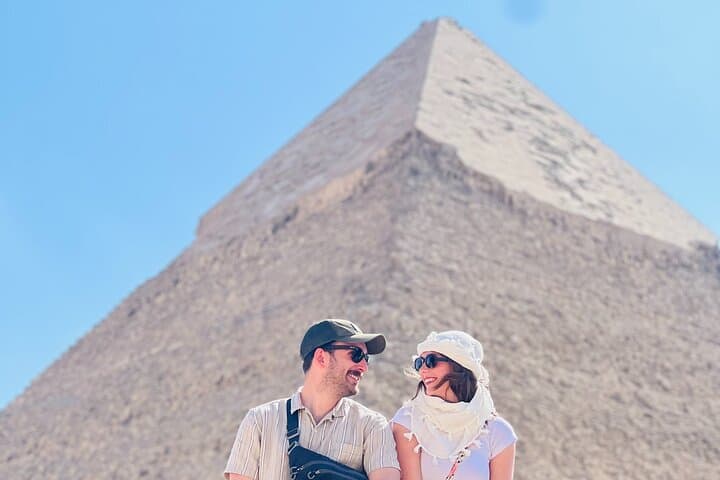
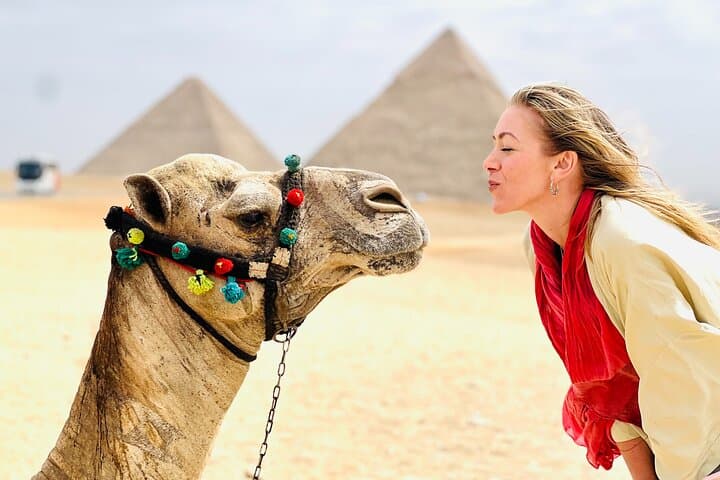
You arrive on the Giza Plateau with the late-morning sun flattening shadows and dust motes skimming the air. Three stone giants—Khufu, Khafre and Menkaure—rise ahead, their faces worn but unbowed; the Sphinx crouches between them like an ancient guard. Your Egyptologist guide moves easily from myth to masonry, pointing out chisel marks and mason’s courses while you scout the best angles for a photograph that captures both scale and solitude.
You arrive on the Giza Plateau with the late-morning sun flattening shadows and dust motes skimming the air. Three stone giants—Khufu, Khafre and Menkaure—rise ahead, their faces worn but unbowed; the Sphinx crouches between them like an ancient guard. Your Egyptologist guide moves easily from myth to masonry, pointing out chisel marks and mason’s courses while you scout the best angles for a photograph that captures both scale and solitude.
The plateau is a storybook of geology and ritual: lower limestone bedrock quarried to form casing stones, and the Valley Temple’s granite blocks where mummification rites tied death to kingship. Built more than 4,500 years ago, the monuments reflect Old Kingdom engineering and the administrative power of Memphis nearby. Cultural notes thread into the tour—how koshary became a working-class staple and why the Nile’s rhythms shaped religious life—culminating in a sunset felucca sail that softens the bustle of Cairo.
Practically: expect 1–2 km of walking across uneven, sandy surfaces and short stair sections inside the Valley Temple; temperatures can spike so plan hydration and sun protection. Upgrades permit entry to the Third Pyramid and limit queueing; photography is unrestricted in most outdoor areas but rules apply inside archaeological structures. The private format means a paced experience—ask your Egyptologist about construction techniques, funerary symbolism, and the conservation challenges that keep these sites under constant care.