THE ADVENTURE COLLECTIVE® · Independent discovery and booking for outdoor travel

Join professional Egyptologists at an active Saqqara excavation and work alongside specialists as they unearth coffins, animal mummies and sealed contexts. This VIP experience blends hands-on digging with expert interpretation and strict conservation protocols.
Join professional Egyptologists at an active Saqqara excavation and work alongside specialists as they unearth coffins, animal mummies and sealed contexts. This VIP experience blends hands-on digging with expert interpretation and strict conservation protocols.
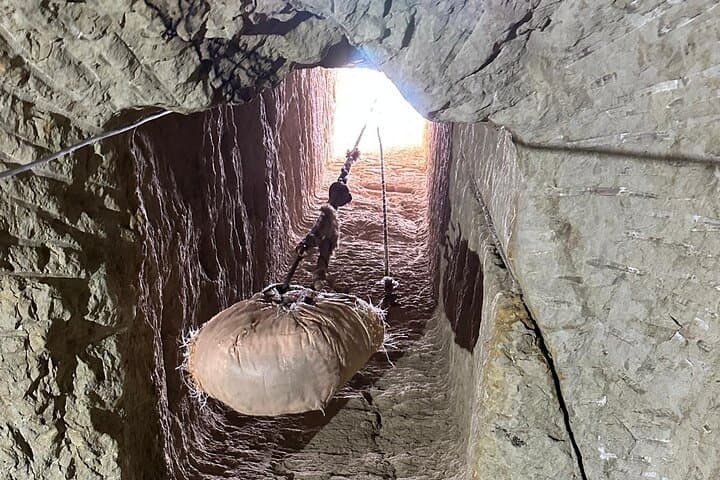
The dry wind lifts dust across a rectangular trench as trowels click and brushes reveal ochre stone beneath—this is Saqqara at close range. On a VIP excavation you stand at the edge of active archaeology, shoulder-to-shoulder with Egyptologists as they map, sift and record finds that have lain undisturbed for millennia.
Verified experiences and guided adventures in the surrounding area.
Operated by Tour Egypt Club - Private Day Tours · Saqqara, Giza Governorate
The dry wind lifts dust across a rectangular trench as trowels click and brushes reveal ochre stone beneath—this is Saqqara at close range. On a VIP excavation you stand at the edge of active archaeology, shoulder-to-shoulder with Egyptologists as they map, sift and record finds that have lain undisturbed for millennia.
Saqqara is the funerary landscape of ancient Memphis: low limestone ridges punctuated by the Step Pyramid of Djoser, the earliest large-scale stone monument in Egypt. Geologically the site sits on sedimentary limestone and marl; archaeologists often work through layers of sand, compacted ash and reused stone blocks. Culturally this is a place of long continuity—burials, chapel complexes and animal cults—so you’ll hear about ritual practices, tomb architecture and the careful stratigraphy that reveals changing funerary customs.
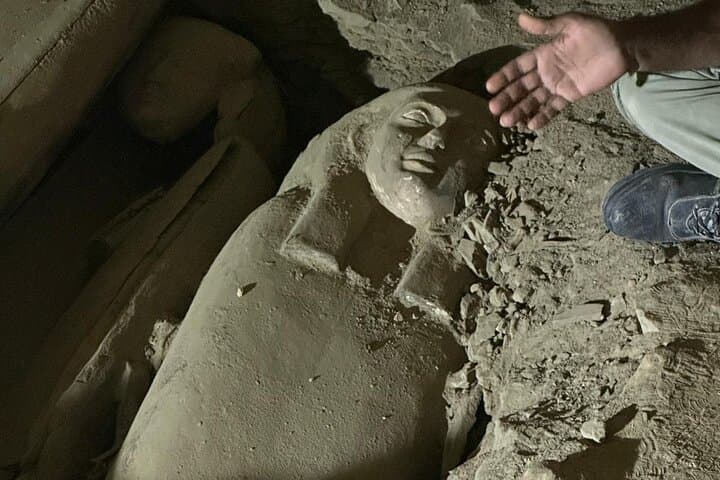
Local insight: excavations here balance public curiosity and strict conservation—specialists will ask you to wear gloves, avoid stepping on flagged areas and never touch exposed surfaces. Expect to encounter wooden coffins and preserved animal mummies (cats, occasionally larger felines), as well as conservation teams stabilizing delicate finds.
Practical guidance: the experience is low-impact physically but exposes you to intense sun and dust—bring sun protection, closed-toe shoes and a reusable water bottle. Photography rules vary; follow the lead of on-site staff. Tours typically include transport from Cairo, bottled water and an English guide, and last roughly two hours. For a meaningful visit, arrive rested, listen closely during handling demonstrations, and be prepared to follow directions from archaeologists to protect both the finds and the site.
easy.
2 hours.
Suitable for most fitness levels; requires short periods of standing, crouching and walking on uneven ground
Yes—under supervision you will participate in controlled troweling, brushing and sifting as part of the team, but all handling is directed by professional archaeologists.
The tour notes indicate accessibility for most visitors; younger participants may need to sit on laps and some tasks are adaptable for limited mobility—confirm with the operator when booking.
No—all artifacts remain property of Egypt and must be recorded and conserved; visitors are not permitted to remove finds from the site.
Photography rules vary by area and conservation stage; always ask the site supervisor before photographing exposed contexts or human remains.
Saqqara served as the necropolis of ancient Memphis and contains the Step Pyramid of Djoser, one of the earliest monumental stone constructions dating to the 27th century BCE.
Excavations prioritize context and conservation—visitors must follow handling rules and avoid contaminating layers; supporting licensed operators helps fund site conservation.
Tour Egypt Club - Private Day Tours operates guided outdoor trips and adventures with an emphasis on safety, stewardship, and memorable experiences.
The dry wind lifts dust across a rectangular trench as trowels click and brushes reveal ochre stone beneath—this is Saqqara at close range. On a VIP excavation you stand at the edge of active archaeology, shoulder-to-shoulder with Egyptologists as they map, sift and record finds that have lain undisturbed for millennia.
The dry wind lifts dust across a rectangular trench as trowels click and brushes reveal ochre stone beneath—this is Saqqara at close range. On a VIP excavation you stand at the edge of active archaeology, shoulder-to-shoulder with Egyptologists as they map, sift and record finds that have lain undisturbed for millennia.
Saqqara is the funerary landscape of ancient Memphis: low limestone ridges punctuated by the Step Pyramid of Djoser, the earliest large-scale stone monument in Egypt. Geologically the site sits on sedimentary limestone and marl; archaeologists often work through layers of sand, compacted ash and reused stone blocks. Culturally this is a place of long continuity—burials, chapel complexes and animal cults—so you’ll hear about ritual practices, tomb architecture and the careful stratigraphy that reveals changing funerary customs.
Local insight: excavations here balance public curiosity and strict conservation—specialists will ask you to wear gloves, avoid stepping on flagged areas and never touch exposed surfaces. Expect to encounter wooden coffins and preserved animal mummies (cats, occasionally larger felines), as well as conservation teams stabilizing delicate finds.
Practical guidance: the experience is low-impact physically but exposes you to intense sun and dust—bring sun protection, closed-toe shoes and a reusable water bottle. Photography rules vary; follow the lead of on-site staff. Tours typically include transport from Cairo, bottled water and an English guide, and last roughly two hours. For a meaningful visit, arrive rested, listen closely during handling demonstrations, and be prepared to follow directions from archaeologists to protect both the finds and the site.