THE ADVENTURE COLLECTIVE® · Independent discovery and booking for outdoor travel

Take a private, late-night aurora hunt from Fairbanks with a small-group guide who picks a dark viewing site and supplies hot drinks. Expect a 4-hour round trip with focused photo time and flexible pick-up from hotels or the airport.
Take a private, late-night aurora hunt from Fairbanks with a small-group guide who picks a dark viewing site and supplies hot drinks. Expect a 4-hour round trip with focused photo time and flexible pick-up from hotels or the airport.
Head out of Fairbanks at 11 p.m. and feel the town fall away as the van pushes into the Alaska night. Snow-creased fields, lone spruce, and the hush of open country frame the ride; when the sky decides to move, green and purple curtains unfurl and the aurora dares you to look up.
Verified experiences and guided adventures in the surrounding area.
Operated by Vip Northern Lights Tours · Fairbanks, Alaska
Head out of Fairbanks at 11 p.m. and feel the town fall away as the van pushes into the Alaska night. Snow-creased fields, lone spruce, and the hush of open country frame the ride; when the sky decides to move, green and purple curtains unfurl and the aurora dares you to look up.
The lights themselves are solar wind made visible: charged particles strike Earth’s magnetosphere and paint the high-latitude sky. Fairbanks sits directly under the auroral oval, making it one of the more reliable places on Earth to watch the show. Indigenous Athabascan people have long interpreted the lights in cultural stories, and modern guides combine that local knowledge with short-range weather analysis to pick viewing sites.
This private, four-hour outing (about 3.5 hours of viewing) delivers small-group flexibility: your guide chooses a dark spot—often Murphy Dome or a rural pullout—brewing hot tea and cocoa while you wait. Expect stretches of standing, camera set-ups, and periods of quiet sky-gazing punctuated by sudden movement as the aurora intensifies.
Practically: dress in insulated layers and bring spare batteries (cold kills charge). Use a tripod and wide-aperture lens if you want night photos; set exposure for 5–15 seconds and experiment. Tours are weather-dependent and sightings can’t be guaranteed—solar activity and cloud cover dictate success. Plan for late-night pickup and drop-off at hotels or the airport, and leave room in your schedule for sleep recovery. The experience is equal parts scientific spectacle and patient, cold-night reward.
easy.
3.5–4 hours.
Minimal fitness required—able to stand and walk short distances; must tolerate cold and late-night timing.
No. The aurora depends on solar activity and local cloud cover; guides maximize odds by choosing viewing locations but cannot promise sightings.
Pick-up is around 11 p.m. with about a four-hour total duration, returning to Fairbanks around 3 a.m.–4 a.m., depending on conditions and pickup locations.
The operator notes it’s not recommended for pregnant travelers; children can join but consider the late hour and cold exposure before booking.
Yes—hot tea, cocoa or coffee and light snacks are provided to help guests stay warm during viewing.
Fairbanks developed as an aurora tourism hub because its inland position and long winter nights sit under the auroral oval; local Athabascan communities have long-standing cultural connections to northern sky phenomena.
Keep to established roads and pullouts to avoid damaging tundra or snow crust; minimize light use during viewing and pack out all trash to protect dark-sky quality.
Vip Northern Lights Tours operates guided outdoor trips and adventures with an emphasis on safety, stewardship, and memorable experiences.
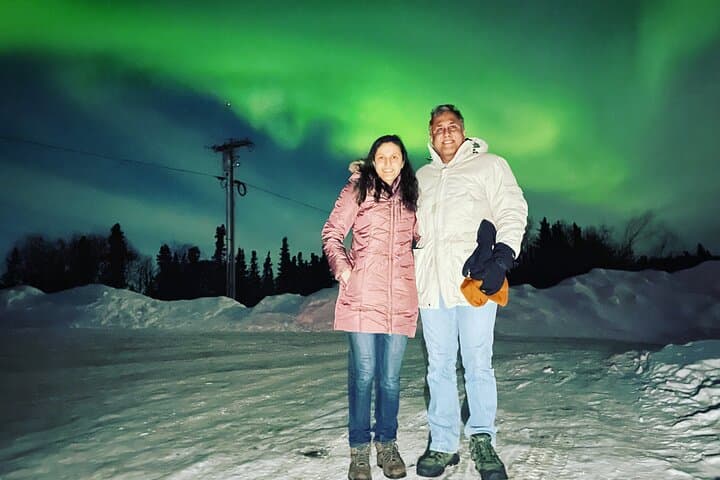
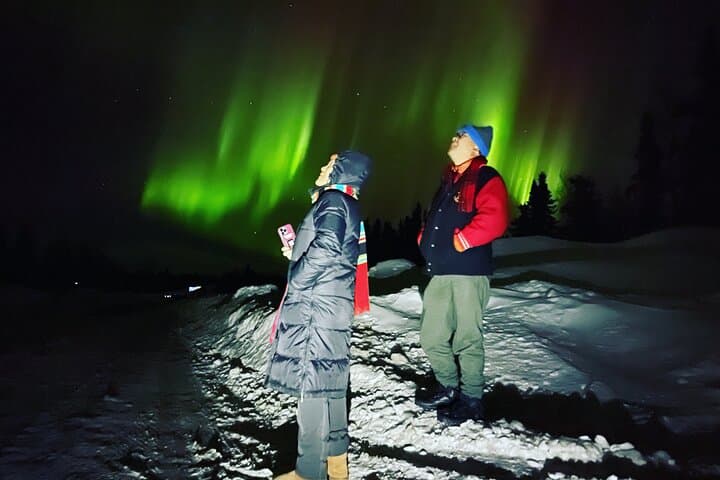
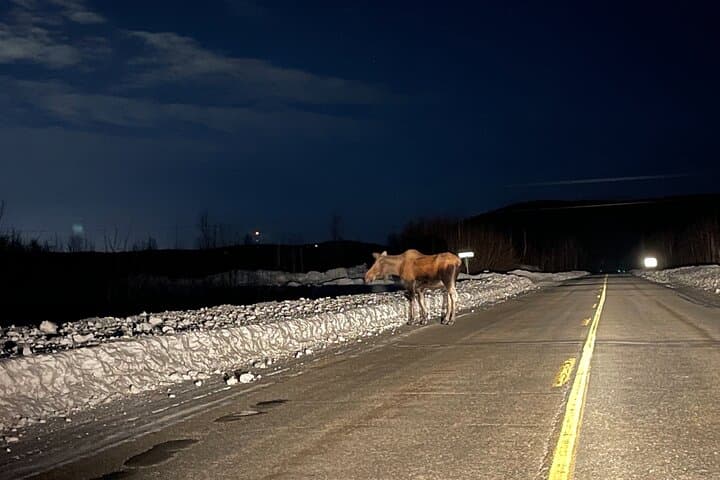
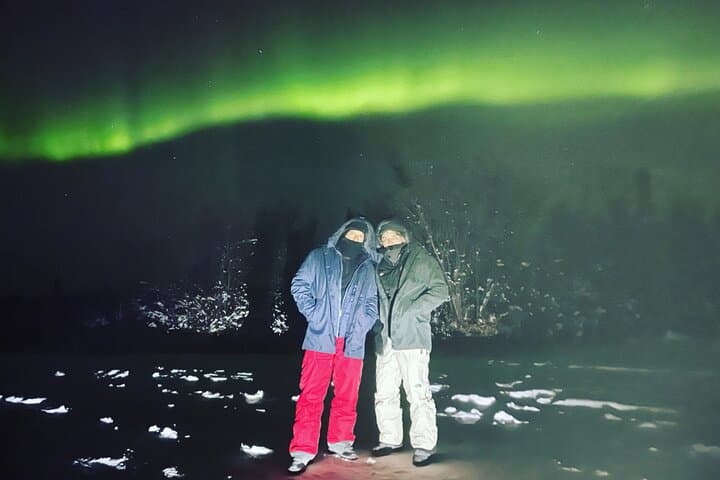
Head out of Fairbanks at 11 p.m. and feel the town fall away as the van pushes into the Alaska night. Snow-creased fields, lone spruce, and the hush of open country frame the ride; when the sky decides to move, green and purple curtains unfurl and the aurora dares you to look up.
Head out of Fairbanks at 11 p.m. and feel the town fall away as the van pushes into the Alaska night. Snow-creased fields, lone spruce, and the hush of open country frame the ride; when the sky decides to move, green and purple curtains unfurl and the aurora dares you to look up.
The lights themselves are solar wind made visible: charged particles strike Earth’s magnetosphere and paint the high-latitude sky. Fairbanks sits directly under the auroral oval, making it one of the more reliable places on Earth to watch the show. Indigenous Athabascan people have long interpreted the lights in cultural stories, and modern guides combine that local knowledge with short-range weather analysis to pick viewing sites.
This private, four-hour outing (about 3.5 hours of viewing) delivers small-group flexibility: your guide chooses a dark spot—often Murphy Dome or a rural pullout—brewing hot tea and cocoa while you wait. Expect stretches of standing, camera set-ups, and periods of quiet sky-gazing punctuated by sudden movement as the aurora intensifies.
Practically: dress in insulated layers and bring spare batteries (cold kills charge). Use a tripod and wide-aperture lens if you want night photos; set exposure for 5–15 seconds and experiment. Tours are weather-dependent and sightings can’t be guaranteed—solar activity and cloud cover dictate success. Plan for late-night pickup and drop-off at hotels or the airport, and leave room in your schedule for sleep recovery. The experience is equal parts scientific spectacle and patient, cold-night reward.