THE ADVENTURE COLLECTIVE® · Independent discovery and booking for outdoor travel

Drive from historic Kairouan through lunar salt flats to the dunes of Douz on a two-day VIP Sahara route. Experience luxury tent nights, Berber troglodyte villages, and El Jem’s Roman amphitheatre with guided stops and local insights.
Drive from historic Kairouan through lunar salt flats to the dunes of Douz on a two-day VIP Sahara route. Experience luxury tent nights, Berber troglodyte villages, and El Jem’s Roman amphitheatre with guided stops and local insights.
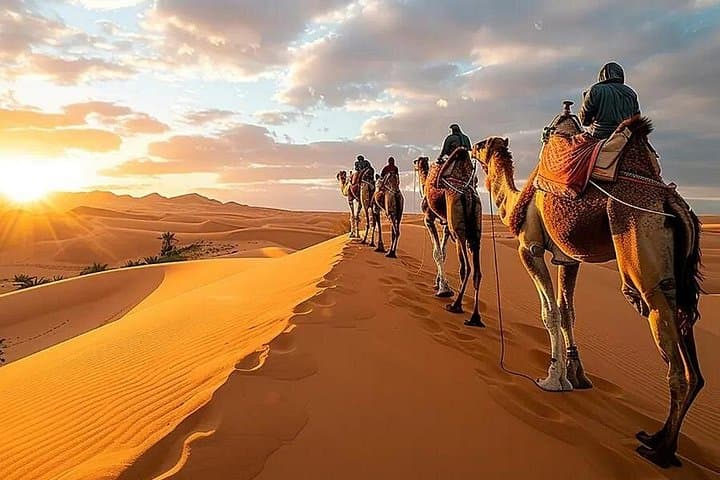
A low, golden dawn unfurls over sand that seems to have its own weather—ridges catch the light while the vehicle’s AC hum recedes into the background. You start the day on asphalt, but within hours the landscape changes: salt flats that play with distance, date-palm oases tucked into dry wadis, and dunes that dare you to climb them before dusk.
Verified experiences and guided adventures in the surrounding area.
Operated by Hannibal Tours · Douz, Kebili Governorate
A low, golden dawn unfurls over sand that seems to have its own weather—ridges catch the light while the vehicle’s AC hum recedes into the background. You start the day on asphalt, but within hours the landscape changes: salt flats that play with distance, date-palm oases tucked into dry wadis, and dunes that dare you to climb them before dusk.
This two-day route threads history and geology. Kairouan’s Great Mosque marks centuries of Islamic scholarship; El Jem’s Roman amphitheatre recalls legionary logistics in North Africa. Between them lie Tozeur’s oases, the cracked mirror of Chott el Jerid where mirages form, and Matmata’s troglodyte homes—Berber architecture adapted to a harsh climate.
Culture surfaces in small moments: mint tea in a local house, Bedouin drum rhythms at a campfire, or a guide explaining irrigation in an oasis. Geology is tactile—sand that shifts underfoot, salt crusts that reflect the sun, and eroded ridgelines carved by episodic rains.
Practical guidance: expect long drives with short, purposeful stops; nights near Douz are cold despite daytime heat. Carry 2–3 liters of water per person, sun protection, and sturdy closed shoes for dune walks. Bring cash for small purchases and tent fees if not included; confirm exact accommodation arrangements in advance. Plan arrival and pickup times conservatively—the desert runs on light and temperature more than on schedules.
Respect local customs and the fragile ecology: stick to vehicle tracks, pack out waste, and leave the silence intact for the stars and the desert’s slow pulse.
moderate.
2 days (≈48 hours).
Moderate fitness for short hikes, dune climbs, and long vehicle transfers; comfortable mobility for desert walking recommended.
The listing notes luxury tent accommodation but indicates lodging may be an extra cost—confirm with the operator before booking for exact inclusions.
The product advertises pickup from all cities; confirm your specific pickup point and time during booking and provide any flight or arrival details.
Transfers are long but walking portions are short to moderate; participants should be comfortable on uneven sand and short hikes.
Operators report secure, tourist-friendly routes; family-friendly options exist, but check child policies and vehicle seat availability when booking.
The route connects Kairouan’s Islamic heritage and El Jem’s Roman amphitheatre, with Berber troglodyte dwellings illustrating millennia of adaptive living in the Tunisian south.
Desert soils and oases are fragile—stay on established tracks, avoid collecting plants or rocks, and minimize water waste to reduce impact.
Hannibal Tours operates guided outdoor trips and adventures with an emphasis on safety, stewardship, and memorable experiences.

A low, golden dawn unfurls over sand that seems to have its own weather—ridges catch the light while the vehicle’s AC hum recedes into the background. You start the day on asphalt, but within hours the landscape changes: salt flats that play with distance, date-palm oases tucked into dry wadis, and dunes that dare you to climb them before dusk.
A low, golden dawn unfurls over sand that seems to have its own weather—ridges catch the light while the vehicle’s AC hum recedes into the background. You start the day on asphalt, but within hours the landscape changes: salt flats that play with distance, date-palm oases tucked into dry wadis, and dunes that dare you to climb them before dusk.
This two-day route threads history and geology. Kairouan’s Great Mosque marks centuries of Islamic scholarship; El Jem’s Roman amphitheatre recalls legionary logistics in North Africa. Between them lie Tozeur’s oases, the cracked mirror of Chott el Jerid where mirages form, and Matmata’s troglodyte homes—Berber architecture adapted to a harsh climate.
Culture surfaces in small moments: mint tea in a local house, Bedouin drum rhythms at a campfire, or a guide explaining irrigation in an oasis. Geology is tactile—sand that shifts underfoot, salt crusts that reflect the sun, and eroded ridgelines carved by episodic rains.
Practical guidance: expect long drives with short, purposeful stops; nights near Douz are cold despite daytime heat. Carry 2–3 liters of water per person, sun protection, and sturdy closed shoes for dune walks. Bring cash for small purchases and tent fees if not included; confirm exact accommodation arrangements in advance. Plan arrival and pickup times conservatively—the desert runs on light and temperature more than on schedules.
Respect local customs and the fragile ecology: stick to vehicle tracks, pack out waste, and leave the silence intact for the stars and the desert’s slow pulse.