THE ADVENTURE COLLECTIVE® · Independent discovery and booking for outdoor travel

Board a low-profile raft from Lahaina for an intimate, two-hour whale watch with a marine naturalist. Small groups, hydrophone whale song, and a sighting guarantee in peak season make this a focused wildlife encounter on Maui.
Board a low-profile raft from Lahaina for an intimate, two-hour whale watch with a marine naturalist. Small groups, hydrophone whale song, and a sighting guarantee in peak season make this a focused wildlife encounter on Maui.
You step off Front Street and the harbor air immediately changes — salt and warm trade winds push the scent of the ocean toward you as a nimble inflatable raft waits low to the water. In two hours you’ll be out past the harbor breakwall, where the Pacific flattens into a stage and humpback whales, fresh from a 3,000-mile migration, surface, spout and tail-slap in the protected Maui Nui waters.
Verified experiences and guided adventures in the surrounding area.
Operated by Ultimate Whale Watch & Snorkel · Lahaina, Hawaii
You step off Front Street and the harbor air immediately changes — salt and warm trade winds push the scent of the ocean toward you as a nimble inflatable raft waits low to the water. In two hours you’ll be out past the harbor breakwall, where the Pacific flattens into a stage and humpback whales, fresh from a 3,000-mile migration, surface, spout and tail-slap in the protected Maui Nui waters.
This stretch of shoreline has long been a junction of voyaging and seasonal life: early Hawaiian navigators followed currents and whale movements; later, 19th-century whalers and merchants charted the same coastline. Geologically, Maui’s western shelf drops off beyond the reef — that gradient concentrates marine life and creates the calm bays whales favor for breeding and nursing. Culturally, Lahaina’s seafaring history and modern conservation efforts converge here: local operators contribute to research and respond to entanglements.
On the water expect close-range viewing from a low-profile raft, live narration from a marine naturalist, and a hydrophone feed of whale song — small groups (max 12) mean every seat can be a front-row view. Practical notes: check in 20 minutes early at Mala Boat Yard on Front Street, pack sun protection and a light wind layer, secure your camera in a weatherproof case, and consider motion-sickness prevention if you’re prone to seasickness. The operator guarantees sightings in peak season (Dec–Apr) or offers a free return. Be prepared to follow crew instructions to minimize disturbance; the whales are the actors here, and the ocean calls the shots.
easy.
2 hours.
Suitable for most fitness levels; passengers should be able to board a low-rise dock and remain seated or steady on a moving craft.
The trip is two hours; peak whale season runs December through April with the highest odds of sightings and close encounters.
The vessel is stable but low to the water; children under 3 are not allowed and the trip is not recommended for travelers with spinal injuries or significant mobility constraints.
During peak season the operator guarantees sightings Dec–Apr; if no whales are sighted on your trip they typically offer a free repeat booking.
Trips provide purified drinking water from an eco-friendly dispenser; there are limited or no onboard restrooms—plan accordingly before boarding.
Lahaina was once the capital of the Hawaiian Kingdom and a 19th-century whaling hub; modern whale watching builds on centuries of maritime knowledge.
Operators participate in local research and entanglement response programs; passengers are asked to minimize noise and follow approach guidelines to reduce disturbance to whales.
Ultimate Whale Watch & Snorkel operates guided outdoor trips and adventures with an emphasis on safety, stewardship, and memorable experiences.
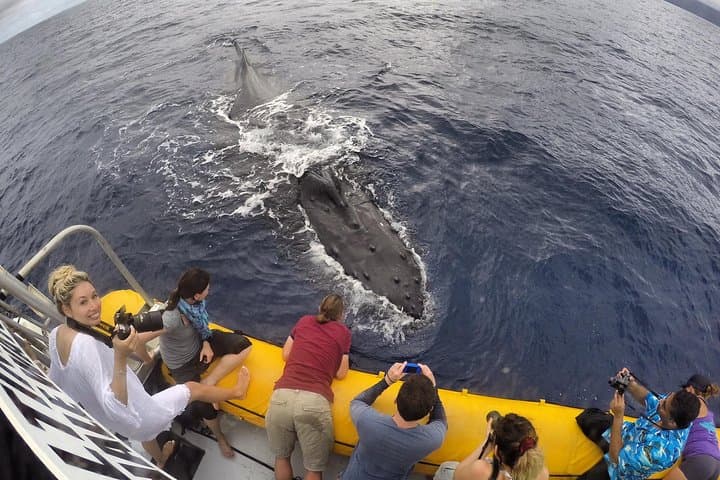
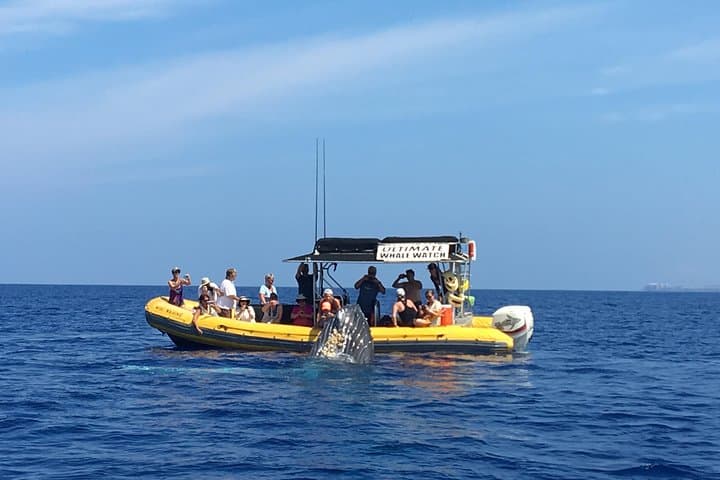
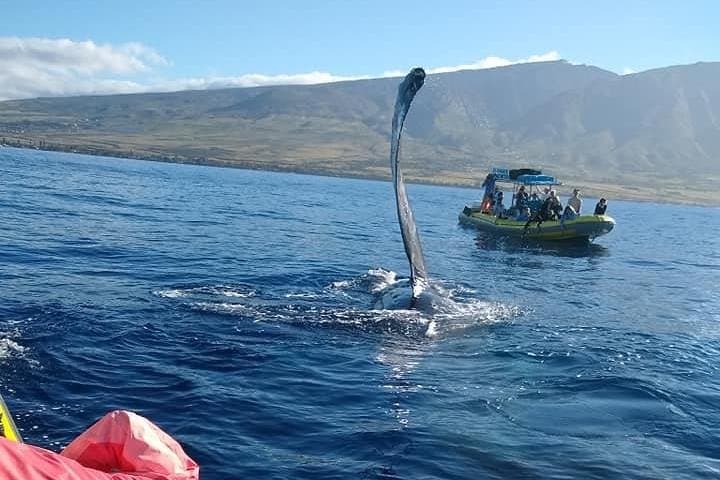
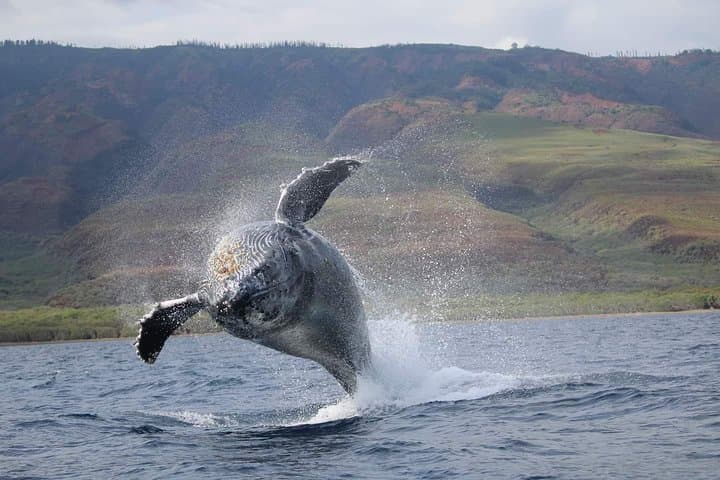
You step off Front Street and the harbor air immediately changes — salt and warm trade winds push the scent of the ocean toward you as a nimble inflatable raft waits low to the water. In two hours you’ll be out past the harbor breakwall, where the Pacific flattens into a stage and humpback whales, fresh from a 3,000-mile migration, surface, spout and tail-slap in the protected Maui Nui waters.
You step off Front Street and the harbor air immediately changes — salt and warm trade winds push the scent of the ocean toward you as a nimble inflatable raft waits low to the water. In two hours you’ll be out past the harbor breakwall, where the Pacific flattens into a stage and humpback whales, fresh from a 3,000-mile migration, surface, spout and tail-slap in the protected Maui Nui waters.
This stretch of shoreline has long been a junction of voyaging and seasonal life: early Hawaiian navigators followed currents and whale movements; later, 19th-century whalers and merchants charted the same coastline. Geologically, Maui’s western shelf drops off beyond the reef — that gradient concentrates marine life and creates the calm bays whales favor for breeding and nursing. Culturally, Lahaina’s seafaring history and modern conservation efforts converge here: local operators contribute to research and respond to entanglements.
On the water expect close-range viewing from a low-profile raft, live narration from a marine naturalist, and a hydrophone feed of whale song — small groups (max 12) mean every seat can be a front-row view. Practical notes: check in 20 minutes early at Mala Boat Yard on Front Street, pack sun protection and a light wind layer, secure your camera in a weatherproof case, and consider motion-sickness prevention if you’re prone to seasickness. The operator guarantees sightings in peak season (Dec–Apr) or offers a free return. Be prepared to follow crew instructions to minimize disturbance; the whales are the actors here, and the ocean calls the shots.