THE ADVENTURE COLLECTIVE® · Independent discovery and booking for outdoor travel

Ride a classic van up to Mount Vesuvius, then join volcanological guides for a crater walk that exposes the mountain’s explosive past. Practical tips on timing, footwear and what to expect on the short but steep volcanic trail.
Ride a classic van up to Mount Vesuvius, then join volcanological guides for a crater walk that exposes the mountain’s explosive past. Practical tips on timing, footwear and what to expect on the short but steep volcanic trail.
At dawn the vintage van climbs narrow coastal roads, leaving citrus-scented towns behind as Vesuvius fills the windshield — a dark dome with a ragged rim that seems to listen and breathe. The van rumbles over old lava pavement and drops you at the park checkpoint; from there a volcanic trail angles up through scoria and low scrub, each step a reminder of the mountain’s appetite.
Verified experiences and guided adventures in the surrounding area.
Operated by Sesto Continente Tours · Naples, Campania
At dawn the vintage van climbs narrow coastal roads, leaving citrus-scented towns behind as Vesuvius fills the windshield — a dark dome with a ragged rim that seems to listen and breathe. The van rumbles over old lava pavement and drops you at the park checkpoint; from there a volcanic trail angles up through scoria and low scrub, each step a reminder of the mountain’s appetite.
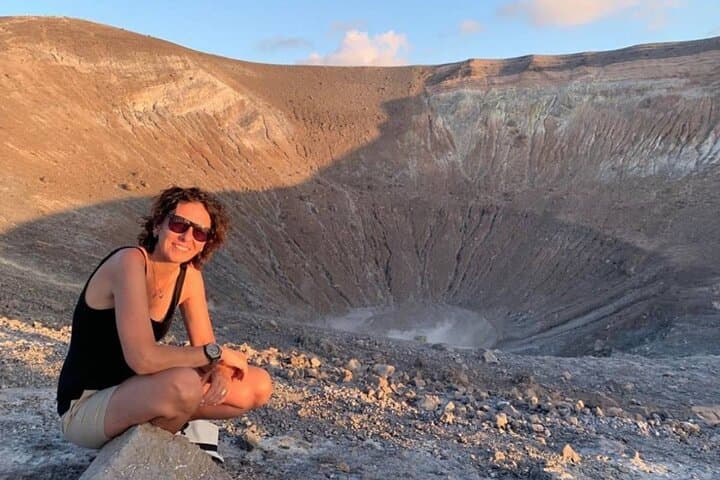
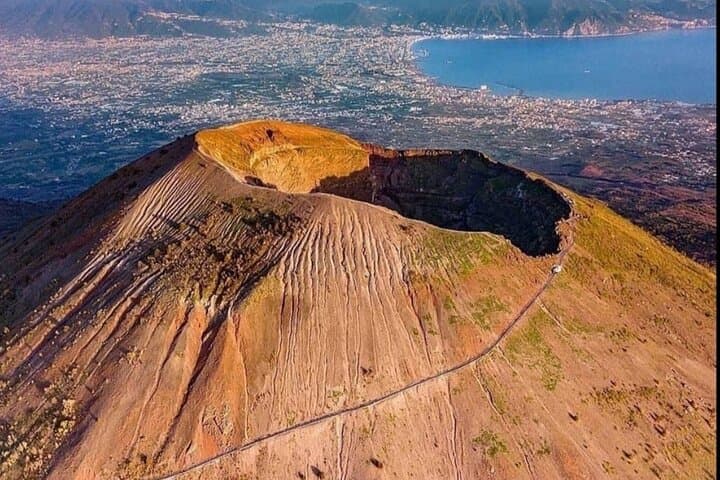
Vesuvius erupted catastrophically in AD 79, burying Pompeii and Herculaneum; the summit you walk today is layered with pumice, ash and lava flows deposited across millennia. The crater’s steep walls reveal volcanic strata and fumaroles that exhale warm, sulfur-scented breath. Local culture around the massif is defined by this geology — terraced vineyards and citrus groves take advantage of mineral-rich soils and nearby towns brim with archaeological echoes.
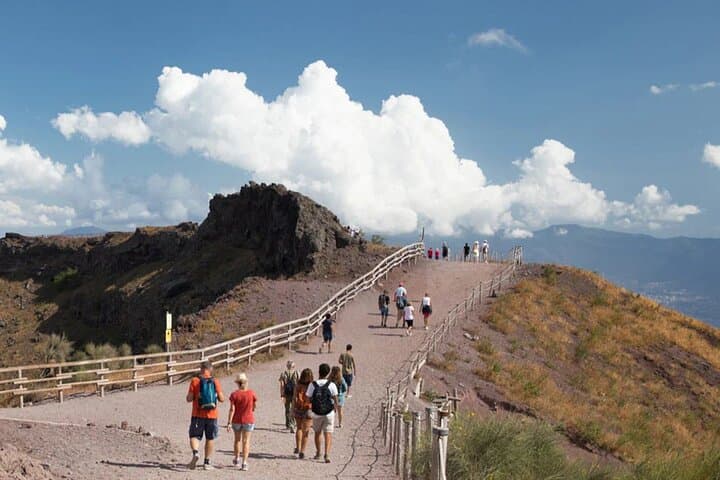
Practical guidance: the shared tour runs about 3–4 hours with roughly 90–120 minutes at the crater. After the minivan drops you near the summit checkpoint, expect a steep, loose-rock path under a kilometer long that takes 20–40 minutes round trip at a steady pace. Bring sturdy shoes, 1–2 liters of water, sun protection and a light windproof layer; sudden gusts and strong sun are common. The experience includes entrance and a guided volcanological walk where guides explain fumaroles, crater morphology and safety. The climb is not recommended for people with significant back, heart or pregnancy restrictions. Visit in the morning or late afternoon to avoid peak heat and crowds, and stay on marked trails — Vesuvius’s fragile surface recovers slowly and conservation matters for future visitors.
moderate.
3–4 hours.
Suitable for people with basic fitness who can handle a short steep walk on uneven volcanic rock; not strenuous but requires stable footing.
The uphill trail is under one kilometer and typically takes 20–40 minutes round trip depending on pace and stops for photos or explanations.
Yes — the tour package includes the crater entrance ticket and a guided volcanological walk.
Families can join but consider the steep footing; children should be supervised and able to walk on loose rock for short distances.
This tour is sold as all sales final — cancellations generally are non-refundable, and the operator may cancel if there are insufficient travelers.
Vesuvius’s AD 79 eruption reshaped regional settlement patterns; many nearby towns developed around the mountain’s fertile soils and the archaeological recovery of buried Roman sites.
Stay on marked trails and avoid sampling rocks or plants; volcanic soils regenerate slowly and heavy foot traffic can accelerate erosion, so follow local park rules.
Sesto Continente Tours operates guided outdoor trips and adventures with an emphasis on safety, stewardship, and memorable experiences.
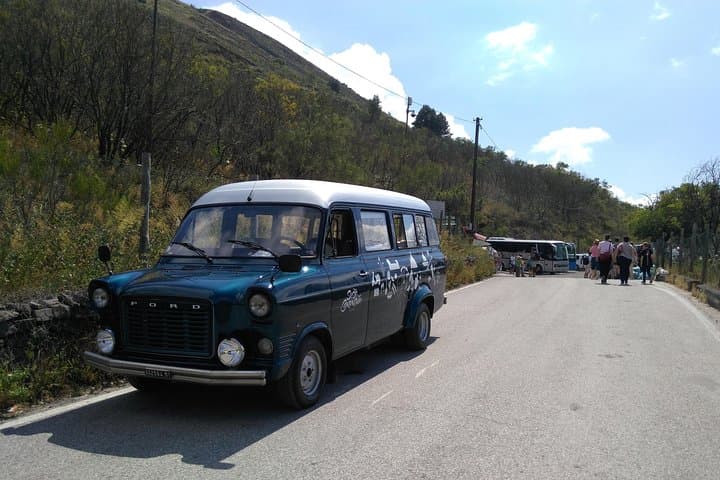
At dawn the vintage van climbs narrow coastal roads, leaving citrus-scented towns behind as Vesuvius fills the windshield — a dark dome with a ragged rim that seems to listen and breathe. The van rumbles over old lava pavement and drops you at the park checkpoint; from there a volcanic trail angles up through scoria and low scrub, each step a reminder of the mountain’s appetite.
At dawn the vintage van climbs narrow coastal roads, leaving citrus-scented towns behind as Vesuvius fills the windshield — a dark dome with a ragged rim that seems to listen and breathe. The van rumbles over old lava pavement and drops you at the park checkpoint; from there a volcanic trail angles up through scoria and low scrub, each step a reminder of the mountain’s appetite.
Vesuvius erupted catastrophically in AD 79, burying Pompeii and Herculaneum; the summit you walk today is layered with pumice, ash and lava flows deposited across millennia. The crater’s steep walls reveal volcanic strata and fumaroles that exhale warm, sulfur-scented breath. Local culture around the massif is defined by this geology — terraced vineyards and citrus groves take advantage of mineral-rich soils and nearby towns brim with archaeological echoes.
Practical guidance: the shared tour runs about 3–4 hours with roughly 90–120 minutes at the crater. After the minivan drops you near the summit checkpoint, expect a steep, loose-rock path under a kilometer long that takes 20–40 minutes round trip at a steady pace. Bring sturdy shoes, 1–2 liters of water, sun protection and a light windproof layer; sudden gusts and strong sun are common. The experience includes entrance and a guided volcanological walk where guides explain fumaroles, crater morphology and safety. The climb is not recommended for people with significant back, heart or pregnancy restrictions. Visit in the morning or late afternoon to avoid peak heat and crowds, and stay on marked trails — Vesuvius’s fragile surface recovers slowly and conservation matters for future visitors.