THE ADVENTURE COLLECTIVE® · Independent discovery and booking for outdoor travel

Glide across the Venetian Lagoon to Murano, Burano, Torcello and quieter isles aboard a heated vintage boat. This five-hour guided tour pairs intimate cultural stops—glass, lace, ancient churches—with open-water views and wildlife watching.
Glide across the Venetian Lagoon to Murano, Burano, Torcello and quieter isles aboard a heated vintage boat. This five-hour guided tour pairs intimate cultural stops—glass, lace, ancient churches—with open-water views and wildlife watching.
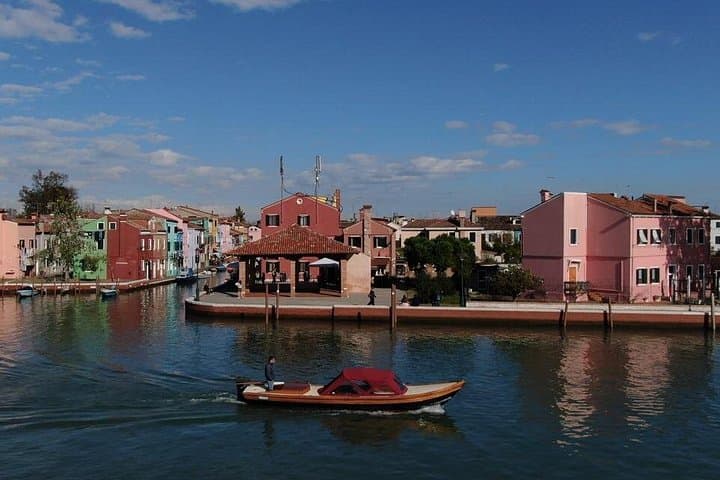
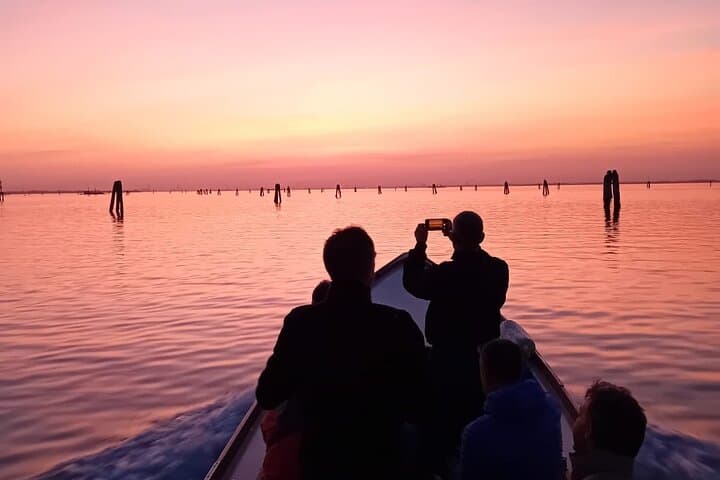
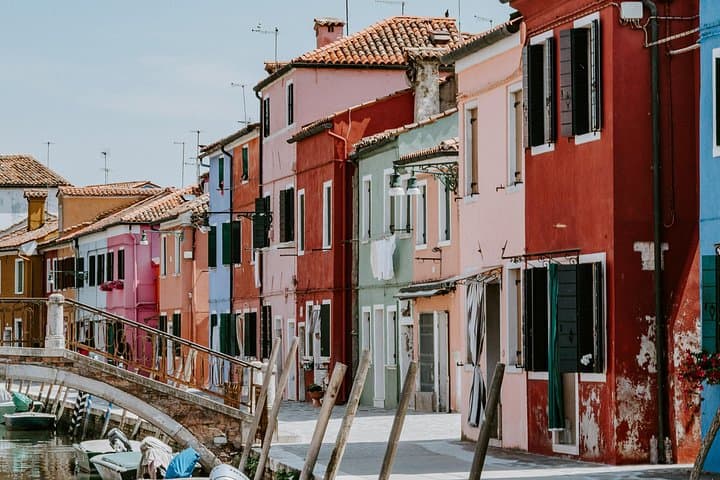
The engine hums low as the wooden hull slips away from a narrow Venetian quay, and the lagoon opens like a map unfolding beneath a pale sky. Salted wind pushes you toward a chain of islands where glassmakers, lace-makers and monastic hush hold court; each stop is a change of pace and color: Murano’s glass smoke, Burano’s painted facades, Torcello’s quiet stone, San Francesco’s cloistered air and Sant’Erasmo’s flat green fields.
Verified experiences and guided adventures in the surrounding area.
Operated by Veneziamare · Venice, Veneto
The engine hums low as the wooden hull slips away from a narrow Venetian quay, and the lagoon opens like a map unfolding beneath a pale sky. Salted wind pushes you toward a chain of islands where glassmakers, lace-makers and monastic hush hold court; each stop is a change of pace and color: Murano’s glass smoke, Burano’s painted facades, Torcello’s quiet stone, San Francesco’s cloistered air and Sant’Erasmo’s flat green fields.
These islands trace the lagoon’s long human story—Murano became a glassmaking center in the 13th century, Burano a fishing and lace hub, Torcello one of the earliest Venetian settlements. Geologically the lagoon is a shallow brackish basin of sediment and salt marsh, shaped by tides and river inflows; its low islands rise only a few meters above sea level so tidal movement is part of the scenery.
Expect close-up cultural moments: glassblowing demonstrations, lace workshops, a sparse cathedral on Torcello and a friary garden on San Francesco. Wildlife is visible from the deck—herons and gulls patrol reedbeds while salt-plain marshes change tone with the light.
Practicalities: the tour lasts about five hours, departs from central Venice by arrangement, and is low-impact travel—bring layered clothing for wind and sun, comfortable shoes for short island walks, and some cash for crafts and cafés. Bookings are often confirmed quickly; call the operator after purchase to set meeting logistics. Travel lightly, follow local guidance on protected areas, and time your visit for morning or late afternoon to avoid the busiest hours.
easy.
5–6 hours.
Suitable for most fitness levels; involves short, flat walks on island pavements and boarding a low-deck boat
The exact meeting point is agreed by phone after booking; departures are from a central dock in Venice accessible by vaporetto or on-foot depending on downtown location.
Infants must sit on an adult’s lap; service animals are allowed—confirm specifics with the operator when you call to finalize your booking.
Admission fees to museums or specific workshops are not included; the tour covers transport, bottled water and fees/taxes but not entrance tickets.
The operator may cancel for poor weather with a full refund if done at least 24 hours before departure; last-minute cancellations for safety are possible and communicated promptly.
Murano’s glass furnaces moved offshore from Venice in the 1200s; Torcello was a major settlement before Venice rose in prominence, leaving medieval churches and mosaics.
The Venetian Lagoon is ecologically sensitive—stick to marked paths, avoid disturbing birdlife, and comply with local access fees intended to manage tourism pressure.
Veneziamare operates guided outdoor trips and adventures with an emphasis on safety, stewardship, and memorable experiences.
The engine hums low as the wooden hull slips away from a narrow Venetian quay, and the lagoon opens like a map unfolding beneath a pale sky. Salted wind pushes you toward a chain of islands where glassmakers, lace-makers and monastic hush hold court; each stop is a change of pace and color: Murano’s glass smoke, Burano’s painted facades, Torcello’s quiet stone, San Francesco’s cloistered air and Sant’Erasmo’s flat green fields.
The engine hums low as the wooden hull slips away from a narrow Venetian quay, and the lagoon opens like a map unfolding beneath a pale sky. Salted wind pushes you toward a chain of islands where glassmakers, lace-makers and monastic hush hold court; each stop is a change of pace and color: Murano’s glass smoke, Burano’s painted facades, Torcello’s quiet stone, San Francesco’s cloistered air and Sant’Erasmo’s flat green fields.
These islands trace the lagoon’s long human story—Murano became a glassmaking center in the 13th century, Burano a fishing and lace hub, Torcello one of the earliest Venetian settlements. Geologically the lagoon is a shallow brackish basin of sediment and salt marsh, shaped by tides and river inflows; its low islands rise only a few meters above sea level so tidal movement is part of the scenery.
Expect close-up cultural moments: glassblowing demonstrations, lace workshops, a sparse cathedral on Torcello and a friary garden on San Francesco. Wildlife is visible from the deck—herons and gulls patrol reedbeds while salt-plain marshes change tone with the light.
Practicalities: the tour lasts about five hours, departs from central Venice by arrangement, and is low-impact travel—bring layered clothing for wind and sun, comfortable shoes for short island walks, and some cash for crafts and cafés. Bookings are often confirmed quickly; call the operator after purchase to set meeting logistics. Travel lightly, follow local guidance on protected areas, and time your visit for morning or late afternoon to avoid the busiest hours.