THE ADVENTURE COLLECTIVE® · Independent discovery and booking for outdoor travel

Wake before dawn, ride through the high Andean valley and hike above 5,000 meters to see the famous striped slopes of Vinicunca. This full-day tour mixes geology, Quechua culture and high-altitude hiking—prepare to move slowly and protect yourself from sun and wind.
Wake before dawn, ride through the high Andean valley and hike above 5,000 meters to see the famous striped slopes of Vinicunca. This full-day tour mixes geology, Quechua culture and high-altitude hiking—prepare to move slowly and protect yourself from sun and wind.
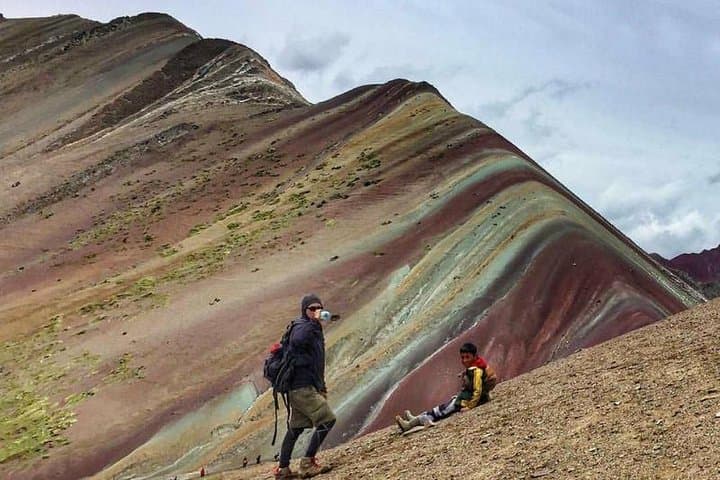
You crest a final ridge and the ground ahead unrolls in bands of color — rust, ochre, mint, and wine stacked like pages of exposed rock. The thin air pulls at your breath; wind scours the grassland and the Ausangate massif watches over the valley like an immovable elder. That opening hour is the reason people set alarms for 4 a.m. and climb into vans while the city of Cusco sleeps.
Verified experiences and guided adventures in the surrounding area.
Operated by Discover Inca Planet · Cusco, Cusco Region
You crest a final ridge and the ground ahead unrolls in bands of color — rust, ochre, mint, and wine stacked like pages of exposed rock. The thin air pulls at your breath; wind scours the grassland and the Ausangate massif watches over the valley like an immovable elder. That opening hour is the reason people set alarms for 4 a.m. and climb into vans while the city of Cusco sleeps.
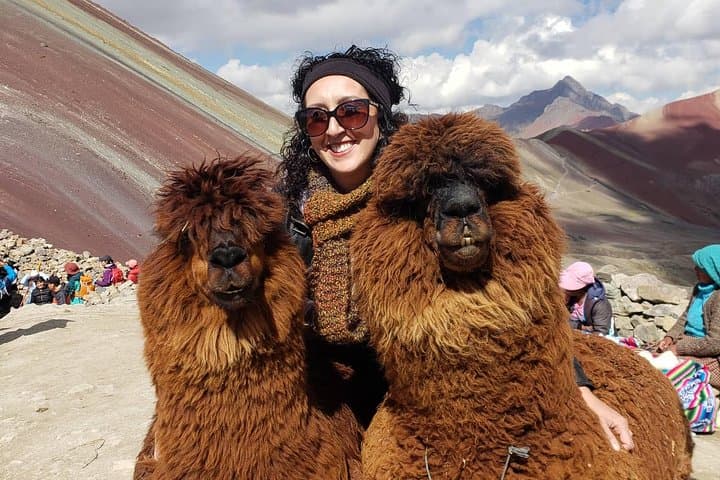
Geologically, Vinicunca’s stripes are mineral layers—iron oxides, clays, and chlorites—exposed by glacial erosion and uplift. The painted slopes sit on high puna at roughly 5,200 meters (17,060 ft), formed where Andean uplift met alternating sedimentary deposits millions of years ago. Culturally the range is part of the Ausangate landscape, long regarded as sacred by Quechua communities; shepherds and alpaca graze these slopes, and local herders still travel the passes seasonally.
Practically, expect a long day: private pickup often begins around 4:00 a.m., with a 2–3 hour drive from Cusco, a 2–4 hour round-trip hike at high altitude, and return to town by early evening. Trails are rocky, exposed and can be muddy after rain; some operators supply emergency horses and oxygen. Acclimatize in Cusco for 48–72 hours if possible, carry 2–3 liters of water, high-calorie snacks, sun protection and layered clothing. Move slowly on the final ascent — the summit view rewards steady pacing more than speed.
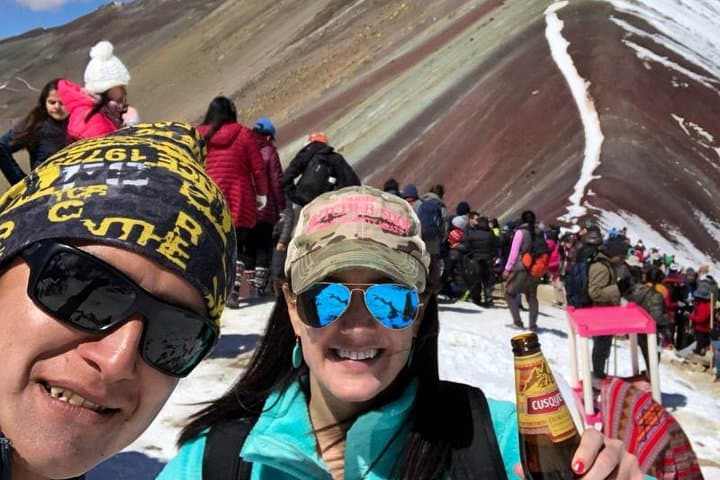
Respect local guides and communities, stick to designated paths to prevent erosion, and plan for rapid weather shifts: the mountain can be dazzling one hour and wind-whipped snow the next.
moderate.
9 hours.
Moderate cardiovascular fitness with prior acclimatization; comfortable on uneven trails for several hours.
The viewpoint near Vinicunca sits around 5,200 meters (about 17,000 feet); exact elevations vary by trail and viewpoint.
You don’t need technical skills, but moderate fitness and prior acclimatization are important because of steep sections and high altitude.
Some operators offer horses for part of the ascent or in emergencies, but availability varies and horses may not be allowed on the final steep sections.
The dry season (May–September) generally offers clearer skies and firmer trails; the rainy season brings mud, limited visibility and higher cancellation risk.
Vinicunca lies within traditional Quechua lands and is part of the broader Ausangate cultural landscape, long used for seasonal herding and ritual offerings.
High foot traffic causes erosion and littering; follow your guide, stick to trails, and support local operators who invest in trail maintenance and responsible tourism.
Discover Inca Planet operates guided outdoor trips and adventures with an emphasis on safety, stewardship, and memorable experiences.
You crest a final ridge and the ground ahead unrolls in bands of color — rust, ochre, mint, and wine stacked like pages of exposed rock. The thin air pulls at your breath; wind scours the grassland and the Ausangate massif watches over the valley like an immovable elder. That opening hour is the reason people set alarms for 4 a.m. and climb into vans while the city of Cusco sleeps.
You crest a final ridge and the ground ahead unrolls in bands of color — rust, ochre, mint, and wine stacked like pages of exposed rock. The thin air pulls at your breath; wind scours the grassland and the Ausangate massif watches over the valley like an immovable elder. That opening hour is the reason people set alarms for 4 a.m. and climb into vans while the city of Cusco sleeps.
Geologically, Vinicunca’s stripes are mineral layers—iron oxides, clays, and chlorites—exposed by glacial erosion and uplift. The painted slopes sit on high puna at roughly 5,200 meters (17,060 ft), formed where Andean uplift met alternating sedimentary deposits millions of years ago. Culturally the range is part of the Ausangate landscape, long regarded as sacred by Quechua communities; shepherds and alpaca graze these slopes, and local herders still travel the passes seasonally.
Practically, expect a long day: private pickup often begins around 4:00 a.m., with a 2–3 hour drive from Cusco, a 2–4 hour round-trip hike at high altitude, and return to town by early evening. Trails are rocky, exposed and can be muddy after rain; some operators supply emergency horses and oxygen. Acclimatize in Cusco for 48–72 hours if possible, carry 2–3 liters of water, high-calorie snacks, sun protection and layered clothing. Move slowly on the final ascent — the summit view rewards steady pacing more than speed.
Respect local guides and communities, stick to designated paths to prevent erosion, and plan for rapid weather shifts: the mountain can be dazzling one hour and wind-whipped snow the next.