THE ADVENTURE COLLECTIVE® · Independent discovery and booking for outdoor travel

A high-altitude day hike from Cusco to Vinicunca (Rainbow Mountain) delivers dramatic mineral-striped ridgelines, Quechua pastoral scenes and demanding thin-air walking. Read what to expect, how to prepare, and practical tips for the 8–12 hour outing.
A high-altitude day hike from Cusco to Vinicunca (Rainbow Mountain) delivers dramatic mineral-striped ridgelines, Quechua pastoral scenes and demanding thin-air walking. Read what to expect, how to prepare, and practical tips for the 8–12 hour outing.
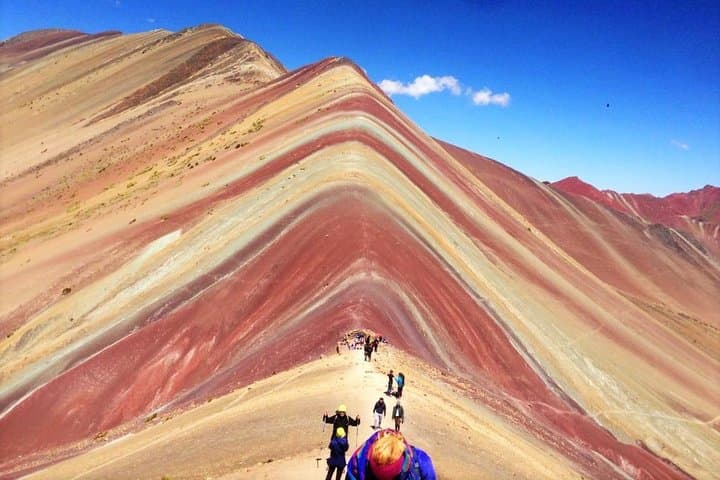
You climb before dawn, the bus hissing through thin air as stars fade behind the high spine of Ausangate. By the time the trail spills into puna grasslands, the Andes have begun to color—first a wash of pink on distant ridges, then the bands of iron, copper and sulfur that make Vinicunca’s famed stripes. The summit sits between roughly 4,710m and 5,200m; the last switchbacks are steep and sparse, with wind that pushes against every forward step.
Verified experiences and guided adventures in the surrounding area.
Operated by Conde Travel · Cusco, Cusco Region
You climb before dawn, the bus hissing through thin air as stars fade behind the high spine of Ausangate. By the time the trail spills into puna grasslands, the Andes have begun to color—first a wash of pink on distant ridges, then the bands of iron, copper and sulfur that make Vinicunca’s famed stripes. The summit sits between roughly 4,710m and 5,200m; the last switchbacks are steep and sparse, with wind that pushes against every forward step.
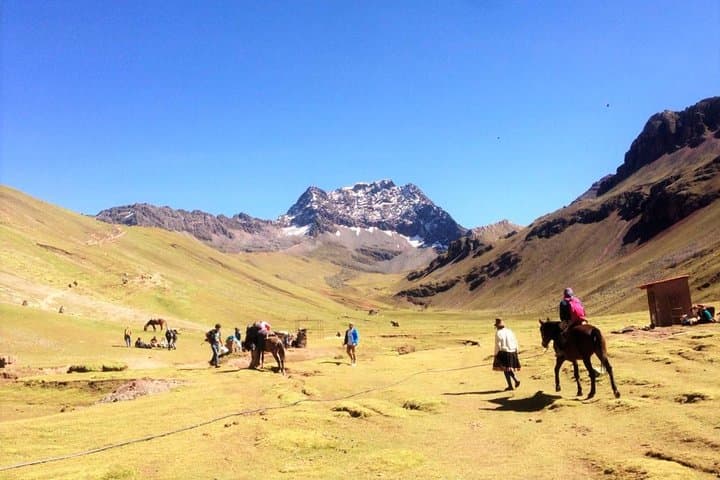
Geology here is blunt and readable: layered sediments lifted and exposed by glacial sculpting and mineral staining, producing reds, yellows and greens where iron oxides and other minerals oxidized. The route threads through small Quechua-speaking communities—pastoral families tending alpaca and llamas—whose lived history ties to pre-Columbian trade routes and Andean pastoralism.
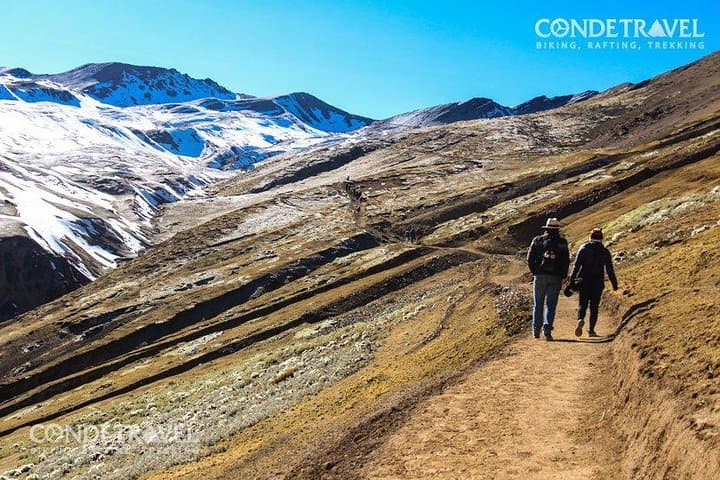
Expect a firm, arid trail of moraine, rock and compacted earth; the ascent usually takes about three hours from the common trailhead used by alternative routes. Altitude, not technical difficulty, is the limiter—breathing will feel shallow and steps short. Practical planning matters: acclimatize in Cusco for 48–72 hours if possible, carry high-calorie snacks, and layer for bone-dry sun and sudden wind-chill. Guides handle permits, local logistics and a paced ascent; the return is a long bus ride back to Cusco.
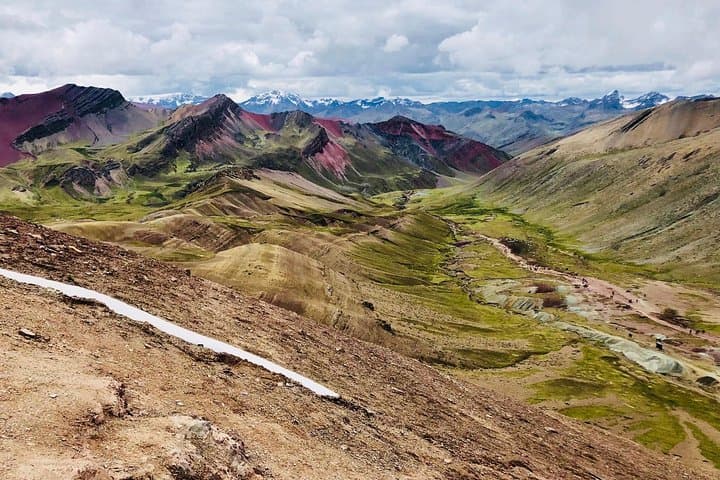
If you go, give time to a respectful visit with local families, pack out waste, and move deliberately—this is a high plateau that rewards measured effort with panoramic, almost otherworldly views.
challenging.
10–12 hours.
Good aerobic fitness recommended; ability to hike 3 hours uphill at high altitude and handle long bus transfers.
The walking portion from the common trailhead is about 3 hours uphill to the main viewpoint and roughly 1–1.5 hours down, though total outing time including transport is 10–12 hours.
Yes—Vinicunca sits above 4,700m; spending 48–72 hours in Cusco or a gradual ascent profile significantly reduces altitude sickness risk.
The classic route can be busy mid-day, but alternative trails and early starts reduce encounters; private tours often use less-traveled approaches.
Locally offered horse rides exist on some approaches, but availability varies and horses do not eliminate altitude effects—confirm with your operator in advance.
The area sits within traditional Quechua lands and has long been used for pastoralism; the colorful slopes reflect exposed mineral layers uplifted by Andean orogeny.
High foot traffic and unregulated camping strain fragile alpine soils—stick to trails, avoid charcoal or open fires, and support community-run initiatives where available.
Conde Travel operates guided outdoor trips and adventures with an emphasis on safety, stewardship, and memorable experiences.
You climb before dawn, the bus hissing through thin air as stars fade behind the high spine of Ausangate. By the time the trail spills into puna grasslands, the Andes have begun to color—first a wash of pink on distant ridges, then the bands of iron, copper and sulfur that make Vinicunca’s famed stripes. The summit sits between roughly 4,710m and 5,200m; the last switchbacks are steep and sparse, with wind that pushes against every forward step.
You climb before dawn, the bus hissing through thin air as stars fade behind the high spine of Ausangate. By the time the trail spills into puna grasslands, the Andes have begun to color—first a wash of pink on distant ridges, then the bands of iron, copper and sulfur that make Vinicunca’s famed stripes. The summit sits between roughly 4,710m and 5,200m; the last switchbacks are steep and sparse, with wind that pushes against every forward step.
Geology here is blunt and readable: layered sediments lifted and exposed by glacial sculpting and mineral staining, producing reds, yellows and greens where iron oxides and other minerals oxidized. The route threads through small Quechua-speaking communities—pastoral families tending alpaca and llamas—whose lived history ties to pre-Columbian trade routes and Andean pastoralism.
Expect a firm, arid trail of moraine, rock and compacted earth; the ascent usually takes about three hours from the common trailhead used by alternative routes. Altitude, not technical difficulty, is the limiter—breathing will feel shallow and steps short. Practical planning matters: acclimatize in Cusco for 48–72 hours if possible, carry high-calorie snacks, and layer for bone-dry sun and sudden wind-chill. Guides handle permits, local logistics and a paced ascent; the return is a long bus ride back to Cusco.
If you go, give time to a respectful visit with local families, pack out waste, and move deliberately—this is a high plateau that rewards measured effort with panoramic, almost otherworldly views.